Blog
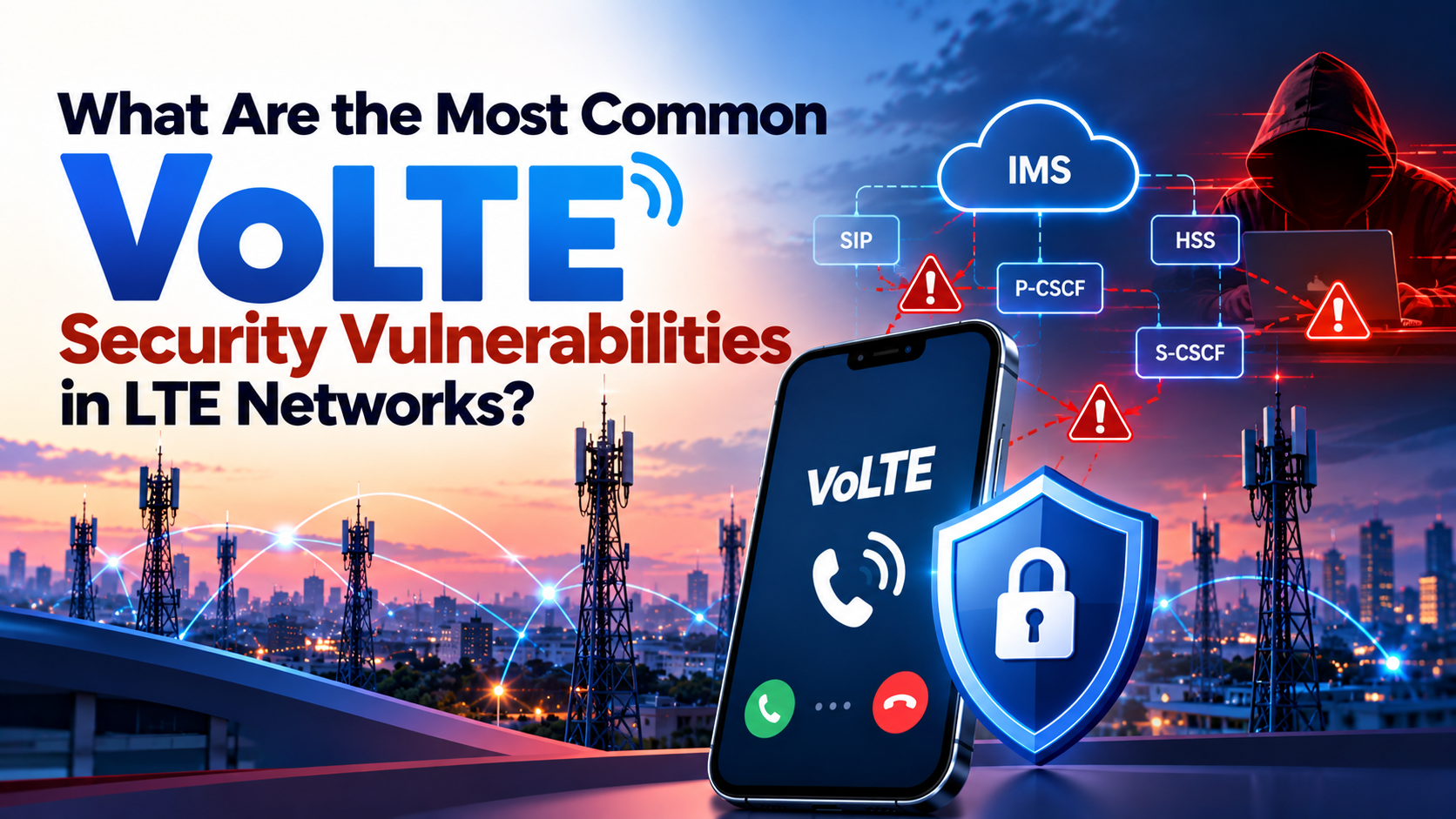

Voice over LTE (VoLTE) carries voice calls over IP-based LTE infrastructure using the IP Multimedia Subsystem (IMS). This architecture supports modern voice services, but it also introduces security considerations across signaling, interfaces, routing, configuration and subscriber information. Understanding common VoLTE security vulnerabilities helps operators review their defenses and prioritise corrective action before weaknesses affect service integrity, availability or privacy.
This guide explains common VoLTE vulnerabilities, IMS vulnerabilities and LTE voice security risks in practical terms. It also outlines how a VoLTE vulnerability assessment and IMS security testing can help identify gaps within an authorised, clearly defined scope.
VoLTE depends on multiple network components and communication paths working together. If access policies are too broad, signaling is insufficiently validated, or network boundaries are poorly defined, an attacker may have opportunities to probe exposed services, misuse signaling or reach resources that should be restricted. The actual risk depends on the operator’s architecture, implementation and existing controls; not every weakness is present in every network.
A sound telecom network security programme therefore looks beyond a single device or interface. It considers the end-to-end service, the supporting IMS environment, interconnections, operational practices and how sensitive subscriber data is handled.
VoLTE signaling helps establish, manage and end calls. Inadequate validation of signaling messages, permissive handling of unexpected requests, or weak rate controls can increase exposure to signaling abuse and service disruption. VoLTE signaling vulnerabilities should be assessed by reviewing relevant SIP handling rules, authentication expectations, error responses, rate limits and monitoring.
Routing and filtering rules define which systems can communicate. Broad allow rules, unnecessary open paths or inconsistent policies between network boundaries can expose internal components to traffic they do not need to accept. VoLTE network security weaknesses in this area may allow unauthorised access attempts or make it harder to contain suspicious traffic. Operators should verify that communication paths are explicitly justified and regularly reviewed.
Management interfaces and privileged accounts can become high-impact entry points if they are reachable from untrusted networks or protected by weak access controls. Review administrative access, authentication, credential handling, role separation and remote management paths. Restrict access to approved personnel and systems, and ensure changes are logged and traceable.
Segmentation helps limit movement between critical network functions, management systems and less-trusted environments. If boundaries are poorly designed or exceptions accumulate, a compromise in one area may create opportunities to reach other resources. IMS network security reviews should examine trust boundaries, dependencies and whether filtering between segments matches the intended architecture.
VoLTE services process subscriber identifiers and call-related information. Excessive access to logs, unnecessary retention, weak protection of stored information or sensitive data exposed in diagnostic output can create subscriber privacy risks. IMS subscriber data protection should include access reviews, appropriate logging practices, data minimisation and controls that prevent unnecessary disclosure of subscriber information.
Even well-designed controls can be less effective when security events are not recorded, alerts are poorly tuned or escalation procedures are unclear. Review whether relevant signaling anomalies, access violations and configuration changes can be detected and investigated. Confirm that logs are protected, time settings are consistent, and response teams know how to escalate suspicious activity.
Network changes, vendor updates and operational work can create differences between approved baselines and deployed configurations. Unnecessary services, outdated settings, undocumented exceptions or untracked findings may leave avoidable exposure. A recurring VoLTE security assessment should compare actual configurations with approved baselines and track remediation through closure.
A structured VoLTE vulnerability assessment should begin with clear objectives, authorisation and a documented scope. Map relevant IMS components, interfaces, trust boundaries and external connections. Then review architecture and configuration, examine signaling and access policies, and perform controlled technical tests where approved. Use evidence to distinguish confirmed weaknesses from theoretical concerns or opportunities for improvement.
IMS security testing can include configuration review, access-control validation, signaling checks, segmentation analysis and authorised penetration testing. Telecom security testing may cover adjacent network domains when they are explicitly included in the engagement. Testing on production systems requires coordination with network operations, defined test windows, monitoring and stop conditions to reduce the risk of service impact.
Operators can use an IMS security checklist to make reviews repeatable. The exact controls should reflect the network design, vendor implementation and operational requirements. Key review areas include:
These checks support telecom network security, but a checklist alone cannot prove that all vulnerabilities have been identified. Risk-based testing and evidence-based validation remain important.
VoLTE security vulnerabilities can arise from signaling handling, permissive traffic rules, weak access controls, segmentation gaps, subscriber-data exposure, monitoring limitations and configuration drift. A structured VoLTE security assessment helps operators understand which weaknesses are relevant to their environment, validate risk and prioritise remediation. Matrix Shell can support telecom operators with tailored telecom security testing and IMS security testing aligned to the agreed scope and operational requirements.