Blog
.png)
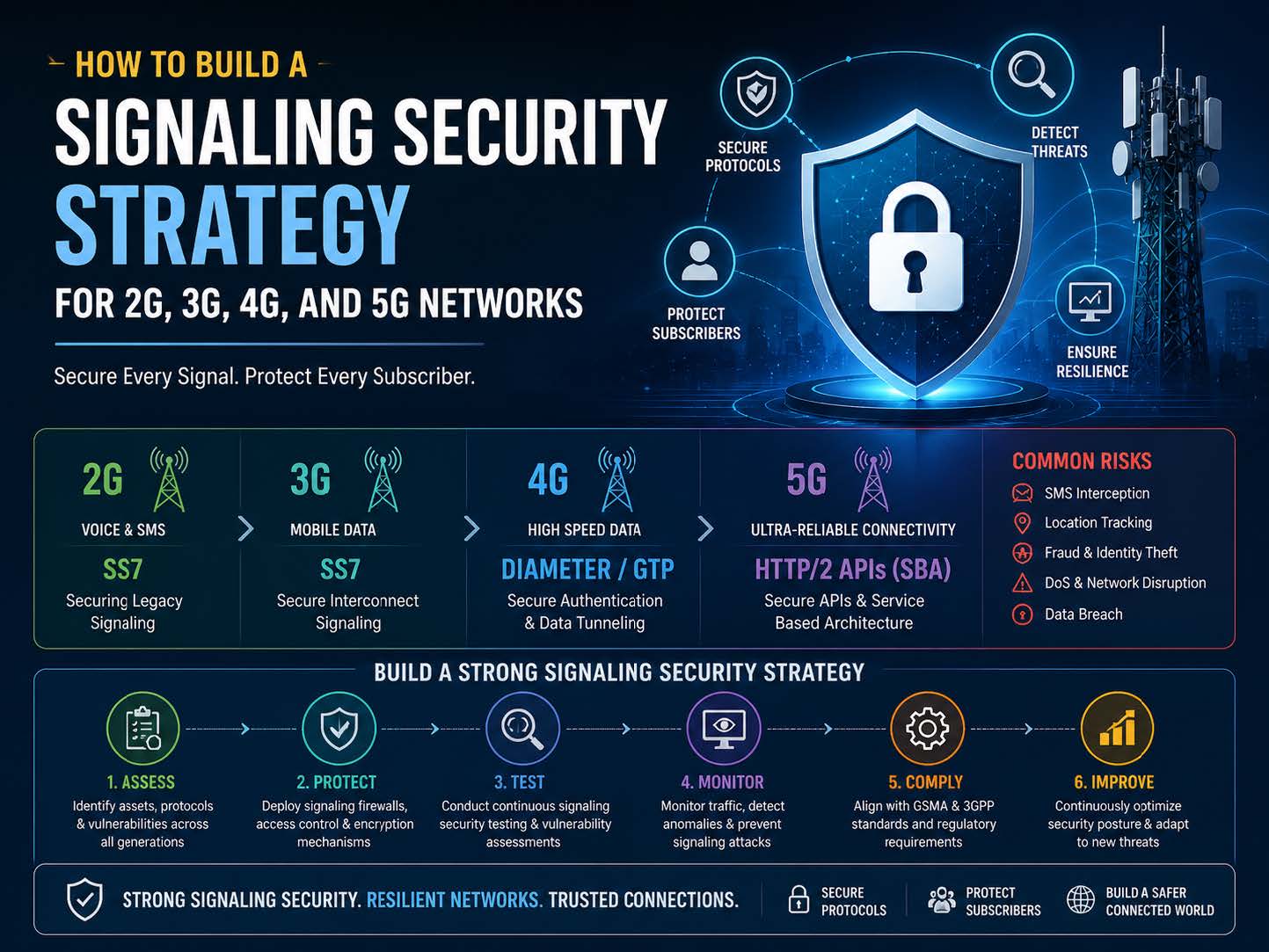
Telecom networks today are not built on a single technology. They are layered ecosystems where 2G, 3G, 4G, and 5G coexist — sharing infrastructure, protocols, and signaling systems.
This creates a unique challenge: even if your 5G network is secure, older signaling layers can still expose the entire system. That's why building a unified signaling security strategy is no longer optional — it's essential.
Each network generation uses different signaling protocols:
These systems are interconnected — and vulnerabilities in one can impact all. According to ENISA, telecom signaling systems across SS7, Diameter, and 5G environments present medium to high security risks, requiring coordinated protection strategies. Research also confirms that attackers actively exploit both legacy and modern protocols across telecom networks.
Key Insight: Telecom security is no longer about securing one protocol — it's about securing the entire signaling ecosystem across generations.
Before building a strategy, you need full visibility. Map out:
Many operators underestimate how deeply these layers are connected. For example, SS7 still plays a role in roaming and fallback mechanisms even in modern networks.
A strong strategy starts with understanding where risks exist.
SS7 lacks authentication and encryption, making it vulnerable to exploitation.
Diameter inherits trust-based weaknesses similar to SS7.
GTP is critical but lacks built-in security controls.
5G expands the attack surface due to its API-driven architecture.
A fragmented approach won't work. Operators must adopt continuous signaling security testing, end-to-end telecom network security testing, and multi-protocol validation. This includes:
This approach ensures consistent protection across all network layers.
The control plane is the brain of telecom networks. Securing it means validating signaling messages, restricting unauthorized access, and monitoring abnormal activity. Studies show that control plane vulnerabilities are increasing, especially in multi-generation environments.
Modern telecom security strategies require:
These tools help filter malicious traffic, detect anomalies, and prevent unauthorized signaling requests.
Signaling vulnerabilities directly impact user privacy. To ensure subscriber data protection in telecom, operators should limit data exposure, monitor signaling queries, and implement strict access controls. Reports confirm that signaling weaknesses can lead to tracking, interception, and data misuse.
Although legacy protocols lack native encryption, operators can add security layers, validate message integrity, and secure communication channels — strengthening telecom encryption and message integrity across the network.
A strong strategy must follow industry frameworks:
These provide structured guidance for telecom protocol security.
Traditional security models rely on periodic audits — and that's no longer enough. Modern telecom networks require continuous monitoring, real-time threat detection, and automated validation. Signaling attacks are ongoing, not one-time events.
Building a signaling security strategy is no longer about protecting individual protocols — it's about securing an interconnected ecosystem. As telecom networks evolve, operators must adopt a unified, proactive approach that covers 2G, 3G, 4G, and 5G signaling layers.
By combining continuous testing, strong validation, and standards-based frameworks, organizations can build resilient telecom infrastructures ready for the future.