Blog

Signaling System No. 7 (SS7) remains an important part of telecom infrastructure, supporting functions such as call routing, SMS delivery, subscriber mobility, authentication, and inter-network communication. However, the trusted architecture and legacy design of SS7 can create security risks when signaling traffic, network configurations, or interconnections are not adequately protected.
An SS7 security audit provides a structured way for telecom operators to examine these security risks, evaluate existing controls, and identify gaps that could affect subscribers and network operations.
But what exactly does an SS7 audit include, and how is it different from other telecom security activities? This guide explains the purpose, scope, key areas, and benefits of conducting an SS7 security audit.
An SS7 security audit is a systematic review of an organization’s SS7 signaling environment, security controls, configurations, policies, and exposure points.
The goal is to determine whether the SS7 infrastructure is adequately protected against unauthorized access, signaling abuse, information exposure, and service disruption.
An SS7 audit can examine areas such as:
Rather than focusing only on individual vulnerabilities, an audit looks at the broader security posture of the SS7 environment.
SS7 networks can be exposed to threats involving subscriber privacy, signaling manipulation, unauthorized access, and service availability.
Potential consequences include:
These risks can become more complex when operators have multiple interconnections, roaming relationships, legacy infrastructure, or third-party signaling connections.
A structured SS7 audit helps operators understand where their security controls may be insufficient and prioritize improvements based on risk.
For a broader discussion of signaling-related threats, see [Top Signaling Security Risks in Telecom Networks and How to Mitigate Them].
The scope of an SS7 security audit can vary according to the operator’s architecture and security objectives. However, a comprehensive audit generally examines several core areas.
The audit begins by understanding how SS7 components communicate and where signaling enters or leaves the network.
This includes reviewing signaling routes, network elements, interconnections, roaming relationships, and potential exposure points.
Access controls determine which entities are permitted to exchange signaling traffic.
The audit can evaluate whether access policies are appropriately defined and whether unauthorized signaling sources could reach sensitive network functions.
Signaling firewalls are an important defensive layer for controlling SS7 traffic.
An audit can review filtering policies, rule configurations, prohibited messages, traffic-control mechanisms, and whether security policies adequately address relevant signaling risks.
Misconfigured network elements can create unnecessary exposure.
An SS7 security audit can review configuration practices and identify weaknesses involving access permissions, signaling policies, filtering rules, routing, and security controls.
Security controls are more effective when suspicious signaling activity can be detected.
The audit may examine logging, monitoring, alerting, event correlation, and the organization’s ability to identify abnormal signaling behavior.
Telecom operators often communicate with external networks through interconnections and roaming arrangements.
These relationships should be reviewed carefully because trusted signaling relationships can introduce additional exposure if controls are inadequate.
A telecom security audit is broader than an SS7-specific audit. It evaluates the security posture of telecommunications infrastructure across multiple technologies, systems, protocols, and operational processes.
Depending on the network, a telecom security audit may cover:
Therefore, an SS7 security audit can be considered a focused component of a broader telecom security audit.
For operators running mixed-generation networks, it is important to avoid treating SS7 security in isolation. A unified signaling security strategy can help address risks across legacy and modern network architectures.
A signaling security audit evaluates the security of signaling protocols and the controls protecting signaling traffic across a telecom environment.
While an SS7 audit specifically focuses on SS7, a signaling security audit can have a wider scope.
For example, an operator may evaluate:
This broader approach becomes increasingly valuable as operators manage networks spanning multiple generations.
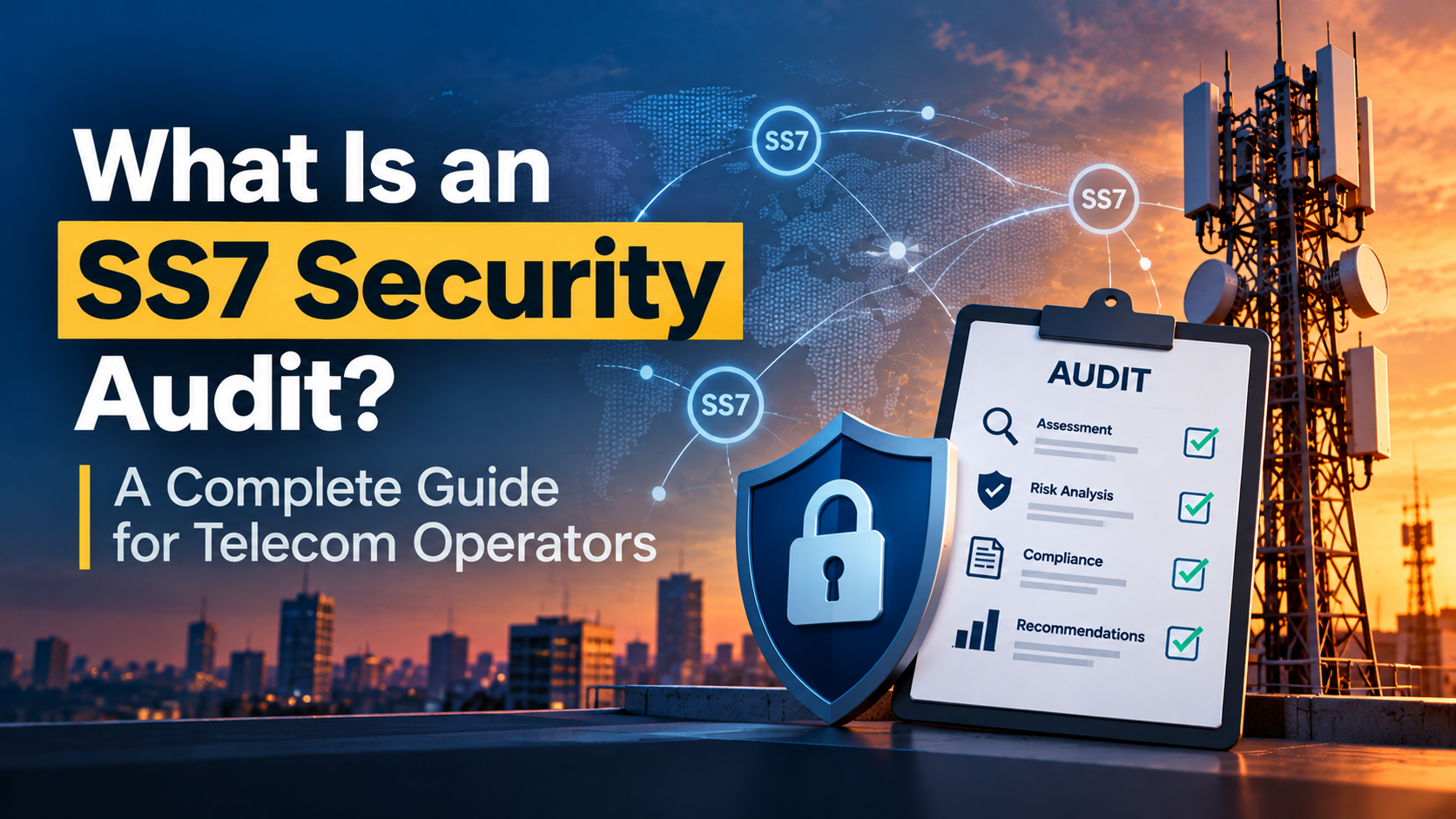
A typical audit can follow a structured process.
1. Define the audit scope: Identify the SS7 infrastructure, network elements, interconnections, environments, and security controls that will be reviewed.
2. Map the signaling environment: Document signaling flows, trust relationships, external connections, and potential exposure points.
3. Review configurations and controls: Examine access controls, signaling firewall policies, filtering mechanisms, monitoring, and relevant configurations.
4. Identify security gaps: Determine weaknesses that could create risks involving subscriber privacy, signaling integrity, unauthorized access, or network availability.
5. Assess risk: Prioritize findings according to their potential impact and likelihood.
6. Recommend remediation: Provide practical recommendations for strengthening signaling controls and reducing identified risks.
Where deeper validation is required, selected findings can subsequently be tested through controlled signaling security testing or penetration testing.
Conducting an SS7 security audit can help telecom operators:
Regular audits can also help organizations identify security gaps after significant network, configuration, or interconnection changes.
Although the terms are sometimes used interchangeably, an audit and security testing have different emphases.
An SS7 security audit primarily evaluates the security posture, controls, configurations, policies, and exposure of the environment.
SS7 security testing goes further by validating how effectively those controls withstand specific security scenarios.
For example, an audit may identify that a signaling firewall has a potentially weak filtering policy. Security testing can then validate whether the control actually prevents the relevant signaling threat under controlled conditions.
This makes auditing and testing complementary activities rather than competing approaches.
An SS7 security audit provides telecom operators with a structured view of their signaling security posture. By reviewing architecture, configurations, access controls, signaling firewalls, interconnections, monitoring, and security policies, operators can identify weaknesses before they result in significant security or operational consequences.
An SS7 audit is also an important component of a broader telecom security audit or signaling security audit, particularly for operators managing multiple generations of network technology.
Combining regular auditing with targeted signaling security testing enables operators to move beyond identifying weaknesses and toward continuously validating the effectiveness of their security controls.