Blog

Mobile networks rely on signaling protocols to manage calls, authenticate subscribers, support roaming, and deliver connectivity. Two important protocols in this evolution are Signaling System No. 7 (SS7) and Diameter.
SS7 supported traditional mobile networks, including 2G and 3G. As telecommunications evolved toward 4G/LTE, Diameter became a key signaling protocol for functions such as subscriber authentication, mobility management, and policy control.
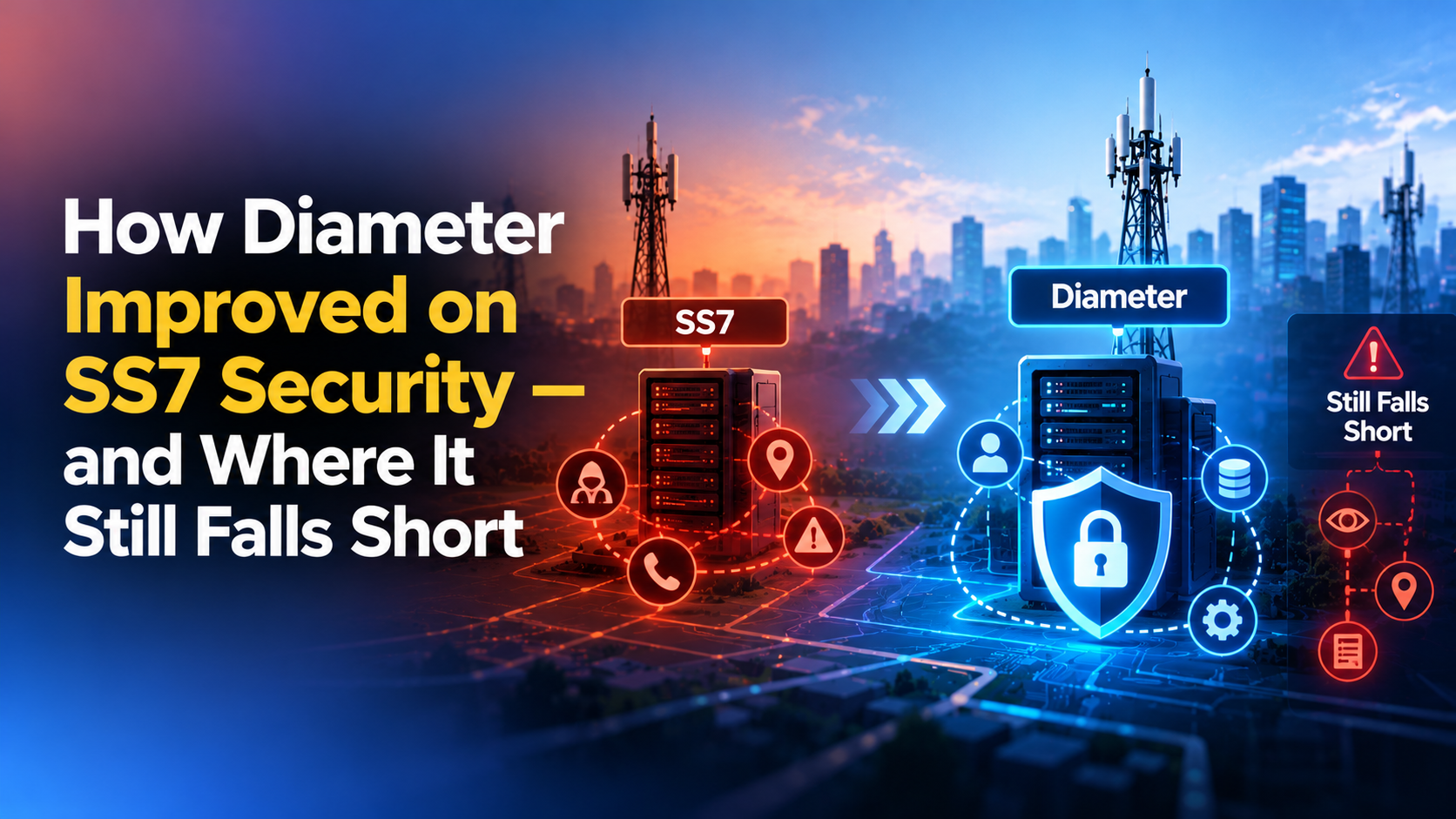
Diameter introduced improvements over SS7, including a more extensible protocol design and support for IP-based network architectures. However, these changes did not eliminate signaling security risks. Misconfigurations, inadequate filtering, untrusted interconnections, and insufficient monitoring can still expose mobile networks to attacks.
Understanding Diameter vs SS7 security helps telecom operators identify which risks have changed, which remain relevant, and what additional controls are needed as networks evolve toward 5G.
SS7 was designed when mobile networks operated in a more controlled telecommunications environment. Operators exchanged signaling messages through established relationships, and the network architecture generally placed considerable trust in connected signaling entities.
As mobile connectivity and global roaming expanded, this trust model created security challenges.
Potential SS7-related risks include:
These risks do not mean every SS7 network is vulnerable in the same way. Exposure depends on the operator’s architecture, signaling access controls, filtering, configuration, and monitoring.
The fundamental challenge is that SS7’s historical trust assumptions can become problematic when signaling traffic crosses network boundaries that are not adequately secured.
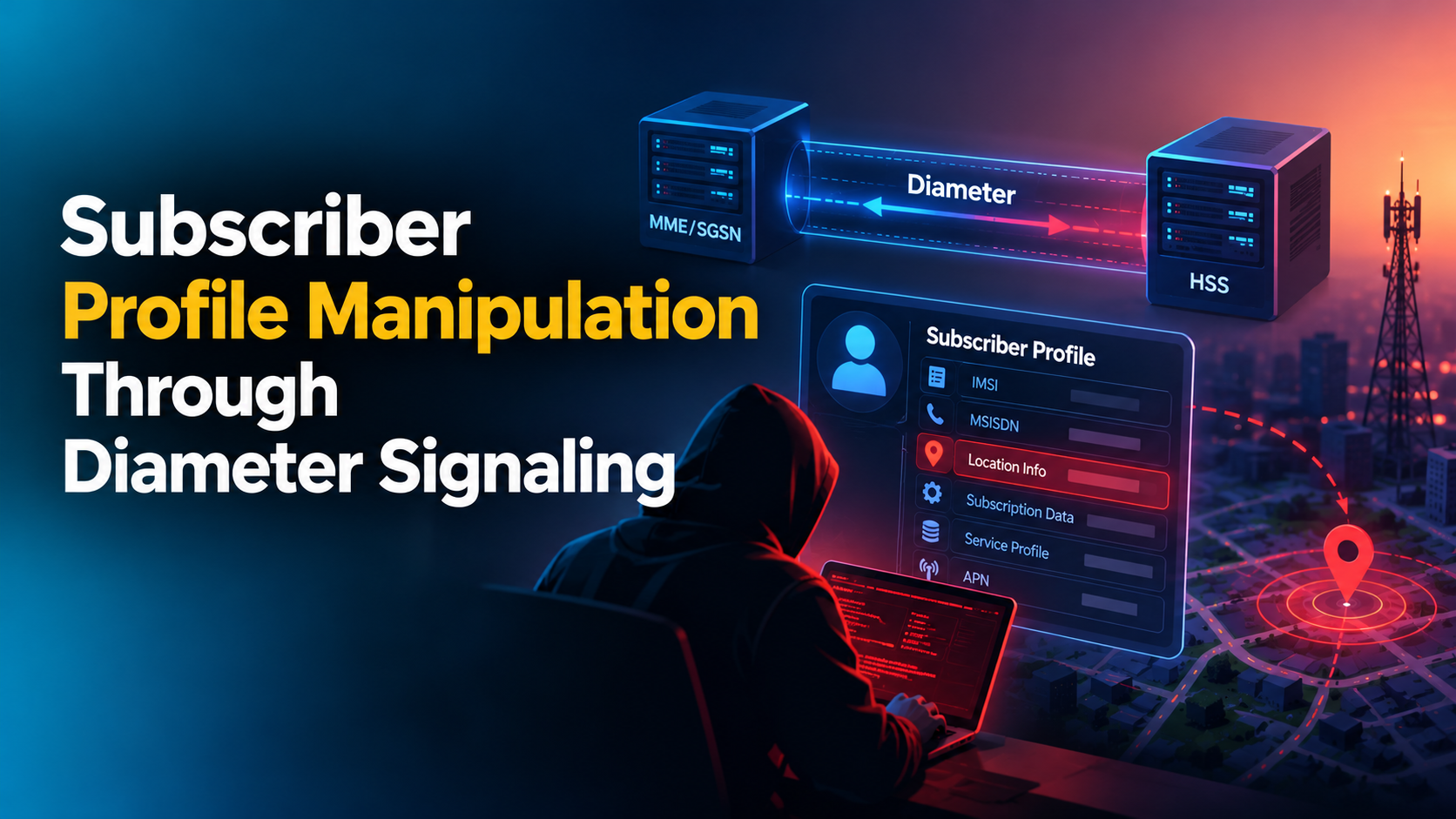
Diameter was developed to support evolving IP-based telecommunications services and more flexible authentication, authorization, and accounting requirements. It is widely used in 4G/LTE network functions, including communication between the Mobility Management Entity (MME) and Home Subscriber Server (HSS) over the S6a interface.
Several characteristics distinguish Diameter from SS7.
A more extensible protocol design
Diameter supports extensible messages and Attribute-Value Pairs (AVPs), allowing implementations to carry different types of information and support evolving service requirements.
This flexibility improves interoperability and functionality, but it does not automatically guarantee security. AVPs and message content still need appropriate validation and authorization.
Support for IP-based networks
Diameter operates in IP-based environments, making it suitable for modern telecommunications architectures. IP infrastructure also provides access to established network security technologies.
However, moving signaling onto IP networks introduces its own considerations, including network exposure, access control, routing security, and protection of communications between network elements.
More structured security mechanisms
Diameter includes protocol-level security capabilities and can be deployed with transport security mechanisms, depending on the implementation and architecture.
The important distinction is between a protocol’s available security capabilities and the controls an operator actually deploys. A capability provides limited protection if it is not configured correctly or applied consistently across network boundaries.
Better opportunities for signaling control
Diameter networks can use Diameter Edge Agents (DEAs), firewalls, message filtering, and routing policies to manage traffic between operators and other network entities.
When correctly configured, these controls can help restrict unauthorized requests, validate signaling messages, and enforce rules for interconnect traffic.
The key point: Diameter provided a more flexible foundation for evolving mobile networks, but its security depends on implementation, configuration, and operational controls—not simply on replacing SS7.
Neither protocol should be considered secure merely because it is newer or uses a different network architecture. Effective security requires controls that match the protocol, the interfaces in use, and the operator’s threat environment.
Despite its improvements, Diameter has security limitations that telecom operators must address.
Inadequate signaling filtering
If a Diameter firewall or DEA allows messages that should be restricted, unauthorized or unexpected signaling requests may reach sensitive network functions. Filtering should consider the origin, destination, command, application, and relevant message attributes.
Weak interconnect security
Roaming and interconnect arrangements can involve multiple operators, vendors, and network configurations. Inconsistent policies or excessive trust between connected networks can increase exposure.
Operators should validate signaling peers and enforce appropriate controls at network boundaries rather than assuming all traffic from a recognized connection is legitimate.
Subscriber information exposure
Diameter exchanges information needed to support subscriber authentication and mobility. If access controls are inadequate, attackers with suitable signaling access may attempt to obtain sensitive subscriber information or misuse legitimate procedures.
Security testing should examine whether requests are authorized for the requesting entity and whether responses disclose more information than necessary.
Message manipulation and denial of service
Poorly validated messages, weak routing policies, or insufficient traffic controls can create opportunities for signaling abuse. Excessive or malformed requests may also affect the availability of signaling infrastructure.
Monitoring, rate controls, message validation, and configuration reviews can help reduce these risks.
Limited visibility and inconsistent monitoring
A firewall alone cannot address every security problem. Operators also need visibility into signaling behavior, policy violations, unusual request patterns, and configuration changes.
Without effective monitoring and incident response, suspicious activity may remain undetected until it affects subscribers or network operations.
The relationship between SS7, Diameter, and 5G is important for operators managing networks across multiple generations.
The 5G Core uses a service-based architecture for many core network functions, with HTTP/2-based service communication in relevant interfaces. It also introduces security mechanisms and architecture-specific protections. Diameter is not the universal native signaling protocol for the 5G Core.
However, SS7 and Diameter can remain relevant in multi-generation environments that support legacy networks, roaming, and interworking. This means operators cannot assume that introducing 5G removes earlier signaling risks.
Diameter security in 5G therefore needs to be considered in context. Operators should assess where Diameter remains in use, how legacy and newer network environments interact, and whether signaling controls are consistent across those boundaries.
A comprehensive approach should include:
The objective is to address the security requirements of each protocol and interface rather than applying a single control strategy to every network generation.
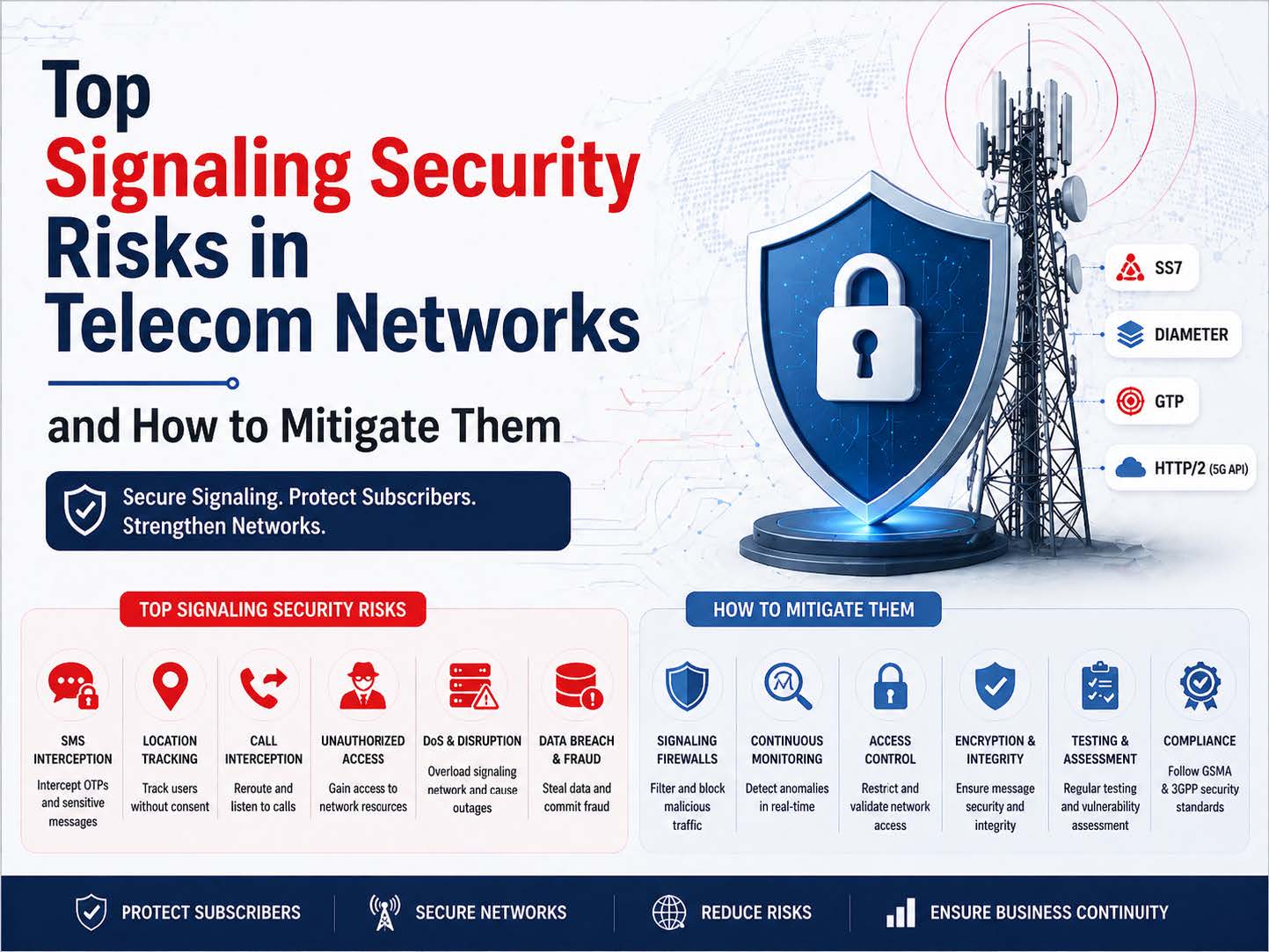
Telecom operators can reduce signaling exposure through a combination of technical controls and ongoing assessment.
Diameter improved on SS7 by supporting a more extensible signaling model suited to IP-based mobile networks and by enabling more structured signaling controls. Yet these improvements do not remove the need for careful security engineering.
The practical lesson from SS7 vs Diameter security is that protocol evolution does not eliminate risk. Weak filtering, inadequate authorization, exposed interconnections, and poor monitoring can leave signaling environments vulnerable.
For operators managing 4G/LTE, legacy networks, and 5G deployments, security assessments should examine each protocol and interface in its actual operational context. This helps identify gaps, strengthen defenses, and reduce the risk of signaling abuse across interconnected networks.