
Blog
/
S6a Security Assessment Checklist for Telecom Operators

Blog

S6a Security Assessment Checklist for Telecom Operators

Nadeem bagwan
Telecom Security Researcher
October 19, 2026
Read Time:
12 Minutes

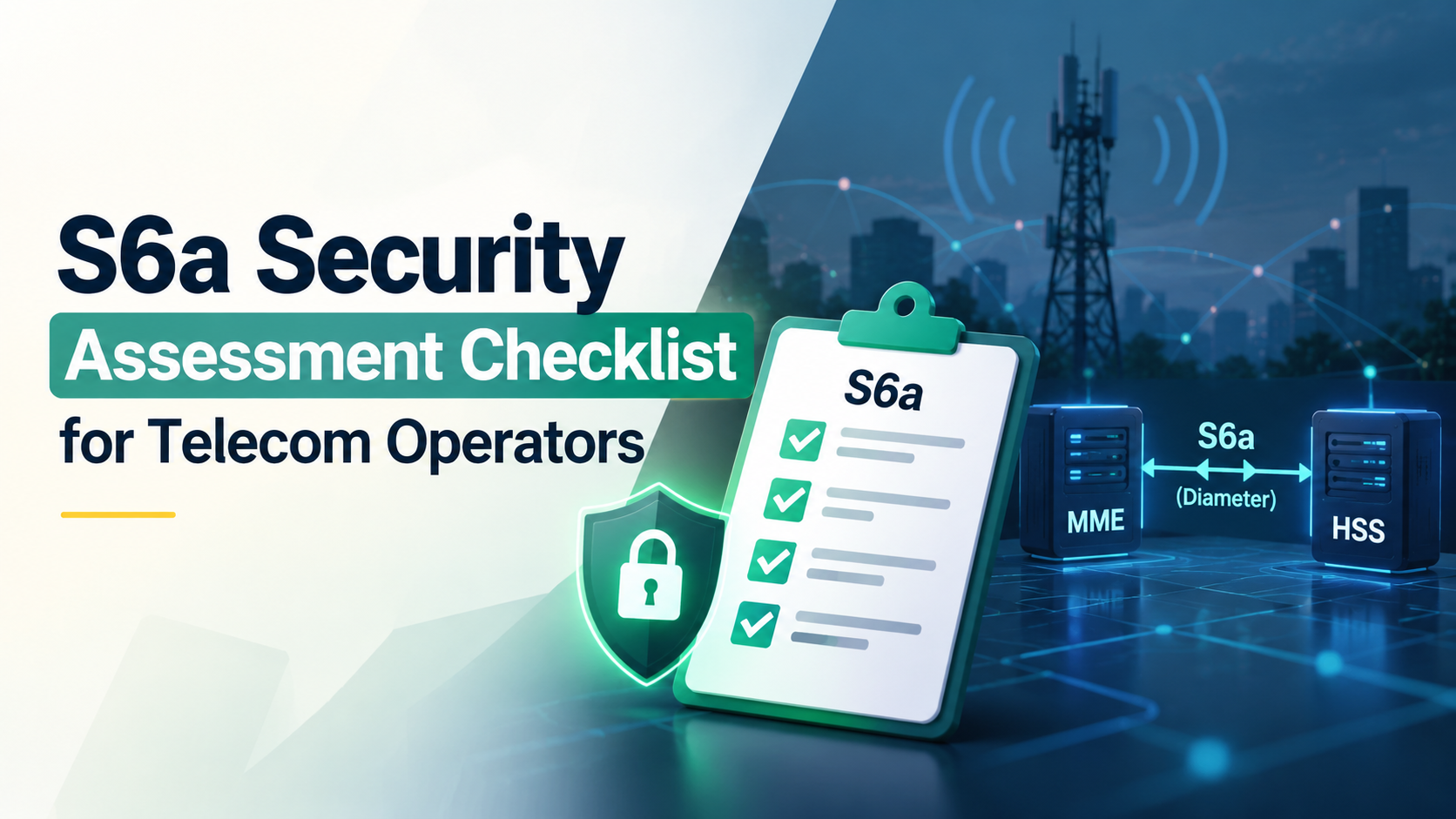
The S6a interface is a critical signaling interface in 4G/LTE networks. It connects the Mobility Management Entity (MME) with the Home Subscriber Server (HSS) and supports important functions related to subscriber authentication, authorization, mobility, and subscription information.

Because S6a uses the Diameter protocol, weaknesses in its configuration, trusted peer relationships, message handling, access controls, or monitoring can introduce security risks.

This makes a structured S6a security assessment important for telecom operators.

A comprehensive assessment should identify S6a vulnerabilities, evaluate S6a Diameter security, validate existing security controls, and determine whether the interface can withstand realistic but controlled security scenarios.

This guide provides a practical S6a security assessment checklist that operators can use when reviewing their LTE core network security.

What Is an S6a Security Assessment?

An S6a security assessment is a structured review of the security posture of the S6a interface between the MME and HSS.

The assessment examines whether the interface is appropriately protected against unauthorized access, signaling manipulation, information exposure, and availability-related threats.

A typical assessment can cover:

  • S6a architecture
  • MME and HSS communication
  • Diameter peer authentication
  • Peer authorization
  • Transport security
  • Message and AVP validation
  • Access controls
  • Signaling filtering
  • Subscriber information protection
  • Authentication-related security
  • Location and mobility-related risks
  • Monitoring and logging
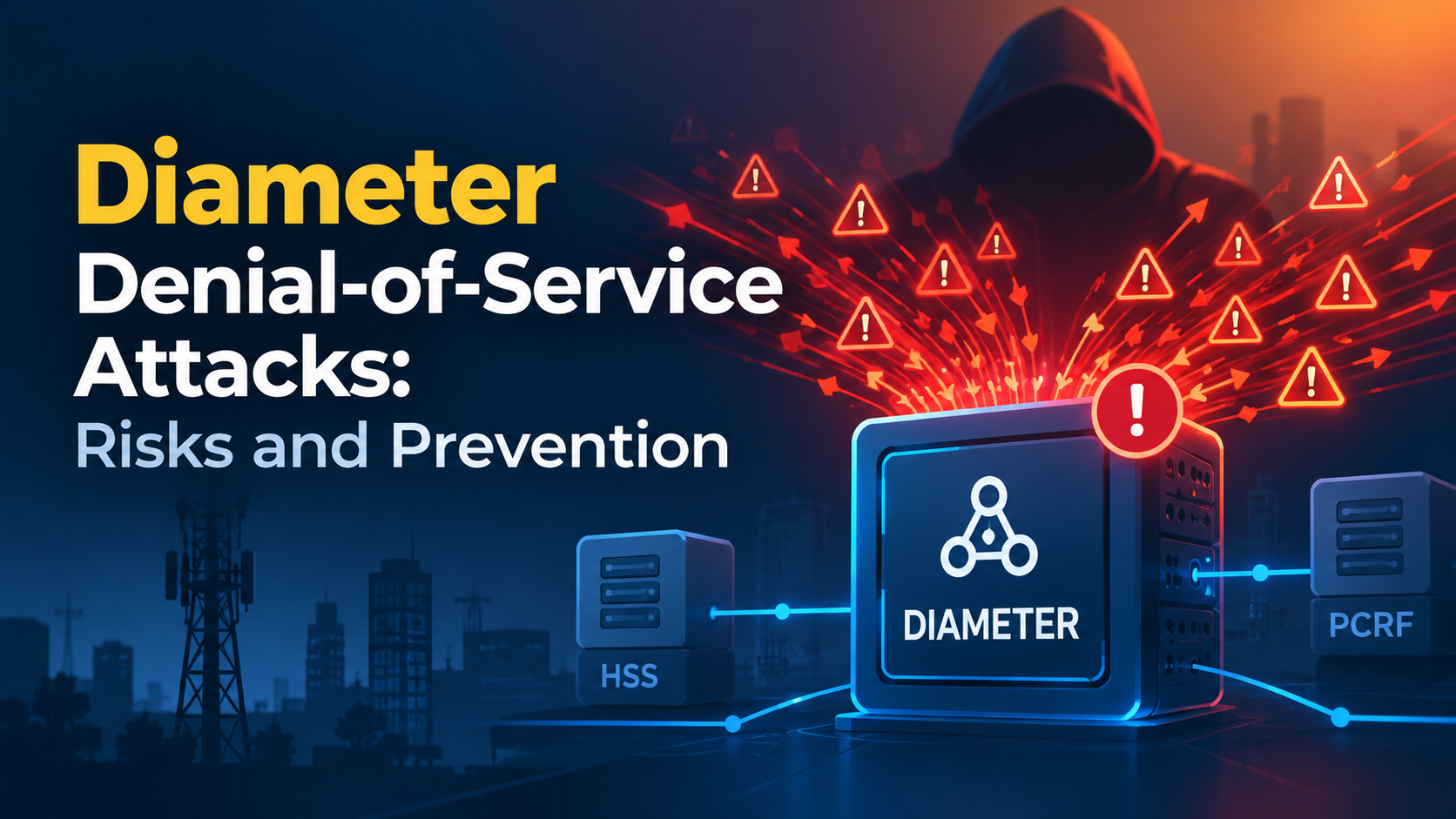
  • Denial-of-service protection
  • Roaming and interconnect exposure

The objective is not simply to determine whether S6a is operational. It is to determine whether it is securely designed, configured, monitored, and tested.

Why Telecom Operators Need an S6a Security Assessment

S6a carries signaling associated with important LTE core-network functions.

A weakness in one security control may therefore create opportunities for unauthorized signaling or misuse of legitimate signaling functionality.

Some potential S6a risks include:

  • Unauthorized Diameter peer access
  • Subscriber information exposure
  • Authentication-related abuse
  • Subscriber profile misuse
  • Location and mobility information exposure
  • Diameter message manipulation
  • Spoofing
  • Denial-of-service conditions
  • Excessive trust between signaling peers
  • Weak roaming security controls

An S6a security assessment helps operators identify these risks before they become operational security incidents.

S6a Security Assessment Checklist

The following checklist provides a practical framework for reviewing S6a security.

1. S6a Architecture Review

Start by documenting the complete S6a environment.

Checklist

  • Identify all MME systems
  • Identify all HSS systems
  • Map S6a connections
  • Identify Diameter peers
  • Document Diameter Edge Agents where applicable
  • Identify signaling security devices
  • Document relevant network segments
  • Identify roaming and interconnect relationships
  • Document trust boundaries
  • Review data flows between MME and HSS

A clear architecture map helps identify where security controls are implemented and where trust relationships exist.

2. Diameter Peer Authentication

One of the first areas of S6a Diameter security to examine is peer authentication.

The operator should verify that only legitimate Diameter peers can establish communication with S6a endpoints.

Checklist

  • Identify all trusted Diameter peers
  • Verify peer authentication mechanisms
  • Validate peer identities
  • Review peer credentials or certificates where applicable
  • Check for unauthorized peer connections
  • Confirm that unknown peers are rejected
  • Review authentication failure handling
  • Check for unnecessary trusted peers

Weak peer authentication can increase the risk of unauthorized signaling access.

3. Diameter Peer Authorization

Authentication alone does not establish whether a peer should have access to particular signaling functions.

Authorization should therefore be assessed separately.

Checklist

  • Verify that peer authorization is implemented
  • Review allowed Diameter applications
  • Check peer-specific permissions
  • Identify excessive trust relationships
  • Review access-control rules
  • Verify unauthorized requests are rejected
  • Review roaming-peer permissions

This is particularly important when the signaling environment includes external or inter-operator relationships.

4. Transport Security

Transport protection is another important part of S6a security.

The assessment should determine whether signaling communication is adequately protected in transit.

Checklist

  • Review Diameter transport configuration
  • Check security mechanisms used for signaling transport
  • Review certificate configuration where applicable
  • Validate credential handling
  • Check network-level restrictions
  • Review encryption requirements
  • Identify insecure communication paths
  • Verify that unauthorized access to signaling endpoints is restricted

Transport security should be assessed alongside peer authentication and authorization.

5. Diameter Message Validation

S6a uses Diameter messages to exchange signaling information between the MME and HSS.

Improper message validation can create security weaknesses.

Checklist

  • Validate expected Diameter message types
  • Check mandatory AVPs
  • Validate AVP values
  • Review unexpected AVP handling
  • Test malformed message handling
  • Check error handling
  • Verify unauthorized requests are rejected
  • Review message-processing behavior

The objective is to ensure that the network does not blindly trust incoming signaling.

6. AVP Security

Attribute-Value Pairs (AVPs) carry information within Diameter messages.

An effective S6a security assessment should therefore examine how security-relevant AVPs are handled.

Checklist

  • Identify security-sensitive AVPs
  • Verify appropriate validation
  • Check whether unexpected values are rejected
  • Review authorization requirements
  • Check for excessive information exposure
  • Validate error handling
  • Review logging of important security events

AVP validation should be considered as part of overall message-security testing rather than as an isolated configuration exercise.

7. MME HSS Security

Because S6a directly connects the MME and HSS, MME HSS security should be included within the assessment.

The review should examine whether the relationship between these systems is appropriately restricted and protected.

Checklist

  • Review MME-HSS trust relationships
  • Validate authorized MME systems
  • Validate authorized HSS systems
  • Review access controls
  • Check network segmentation
  • Review signaling routes
  • Verify unauthorized systems cannot access S6a
  • Review security monitoring

This helps ensure that security is maintained across the complete MME-to-HSS communication path.

8. Subscriber Information Protection

S6a signaling can involve sensitive subscriber and authentication-related information.

The assessment should therefore determine whether access to this information is appropriately restricted.

Checklist

  • Identify sensitive subscriber information
  • Review access controls
  • Validate authorization
  • Check information exposure
  • Review logging
  • Identify excessive access
  • Verify unauthorized requests are blocked
  • Review data-handling practices

This area is particularly relevant when evaluating privacy-related S6a risks.

9. Authentication Security

S6a supports procedures associated with subscriber authentication.

The assessment should determine whether authentication-related signaling is appropriately protected.

Checklist

  • Review authentication-related requests
  • Verify request authorization
  • Check peer restrictions
  • Review abnormal authentication requests
  • Validate message parameters
  • Review monitoring
  • Test unauthorized request handling

The objective is to ensure that authentication signaling cannot be easily misused by unauthorized systems.

10. Location and Mobility Security

LTE signaling can involve information related to subscriber mobility and location.

This creates another area that should be considered when assessing S6a vulnerabilities.

Checklist

  • Identify location-related signaling
  • Review access controls
  • Validate authorized requests
  • Check monitoring
  • Review information exposure
  • Assess excessive request patterns
  • Verify unauthorized requests are rejected

The assessment should focus on whether location and mobility information is accessible only through legitimate signaling procedures.

11. S6a Spoofing Risks

Spoofing-related risks should also be considered during S6a testing.

The assessment can evaluate whether an unauthorized entity could attempt to present itself as a legitimate Diameter peer.

Checklist

  • Validate peer identity
  • Test unauthorized peer connection handling
  • Review origin information validation
  • Verify trusted-peer restrictions
  • Review authorization controls
  • Check monitoring for suspicious peer activity

Spoofing controls should be evaluated alongside authentication and authorization rather than independently.

12. Denial-of-Service Protection

Availability is another important part of S6a security.

Excessive, repeated, or malformed signaling could potentially consume resources or interfere with legitimate network operations.

Checklist

  • Review signaling-rate controls
  • Assess malformed message handling
  • Review repeated request handling
  • Check resource protection
  • Review filtering
  • Check monitoring and alerting
  • Evaluate abnormal signaling detection
  • Validate DoS response procedures

Testing should be carefully controlled to avoid affecting live subscribers.

13. Signaling Filtering

Filtering can help prevent unauthorized or unnecessary Diameter traffic from reaching critical S6a systems.

Checklist

  • Review Diameter filtering rules
  • Validate source restrictions
  • Review destination restrictions
  • Check application-level filtering
  • Review message-level controls
  • Identify unnecessary permitted traffic
  • Test unauthorized signaling handling

Filtering should support, rather than replace, authentication and authorization.

14. Monitoring and Logging

Security controls are more effective when operators can identify suspicious signaling activity.

Checklist

  • Review Diameter logging
  • Check authentication failures
  • Monitor unauthorized peer attempts
  • Monitor unusual signaling volumes
  • Review repeated requests
  • Check security alerts
  • Validate incident-response procedures
  • Confirm appropriate log retention

Monitoring can help operators identify potential S6a risks before they develop into larger incidents.

15. Roaming and Interconnect Security

S6a security should also consider how signaling is handled across operator boundaries.

Roaming relationships can introduce additional trust and interconnection considerations.

Checklist

  • Identify external Diameter peers
  • Review roaming connections
  • Validate peer authorization
  • Review filtering
  • Check Diameter Edge Agent controls
  • Review topology exposure
  • Validate monitoring
  • Review security requirements for external signaling

This area connects S6a security with broader Diameter security testing and interconnect security.

16. Vulnerability Assessment

A checklist-based configuration review should be complemented by vulnerability assessment.

The goal is to determine whether identified weaknesses can create meaningful security exposure.

Assessment areas can include:

  • Peer configuration weaknesses
  • Authentication weaknesses
  • Authorization weaknesses
  • Transport-security gaps
  • Message validation issues
  • Access-control weaknesses
  • Filtering gaps
  • Monitoring deficiencies
  • Information exposure
  • DoS-related weaknesses

Findings should be documented with evidence, risk context, and remediation recommendations.

17. S6a Security Testing

A comprehensive S6a security testing program should go beyond documentation and configuration review.

Controlled testing can validate how the environment responds to realistic security scenarios.

Depending on the agreed scope, testing can evaluate:

  • Unauthorized peer attempts
  • Authentication-related requests
  • Access-control enforcement
  • Message validation
  • AVP handling
  • Signaling manipulation
  • Spoofing controls
  • Excessive signaling
  • Filtering effectiveness
  • Monitoring and alerting

Testing should always be performed within an approved scope and using controlled test subscribers or test environments where appropriate.

S6a Security Assessment Checklist: Quick Reference

Assessment Area Key Checks
Architecture MME, HSS, peers, routes and trust boundaries
Peer Authentication Identity and trusted-peer validation
Authorization Peer permissions and access controls
Transport Signaling protection and secure configuration
Messages Message and AVP validation
MME-HSS Trust, access and segmentation
Subscriber Data Information protection and authorization
Authentication Authentication-related signaling controls
Location Mobility and location information protection
Spoofing Peer identity and unauthorized connection controls
DoS Rate, resource and abnormal signaling controls
Filtering Source, destination and message filtering
Monitoring Logging, alerts and anomaly detection
Roaming External peer and interconnect controls
Vulnerability Testing Identification and validation of weaknesses
Remediation Fix validation and retesting

S6a Security Assessment vs S6a Security Testing

These activities are closely related but serve different purposes.

S6a Security Assessment

An assessment generally focuses on understanding the overall security posture.

It can include:

  • Architecture review
  • Configuration review
  • Security-control review
  • Risk identification
  • Compliance or guideline alignment
  • Vulnerability identification

S6a Security Testing

Testing goes further by validating security controls through controlled scenarios.

It can include:

  • Security-control validation
  • Unauthorized access testing
  • Message validation testing
  • Authentication testing
  • Authorization testing
  • Controlled attack scenarios
  • Vulnerability validation

A telecom operator may therefore use an S6a security assessment to identify weaknesses and S6a security testing to validate how effectively those weaknesses can be exploited or prevented.

How S6a Testing Fits Into Diameter Security Testing

S6a is part of the wider Diameter ecosystem.

Consequently, Diameter security testing should not necessarily stop at S6a.

A broader assessment may also examine:

  • Diameter roaming security
  • Diameter interconnect security
  • Diameter Edge Agent security
  • Other Diameter interfaces
  • Peer authorization
  • Message filtering
  • Signaling monitoring
  • Denial-of-service protection

This creates a broader view of Diameter security across the LTE core and inter-operator signaling environment.

Recommended S6a Security Assessment Process

A practical assessment can follow this sequence:

1. Scope → 2. Architecture Review → 3. Peer Security → 4. Transport → 5. Message/AVP Validation → 6. Access Controls → 7. Vulnerability Testing → 8. Monitoring → 9. Risk Prioritization → 10. Remediation → 11. Retesting

This approach helps operators move from simply identifying configuration issues to validating the actual security posture of the S6a environment.

‍

Frequently Asked Questions