Blog
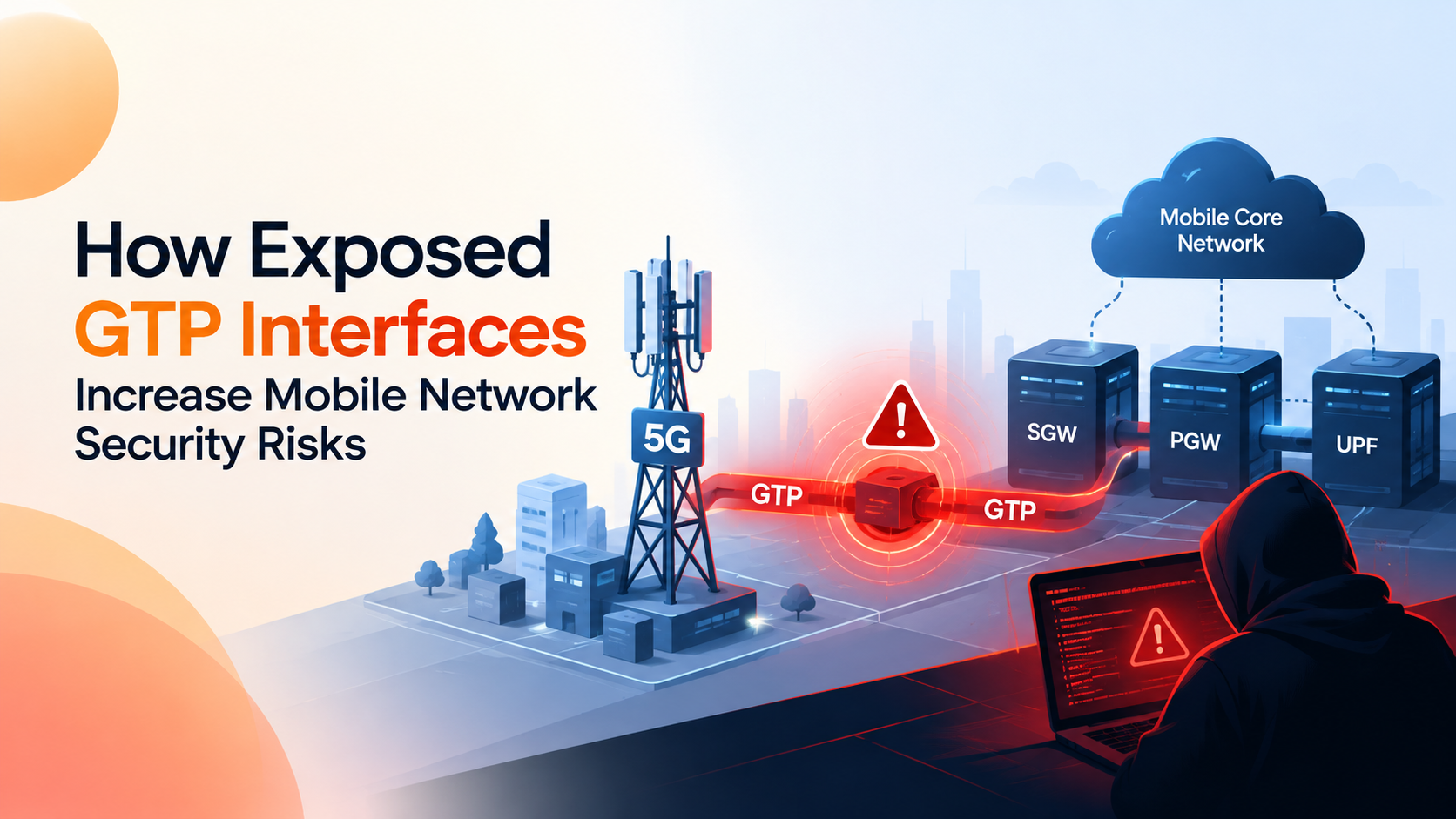

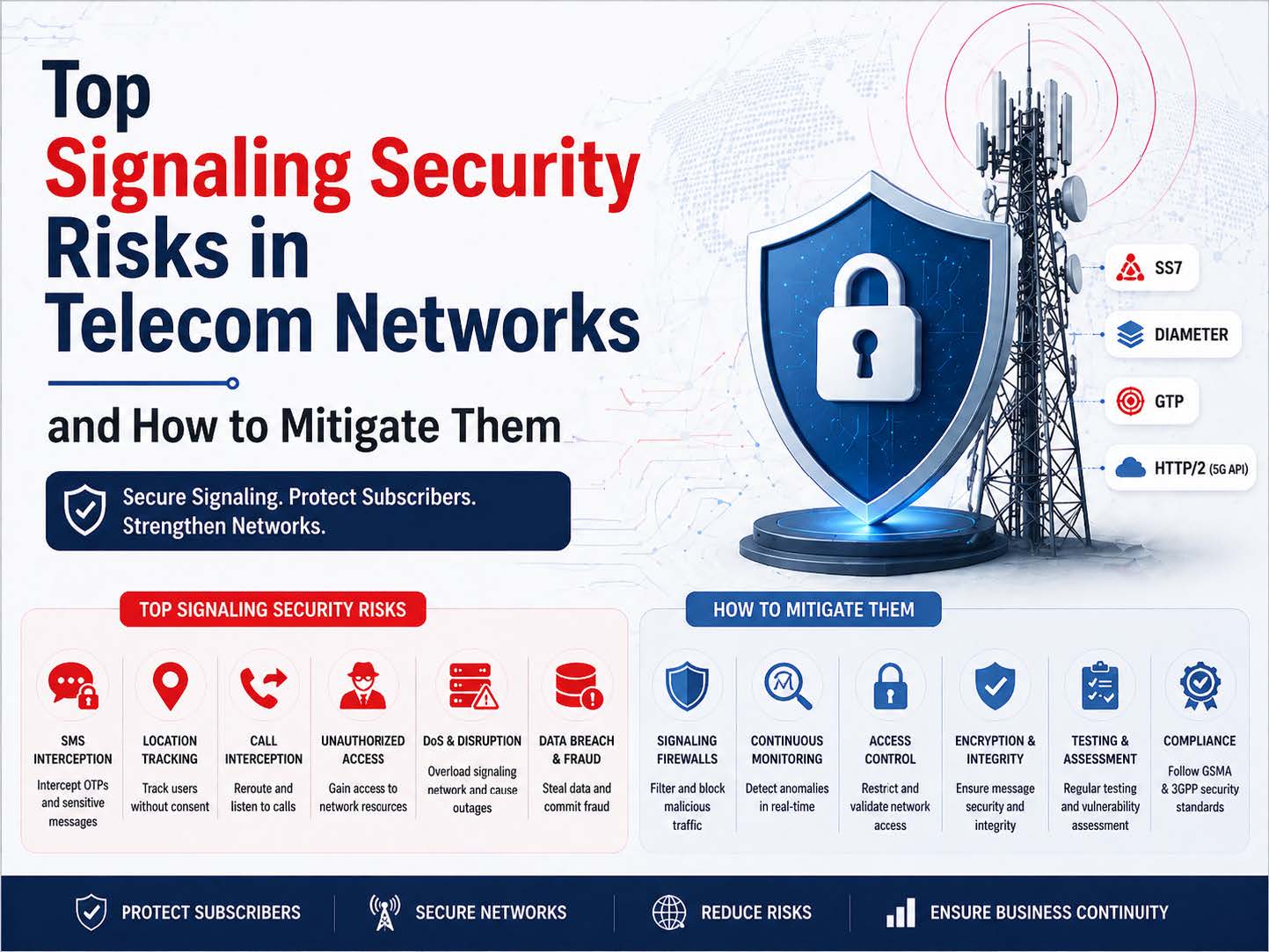
Mobile network operators rely on the GPRS Tunnelling Protocol (GTP) to support subscriber sessions and data communication across mobile packet-core networks. While GTP is essential to network operations, insufficiently protected interfaces can increase the risk of unauthorized signaling, service disruption, and other security incidents.
GTP interface security is therefore an important part of telecom network protection. When GTP interfaces are reachable from untrusted sources, connected to overly permissive networks, or insufficiently restricted to authorized peers, they can create opportunities for malicious activity.
Exposed GTP interfaces do not automatically indicate a vulnerability. The actual risk depends on network architecture, interface purpose, access controls, protocol validation, and monitoring capabilities. This article explains how GTP network exposure increases risk and how telecom operators can strengthen interface security.
GTP is used in mobile packet-core networks to manage and transport subscriber data sessions. In 4G LTE, GTP control-plane signaling supports session and tunnel management, while GTP user-plane traffic carries subscriber data.
GTP interface security involves protecting the interfaces that carry this traffic by controlling connectivity, verifying authorized peers, validating messages, and monitoring suspicious activity.
Security requirements differ by interface and network architecture. For example, interfaces used for communication between internal network elements have different trust boundaries from interfaces connecting operator networks or roaming partners.
Effective protection requires operators to understand which interfaces exist, why they are reachable, which systems should communicate with them, and what controls are enforced at each boundary.
When a GTP interface is reachable from an untrusted network, an attacker may be able to send signaling traffic to the exposed endpoint. Whether that traffic can be processed successfully depends on the interface, the receiving network element, and its security controls.
If peer restrictions or message validation are insufficient, unauthorized requests may reach functions responsible for managing subscriber sessions.
Potential risk: Unauthorized signaling attempts, suspicious session-management activity, and increased exposure to GTP-based attacks.
Recommended control: Restrict connectivity to approved peers, enforce appropriate source-address controls, and validate incoming messages against expected network context.
Every unnecessary reachable endpoint, permissive routing rule, or poorly controlled interconnection can increase the network's attack surface.
The GTP attack surface includes the interfaces, network elements, and communication paths that could be reached or influenced by an attacker. In complex telecom environments, undocumented interfaces and inconsistent policies can make this surface difficult to manage.
Potential risk: Additional opportunities for reconnaissance, unauthorized traffic, and attempts to exploit GTP protocol vulnerabilities.
Recommended control: Maintain an accurate inventory of GTP interfaces, document their purpose and ownership, remove unnecessary exposure, and periodically review network connectivity.
Mobile operators often exchange traffic with roaming partners and other external networks. These connections introduce trust boundaries that must be carefully managed.
If external traffic is allowed to reach sensitive interfaces without appropriate filtering and validation, the operator may have less control over which messages reach internal network functions.
Potential risk: Increased exposure to telecom signaling attacks and malicious or unexpected traffic entering through interconnection points.
Recommended control: Define explicit interconnection policies, restrict communication to authorized peers, apply appropriate filtering at network boundaries, and review policies whenever partner connectivity changes.
Some GTP security risks involve attempts to manipulate session-related signaling or tunnel information. Exposed interfaces can increase opportunities to test whether a network element accepts unauthorized or unexpected requests.
However, exposure alone does not establish that GTP session hijacking is possible. Such activity depends on exploitable weaknesses, attacker access, message handling, and the protections applied to session management.
Potential risk: Depending on the weakness, unauthorized session changes or disruption to subscriber connectivity.
Recommended control: Validate session context and relevant message parameters, restrict access to authorized peers, and monitor unusual session-state changes.
An exposed interface may receive excessive or malformed traffic that places additional demand on network resources. If message processing or traffic controls are inadequate, the resulting load may affect signaling performance or session-management functions.
GTP denial-of-service attacks are not inevitable whenever an interface is reachable. Their feasibility depends on capacity, implementation behavior, exposure, and defensive controls.
Potential risk: Increased signaling latency, resource exhaustion, or degraded subscriber services.
Recommended control: Implement suitable rate controls, monitor signaling volumes, validate messages, and establish procedures for investigating abnormal traffic while protecting legitimate services.
A structured review can help operators understand where GTP interfaces are reachable and whether that exposure is justified.
Identify relevant GTP endpoints, associated network elements, interface purposes, routing paths, and connected peers. Compare the inventory with approved architecture and configuration records.
Determine whether interfaces are reachable from external networks, roaming interconnections, or other segments that do not require access. Investigate unexpected routes, permissive firewall rules, and undocumented connectivity.
Check whether only approved systems can communicate with each interface. Review source-address restrictions, peer allowlists, segmentation, and other applicable access controls.
Within an authorized assessment scope, evaluate how network elements handle unexpected or unauthorized signaling messages. Confirm that filtering rules are appropriate for the interface and that invalid traffic is handled safely.
Review whether monitoring can identify unusual signaling volumes, unexpected peers, repeated validation failures, and suspicious session events. Ensure that findings can be investigated and escalated appropriately.
A GTP vulnerability assessment can combine these checks to identify weaknesses, evaluate their potential impact, and recommend remediation.
Telecom operators should apply a layered approach to managing GTP security vulnerabilities and mobile core network vulnerabilities.
These measures should be tailored to the operator's architecture and operational requirements. Overly restrictive controls can disrupt legitimate signaling, so changes should be validated and deployed through appropriate change-management procedures.
A telecom network security assessment helps operators determine whether their GTP interfaces are exposed appropriately and whether existing controls are effective.
Rather than focusing only on individual protocol weaknesses, an assessment examines the relationship between interface exposure, trust boundaries, peer authorization, filtering, and monitoring. It can also help prioritize remediation according to technical severity, exploitability, and potential business impact.
Matrix Shell Technologies provides Signaling Security Testing as a relevant service area for organizations evaluating signaling security. A properly scoped assessment can help operators identify unnecessary exposure, strengthen interface controls, and improve mobile core network resilience.
Exposed GTP interfaces can increase mobile network security risks by expanding the attack surface and creating opportunities for unauthorized signaling, session-related abuse, or denial-of-service activity. The level of risk depends on interface reachability, peer restrictions, message validation, filtering, and monitoring.
By mapping interfaces, enforcing network boundaries, validating authorized peers, and regularly assessing security controls, telecom operators can reduce unnecessary exposure and strengthen GTP interface security.