Blog
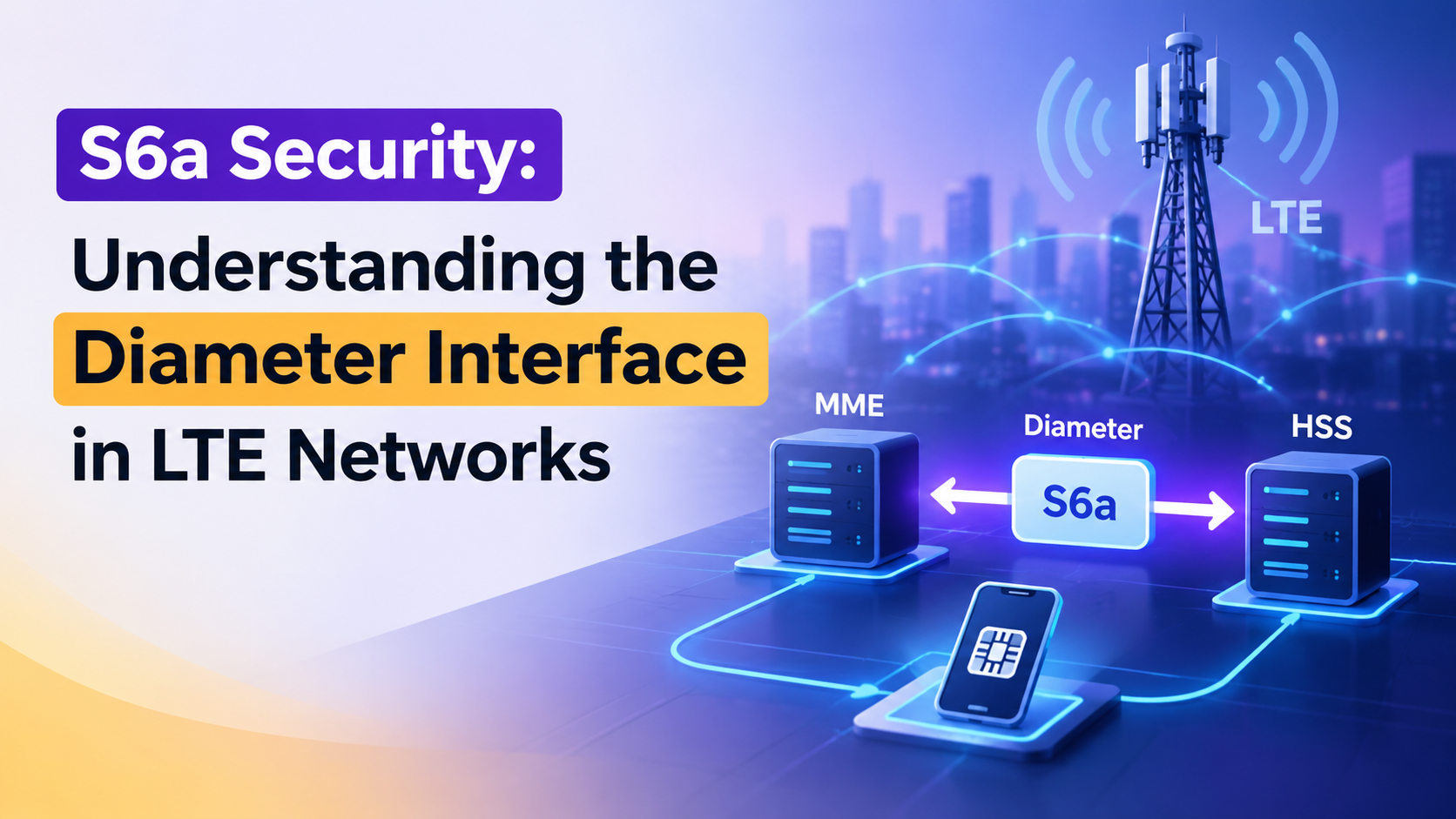

The S6a interface is one of the important signaling interfaces in 4G/LTE networks. It connects the Mobility Management Entity (MME) with the Home Subscriber Server (HSS) and supports critical functions such as subscriber authentication, authorization, subscription-data retrieval, and mobility-related procedures.
Because S6a uses the Diameter protocol, weaknesses in the interface can introduce broader signaling-security risks.
This makes S6a security an important part of LTE network protection.
A comprehensive approach to S6a Diameter security should consider peer authentication, authorization, transport protection, message validation, subscriber-data protection, monitoring, and resilience against abnormal signaling.
S6a is a Diameter-based interface between the MME and HSS in an LTE/Evolved Packet System (EPS) network.
At a simplified level:
UE → eNodeB → MME → S6a → HSS
The MME manages mobility and access-related functions, while the HSS maintains subscriber-related information used by the LTE core.
Through S6a, the MME can obtain information required for subscriber authentication and network access.
The interface can support procedures involving:
GSMA documentation describes S6a as the interface between the HSS and MME for transferring subscription and authentication data, using Diameter as the protocol.
S6a security refers to the controls and practices used to protect signaling exchanged across the S6a interface.
The objective is to ensure that:
S6a Diameter security therefore involves both Diameter-level controls and the security architecture surrounding the MME and HSS.
S6a sits at an important point in the LTE control plane.
If an attacker gains unauthorized access to S6a signaling, the potential consequences depend on the network architecture and security controls but may include:
This means S6a should not be treated simply as another network interface.
Its security should be evaluated in the context of MME HSS security, Diameter peer relationships, subscriber-data protection, and the wider LTE signaling architecture.
The term S6a vulnerabilities covers a range of potential weaknesses rather than one specific flaw.
S6a communication should be limited to authorized Diameter peers.
Security controls should verify:
Weak authentication can increase the risk of unauthorized signaling.
Authentication and authorization are different.
Even after a peer has successfully authenticated, the network should determine whether it is actually authorized to perform the requested role or application.
RFC 6733 requires Diameter peers to verify that other peers are authorized to act in their claimed roles.
For S6a Diameter security, operators should therefore verify both identity and permissions.
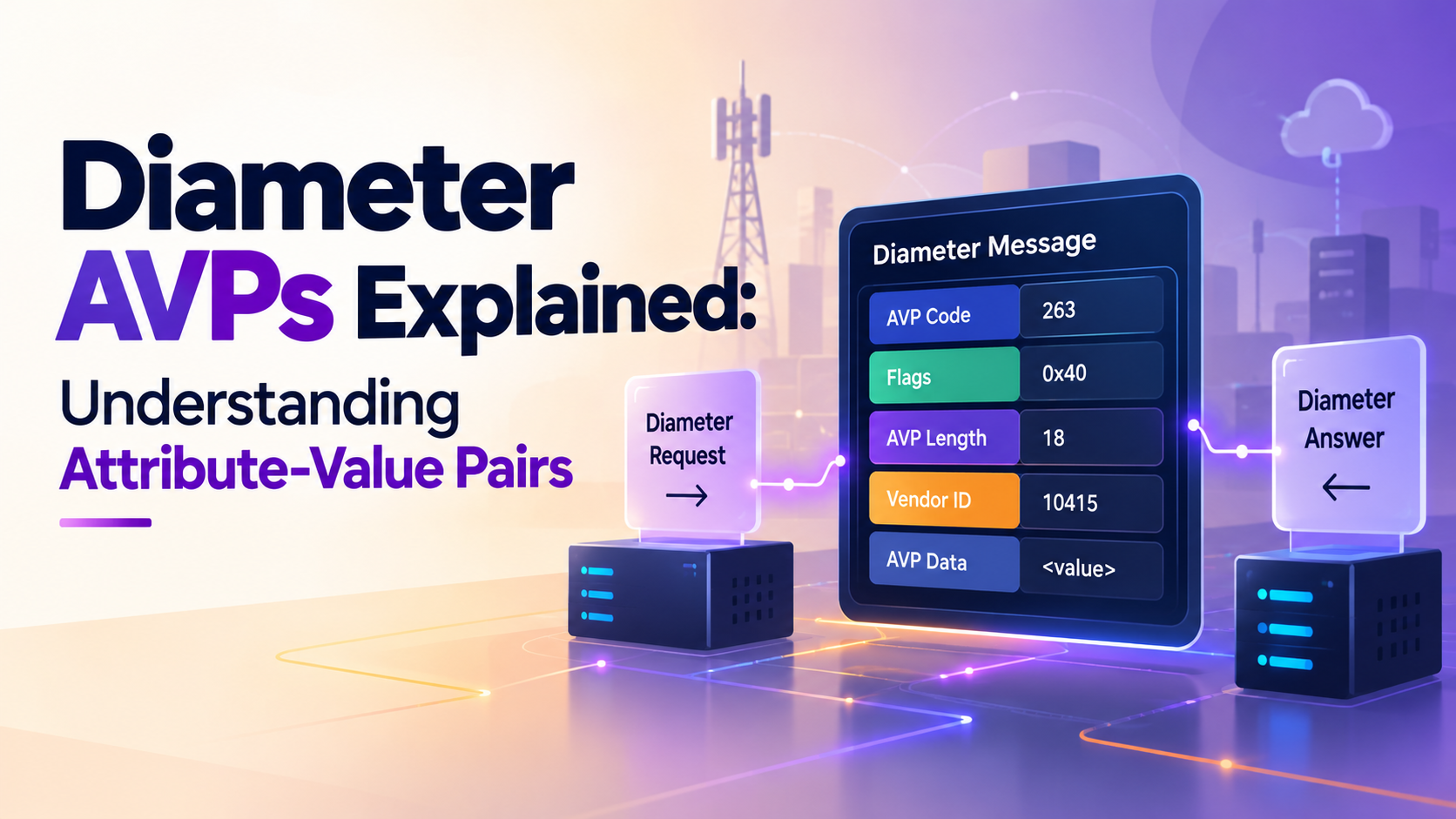
S6a uses Diameter messages containing Attribute-Value Pairs (AVPs).
These can carry information related to subscriber and authentication procedures.
S6a security testing should therefore examine how network elements handle:
The goal is to ensure that malformed or unauthorized signaling is rejected safely.
S6a signaling can involve sensitive subscriber-related information.
Weak access controls or inappropriate message handling could create opportunities for unauthorized information access.
An S6a security assessment should determine:
This makes subscriber-data protection an important part of MME HSS security.
Authentication is one of the core purposes of S6a.
Security testing should therefore evaluate whether unauthorized systems can influence authentication-related procedures.
Relevant checks can include:
The objective is to ensure that authentication functions cannot be improperly accessed through unauthorized signaling.
S6a supports mobility-related signaling between the MME and HSS.
Consequently, weaknesses can potentially create risks involving:
The actual exposure depends on the operator's architecture and implementation.
An S6a security assessment should therefore consider both signaling integrity and subscriber privacy.
S6a vulnerabilities can also involve Diameter peer spoofing.
An unauthorized system may attempt to appear as a legitimate MME, HSS, or other trusted Diameter entity.
Controls should therefore validate:
This is particularly important where Diameter signaling passes through intermediaries or interconnected environments.
An important category of S6a risks relates to availability.
Excessive, malformed, or unauthorized Diameter requests could potentially consume resources on the MME, HSS, or associated signaling infrastructure.
An S6a testing engagement can assess:
Testing should be carefully controlled to avoid disrupting production subscribers.
S6a security testing is the process of evaluating the security controls protecting the S6a interface and its associated Diameter signaling.
A comprehensive assessment can include:
Architecture Review
Identify MME, HSS, Diameter peers, routing paths, and trust boundaries.
Configuration Review
Assess peer authentication, authorization, transport protection, access controls, and filtering.
Message Testing
Validate Diameter headers, commands, Application IDs, and AVPs.
Access-Control Testing
Determine whether unauthorized systems can access S6a functions.
Vulnerability Assessment
Identify configuration, implementation, and security-control weaknesses.
Controlled Penetration Testing
Validate selected weaknesses using approved test scenarios.
A practical S6a security assessment should examine several layers.
S6a security cannot be separated completely from broader Diameter security testing.
Diameter provides the underlying signaling framework, while S6a defines how Diameter is used for LTE mobility and subscriber-related procedures.
Therefore, operators should consider both:
Diameter Security
→ Peer authentication
→ Transport protection
→ Message validation
→ Routing
→ Authorization
S6a Security
→ MME-HSS communication
→ Subscriber authentication
→ Subscription information
→ Mobility procedures
→ S6a-specific application behavior
This layered approach provides better visibility into the actual security posture of the LTE signaling environment.
Telecom operators should consider the following practices:
1. Restrict S6a Connectivity
Only approved MME and HSS systems should be able to establish S6a communication.
2. Strengthen Peer Authentication
Use appropriate authentication and certificate controls.
3. Enforce Authorization
Verify that authenticated peers are actually authorized to perform required functions.
4. Protect Diameter Transport
RFC 6733 states that Diameter must not be used without TLS, DTLS, or IPsec protection.
5. Validate Messages and AVPs
Reject unexpected or malformed signaling.
6. Protect Subscriber Information
Apply appropriate access restrictions and monitoring around sensitive information.
7. Monitor Abnormal Signaling
Track unexpected requests, peer connections, errors, and unusual traffic volumes.
8. Perform Regular Testing
Combine vulnerability assessment, security assessment, and controlled penetration testing.
Before completing an assessment, operators can ask:
This checklist can be adapted to the operator's specific LTE architecture.
S6a security is a critical component of LTE signaling security because the interface connects the MME and HSS and supports subscriber authentication, authorization, subscription-data exchange, and mobility-related procedures.
The key S6a risks include weak peer authentication, insufficient authorization, message-validation weaknesses, subscriber-information exposure, spoofing, abnormal signaling, and denial-of-service conditions.
A mature S6a security assessment should therefore go beyond checking whether the interface is operational. It should evaluate S6a Diameter security, MME HSS security, peer relationships, transport protection, message validation, access controls, monitoring, S6a vulnerabilities, and resilience against relevant attack scenarios.
Combining S6a security testing with broader Diameter security testing provides a more complete view of the LTE signaling security posture.
Recommended internal links
For the final published version, I recommend:
Recommended SEO journey:
S6a Security → S6a Vulnerabilities → Diameter Security Testing → Commercial Service
I have kept these as anchor recommendations because the exact Matrix Shell URLs were not provided.