Blog


Diameter is a critical signaling protocol used across 4G/LTE networks for authentication, subscriber management, mobility, policy control, charging, and roaming. As Diameter networks become increasingly interconnected, operators need effective controls to protect signaling traffic from unauthorized access and malicious activity.
A Diameter firewall is one of the key security controls used to protect Diameter signaling. It sits between trusted and external or less-trusted network environments and applies policies to determine which Diameter traffic should be allowed, rejected, or monitored.
But a firewall alone does not provide complete protection. Effective Diameter firewall security requires appropriate filtering policies, peer controls, message validation, routing restrictions, and Diameter security monitoring.
This guide explains what a Diameter firewall is, how it works, what it protects, and how operators can incorporate it into their broader Diameter security best practices.
A Diameter firewall is a security control designed specifically to inspect, filter, and manage Diameter signaling traffic.
Unlike a traditional IP firewall that primarily evaluates network-level information such as IP addresses and ports, a Diameter firewall can understand Diameter signaling and apply policies based on Diameter-specific information.
Depending on its capabilities, a Diameter firewall may inspect:
This application-aware approach allows operators to control Diameter traffic more precisely.
Diameter was originally designed for communication between trusted network elements. However, modern telecom networks are connected to multiple external environments.
Diameter signaling may pass through:
These connections increase the potential attack surface.
Without appropriate controls, malicious or incorrectly configured Diameter traffic could potentially reach sensitive network functions.
Potential risks include:
A Diameter firewall provides a policy enforcement point between these environments.
A simplified Diameter firewall workflow looks like this:
Incoming Diameter Traffic
↓
Peer Identification
↓
Message & Application Inspection
↓
AVP / Policy Validation
↓
Security Rules
↓
Allow / Reject / Monitor
↓
Destination Diameter Node
The exact implementation varies between network environments, but the basic objective remains the same: inspect Diameter signaling and enforce security policies before traffic reaches protected network elements.
The firewall first determines where Diameter traffic is coming from.
It can evaluate information associated with the Diameter connection and signaling environment to determine whether the source is an authorized peer.
For example, an operator may maintain an approved list of Diameter peers associated with specific network functions or roaming relationships.
Traffic from an unknown or unauthorized peer can then be rejected or flagged.
Diameter supports multiple applications and interfaces.
A firewall can apply policies based on the type of Diameter traffic being exchanged.
For example, policies may distinguish between traffic associated with:
This allows operators to apply different controls depending on the purpose of the signaling traffic.
Diameter messages contain Attribute-Value Pairs (AVPs), which carry information used by Diameter applications.
A Diameter firewall may inspect selected AVPs and enforce rules based on their values or combinations.
This is important because an attack may not necessarily involve an invalid network connection. A malicious request can originate from a seemingly legitimate peer while containing unexpected or unauthorized signaling information.
AVP-aware inspection can therefore provide an additional layer of protection.
Message filtering is a core function of Diameter firewall security.
Operators can establish policies that determine which Diameter messages should be permitted.
Depending on the implementation, filtering can consider:
The objective is to prevent unnecessary or unauthorized signaling from reaching protected network functions.
Diameter routing is another important security consideration.
A firewall can help enforce routing policies so that traffic is forwarded only toward authorized destinations.
This can reduce the risk of:
Routing controls are especially important when Diameter traffic crosses roaming or interconnect environments.
Deploying a Diameter firewall is only the beginning. Operators should follow several Diameter security best practices to make the control effective.
1. Maintain an Authorized Peer List
Document all approved Diameter peers and regularly review the list.
Remove obsolete peers and investigate unexpected connection attempts.
2. Apply Least-Privilege Policies
A peer should receive only the access required for its intended Diameter application and function.
Avoid unnecessarily broad permissions.
3. Validate Diameter Messages
Implement appropriate validation for Diameter commands, AVPs, applications, and routing information.
4. Restrict Unnecessary Traffic
Only required Diameter applications, commands, and destinations should be permitted across security boundaries.
5. Protect External Interfaces
Apply stronger controls to roaming and interconnect-facing Diameter traffic because it may originate outside the operator's direct administrative environment.
6. Review Firewall Rules Regularly
Network architecture changes over time. New peers, applications, roaming relationships, and network functions can make existing firewall policies outdated.
Regular rule reviews help prevent unnecessary access.
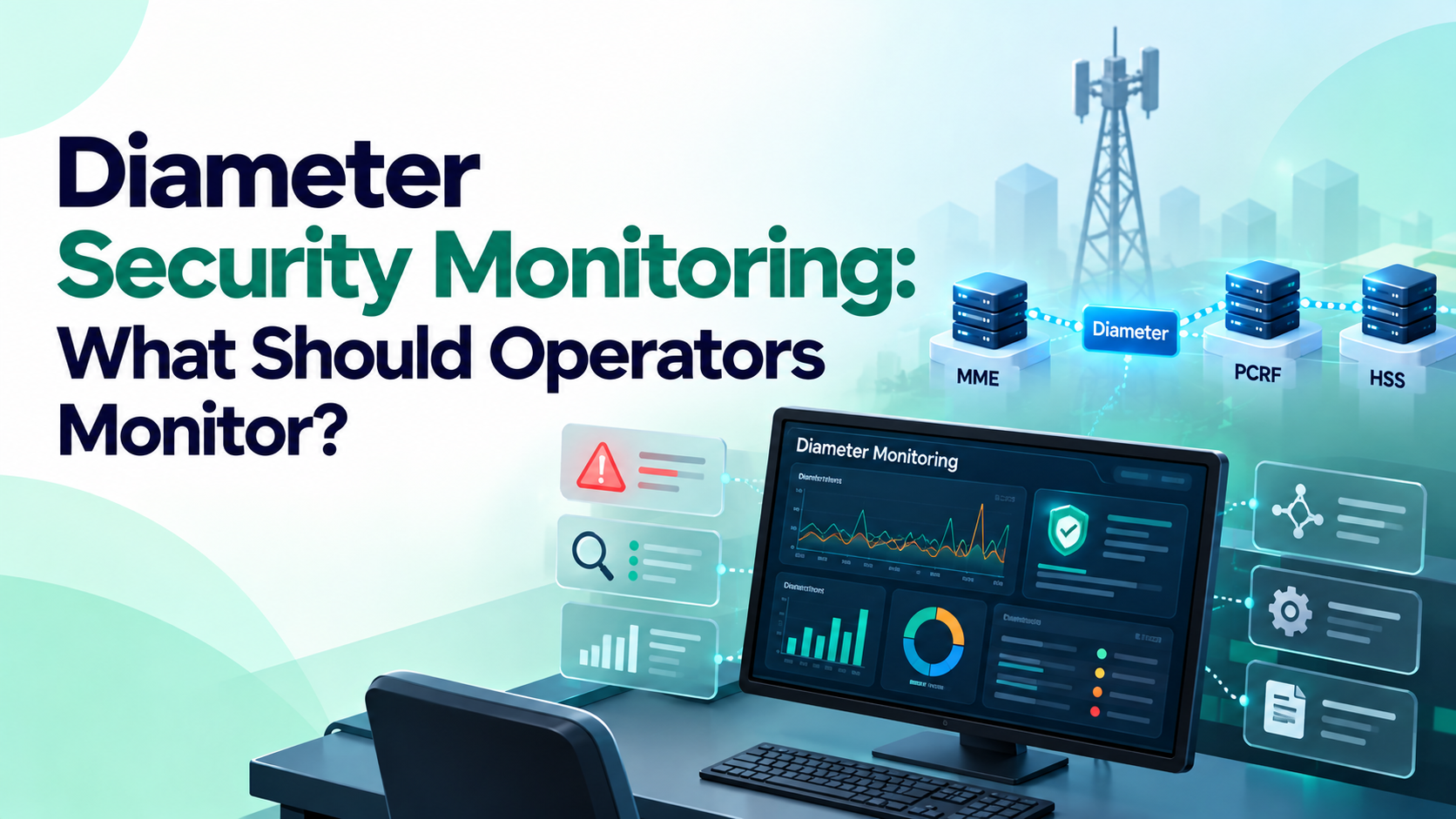
A firewall becomes significantly more useful when combined with Diameter security monitoring.
Monitoring provides visibility into what is happening across the Diameter environment.
Security teams should monitor events such as:
Monitoring can help operators identify both attacks and operational problems.
For example, a sudden increase in Diameter requests from a normally low-volume peer may indicate a configuration problem, traffic anomaly, or potential denial-of-service attempt.
A Diameter firewall and a traditional network firewall serve different purposes.
A traditional firewall can still be an important part of network security, but it does not replace application-aware Diameter security controls.
Operators should not assume that firewall policies work correctly simply because they have been configured.
Regular security testing can validate whether the firewall properly enforces its policies.
Testing may examine:
Testing should be performed in a controlled environment or using approved test subscribers and systems to prevent disruption to live users.
A mature Diameter security architecture uses multiple layers:
Diameter Firewall
Prevents or filters unauthorized traffic.
↓
Diameter Security Monitoring
Detects abnormal activity and security events.
↓
Diameter Security Testing
Validates whether security controls work as expected.
↓
Continuous Improvement
Updates policies based on findings, network changes, and emerging risks.
This layered model is stronger than relying on any single security control.
A Diameter firewall is an important component of a telecom operator's signaling security architecture. Its value comes from its ability to understand Diameter traffic and enforce policies beyond basic IP and port filtering.
Effective Diameter firewall security requires more than simply deploying the technology. Operators should carefully manage peers, applications, messages, AVPs, routing, and access policies while regularly reviewing and testing those controls.
At the same time, Diameter security monitoring provides the visibility required to detect unusual signaling activity and investigate potential threats.
By combining a properly configured Diameter firewall with strong Diameter security best practices, continuous monitoring, and regular security testing, telecom operators can build a more resilient and controlled Diameter signaling environment.