Blog

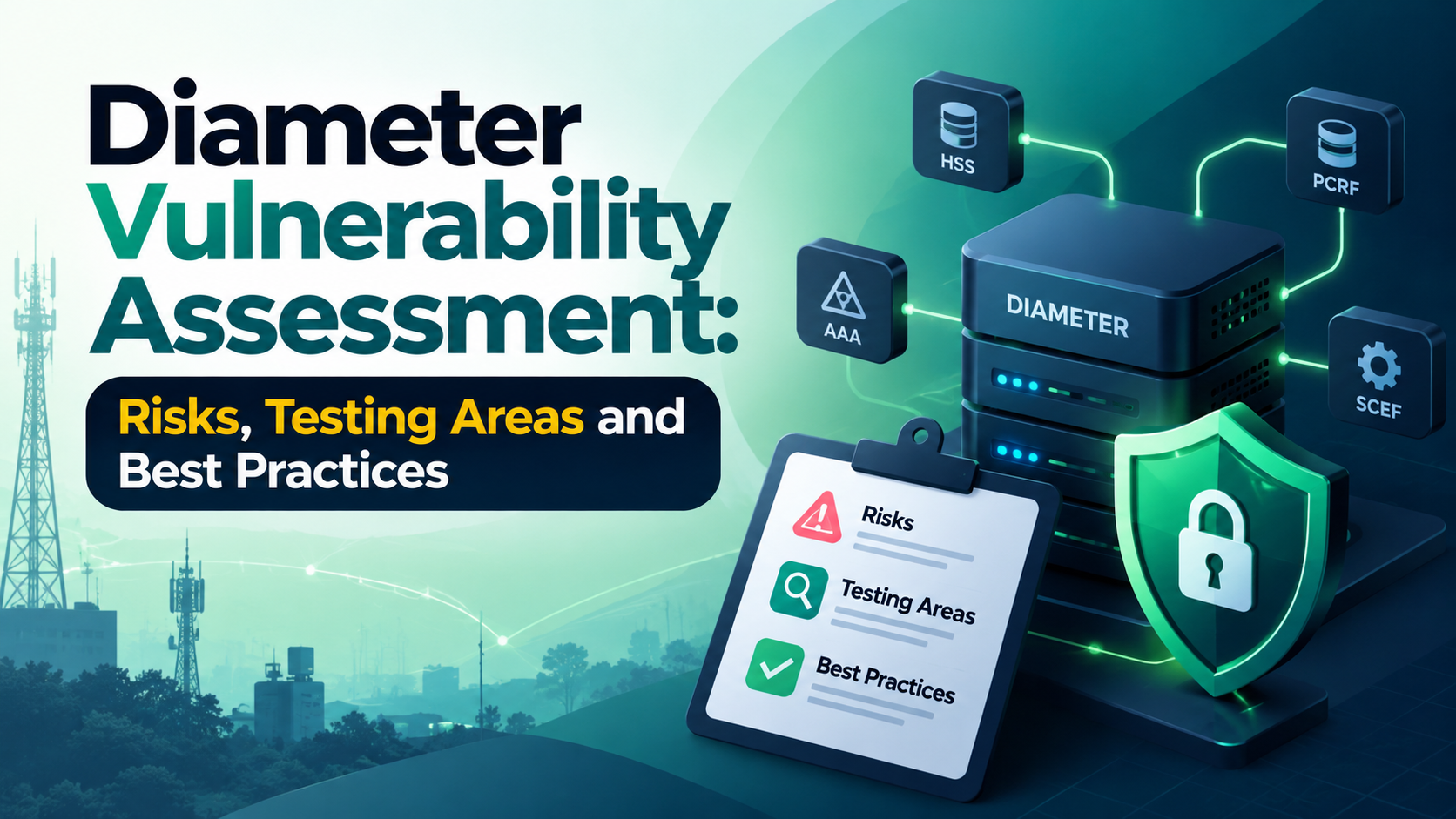
Diameter signaling plays a critical role in 4G/LTE networks. It supports authentication, subscriber management, mobility, policy control, charging, and communication between different network functions.
Because Diameter traffic can carry sensitive signaling and subscriber information, protecting the protocol requires more than preventive controls such as firewalls and access restrictions. Telecom operators also need continuous visibility into what is happening across their Diameter environment.
This is where Diameter security monitoring becomes important.
Effective monitoring helps operators identify unusual signaling behavior, unauthorized peers, unexpected messages, routing anomalies, excessive traffic, and potential attacks before they become larger security or availability issues.
This guide explains what operators should monitor, how Diameter firewall security contributes to monitoring, and the Diameter security best practices that can help build a stronger monitoring strategy.
Diameter networks often operate across complex environments involving:
This creates multiple points where abnormal activity can occur.
Potential risks include:
A Diameter firewall can prevent or filter unwanted traffic, but monitoring helps operators understand what is happening across both allowed and rejected traffic.
A comprehensive Diameter monitoring strategy should cover several layers of the signaling environment.
Operators should continuously monitor Diameter peer connections.
Important indicators include:
An unauthorized peer attempting to establish repeated connections should trigger investigation.
Maintaining an accurate inventory of authorized peers is therefore one of the fundamental Diameter security best practices.
Signaling volume provides important security and operational information.
Operators should monitor:
A sudden increase in Diameter traffic may indicate a network problem, configuration issue, unusual subscriber activity, or a potential signaling flood.
Baseline traffic levels can help security teams distinguish normal peaks from abnormal behavior.
Monitoring Diameter commands can help identify unexpected signaling activity.
Operators should understand which commands are normally exchanged by each Diameter application and monitor for:
This becomes particularly important when external or roaming peers are involved.
Diameter messages contain Attribute-Value Pairs (AVPs), which carry information used by Diameter applications.
Monitoring selected AVPs can help identify suspicious or unexpected behavior.
Depending on the network architecture, operators may monitor:
Monitoring should focus on meaningful deviations rather than attempting to alert on every individual AVP change.
Authentication signaling deserves particular attention because it directly relates to subscriber access.
Operators should monitor for:
Unusual authentication activity may indicate misconfiguration, abuse, or an attempted attack.
Diameter routing information can provide useful security signals.
Operators should monitor:
Unexpected routing behavior can indicate configuration problems or attempts to access network elements outside the intended signaling path.
Diameter firewall security should not operate without visibility.
Operators should monitor firewall events such as:
Repeated firewall blocks from the same source can be an important indicator of attempted abuse.
At the same time, a sudden increase in legitimate traffic being blocked could indicate an incorrect firewall policy or a network configuration change.
Diameter result codes provide information about how requests are being processed.
Operators should monitor:
A high error rate may indicate a network issue, but it can also provide an early indication of malicious or malformed signaling activity.
Diameter networks can be affected by excessive signaling traffic.
Monitoring should therefore look for:
Operators can combine traffic thresholds with other indicators to improve detection accuracy.
External Diameter relationships deserve additional monitoring because they cross organizational boundaries.
Operators should monitor:
An established roaming relationship should not mean that all traffic from that relationship is automatically considered safe.
A Diameter firewall and monitoring platform serve complementary purposes.
For example:
Diameter Traffic → Firewall → Monitoring → Alert → Investigation → Response
The firewall can block traffic that violates predefined policies, while monitoring can identify trends and behaviors that may not immediately violate a single firewall rule.
A strong monitoring strategy should follow several Diameter security best practices.
Establish Traffic Baselines
Understand normal traffic volumes, peer behavior, applications, and signaling patterns before defining anomaly thresholds.
Monitor by Peer
Analyze traffic separately for different Diameter peers rather than relying only on overall network statistics.
Monitor by Application
Different Diameter applications have different expected behaviors. Monitoring should therefore consider the application associated with the traffic.
Prioritize High-Risk Events
Not every event requires an immediate alert. Prioritize unauthorized peers, abnormal traffic spikes, repeated authentication failures, unexpected routing, and significant firewall violations.
Correlate Multiple Signals
A single unusual request may not indicate an attack. Multiple indicators occurring together can provide stronger evidence.
For example:
New peer + signaling spike + repeated rejected requests = higher-risk event
Review Monitoring Rules Regularly
Network architecture and traffic patterns change over time. Monitoring rules should therefore be reviewed whenever new peers, applications, interfaces, or interconnect relationships are introduced.
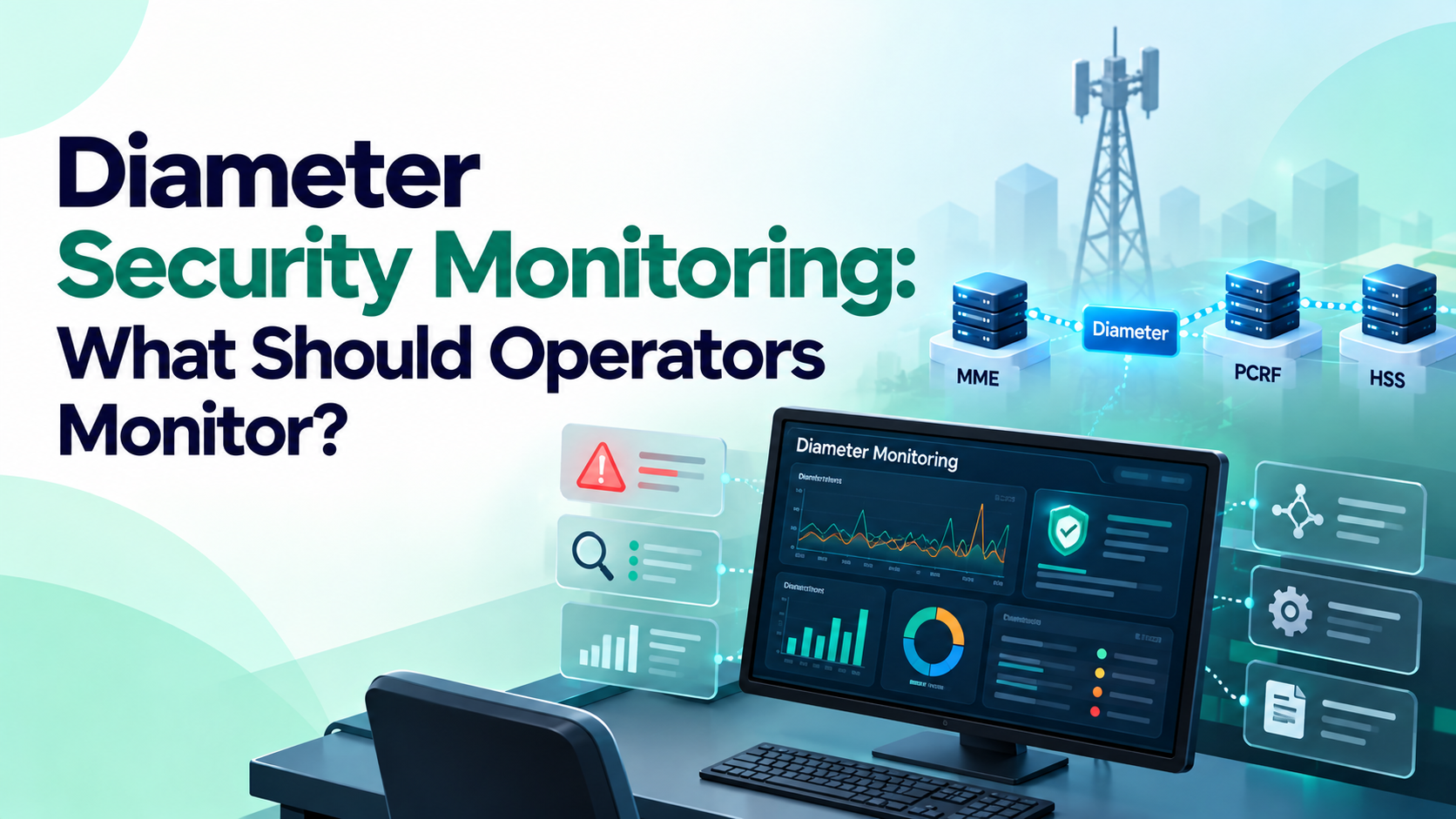
A practical monitoring dashboard could include:
This gives network and security teams a consolidated view of Diameter activity.
Monitoring identifies activity; security testing validates whether security controls can withstand specific scenarios.
A Diameter security assessment can evaluate:
Testing should be conducted in a controlled environment or against approved test subscribers and systems to prevent disruption to live users.
| Monitoring Area | What to Monitor |
|---|---|
| Peers | New, unauthorized and failed connections |
| Traffic | Volume, trends and spikes |
| Commands | Unexpected or repeated commands |
| AVPs | Abnormal or unexpected values |
| Authentication | Failures and unusual request patterns |
| Routing | Unexpected destinations and paths |
| Firewall | Blocks, violations and rate limits |
| Errors | Result codes and transaction failures |
| DoS | Traffic floods and abnormal request rates |
| Roaming | External peer and partner behavior |
| Interconnect |