
Blog
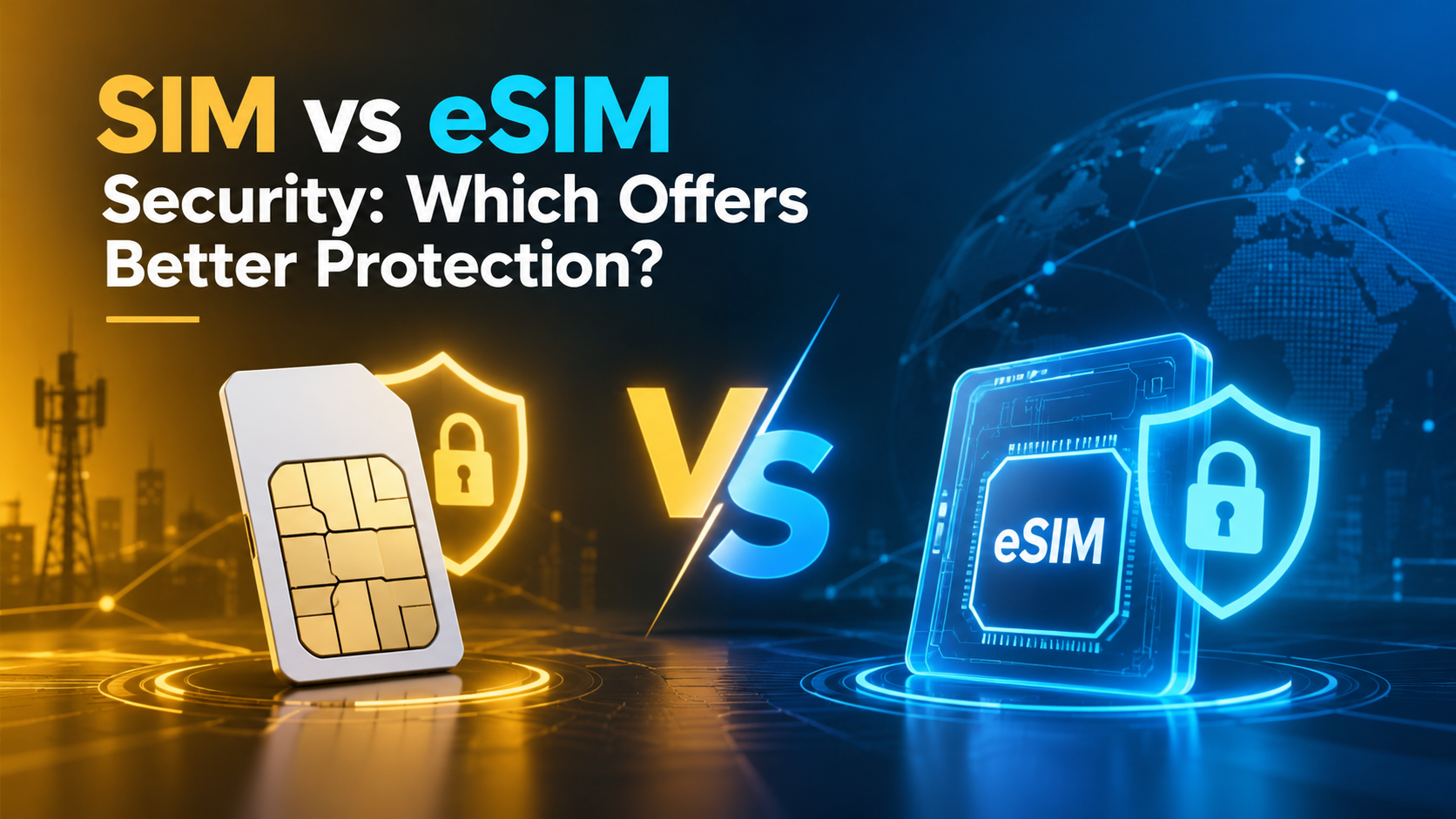

For years, the physical SIM card has been the foundation of mobile identity. Every subscriber, device, and network connection has relied on it to authenticate users and protect communications.
Today, that foundation is changing.
With the rapid adoption of eSIM technology, telecom operators are moving toward remotely provisioned subscriber identities that simplify device activation, enable IoT deployments, and support digital-first services. According to the GSMA, billions of eSIM-enabled consumer and enterprise devices are expected to be active over the coming years, making remote SIM provisioning a strategic priority for operators worldwide.
This shift naturally raises an important question:
Does eSIM provide better security than a traditional SIM card?
The answer isn't as simple as choosing one technology over another.
Both SIM and eSIM rely on strong cryptographic foundations, secure authentication, and standardized security architectures. However, they introduce different operational risks, lifecycle challenges, and attack surfaces.
For telecom operators across France, Europe, the Middle East, and Africa, understanding these differences is essential when planning secure network deployments, enterprise mobility strategies, and IoT connectivity.
This guide compares SIM vs eSIM security, explains how each technology protects subscriber identities, and highlights which approach is better suited for different telecom environments.
Key takeaway: Neither technology is inherently "more secure." The strongest protection depends on how securely it is deployed, managed, and monitored.
A traditional SIM is a removable hardware security module that stores subscriber credentials inside a tamper-resistant secure element.
Its primary responsibilities include:
Because authentication keys never leave the secure element during normal operation, the SIM has remained one of the most trusted components in telecom networks for decades.
The ETSI UICC security specifications define strict requirements for protecting subscriber credentials stored within SIM cards.
Despite these strengths, physical SIMs introduce operational limitations.
Operators still manage:
Human interaction during these processes increases the possibility of fraud or operational mistakes.
Unlike a removable SIM card, an eSIM (Embedded SIM) is permanently integrated into the device.
Instead of physically replacing cards, operators securely download and manage subscriber profiles through Remote SIM Provisioning (RSP).
This provides enormous operational flexibility while introducing a different security model.
An eSIM still stores authentication credentials within secure hardware. The difference lies in how subscriber profiles are delivered and managed.
The GSMA Remote SIM Provisioning architecture defines security controls for downloading, activating, transferring, and deleting subscriber profiles remotely.
Because management occurs remotely, operators must also secure:
These areas become part of the overall security posture.
One common misconception is that eSIM uses an entirely different authentication process.
In reality, both technologies rely on the same fundamental telecom authentication principles.
Both SIM and eSIM securely store authentication credentials inside protected hardware and participate in cryptographic challenge-response mechanisms during network registration.
The major difference lies outside the authentication itself.
Traditional SIM authentication depends on credentials loaded during manufacturing and personalization.
eSIM authentication depends on securely provisioning subscriber profiles through remote management systems before authentication begins.
Modern 3GPP 5G Authentication and Key Agreement (5G-AKA) standards support both deployment models while strengthening subscriber identity protection.
The result?
Authentication strength is nearly identical.
Operational security becomes the deciding factor.
Security isn't only about cryptography.
It's also about understanding where attackers are most likely to target the system.
Traditional SIM deployments typically face risks such as:
These attacks generally require human interaction.
eSIM significantly reduces physical risks but introduces new digital ones.
Potential attack vectors include:
Research published by ENISA emphasizes that digital identity management and cloud-native telecom architectures require stronger governance as operators increase software-defined operations.
Physical SIMs primarily face physical fraud risks.
eSIM environments primarily face remote operational risks.
Neither approach is inherently less secure.
They simply require different protection strategies.
The lifecycle of subscriber identity has become one of the biggest differences between these technologies.
A physical SIM typically follows these stages:
Each stage requires physical handling, creating additional logistical complexity.
An eSIM lifecycle is considerably more dynamic.
Subscriber profiles can be:
This flexibility makes eSIM particularly attractive for enterprise mobility, connected vehicles, and IoT deployments.
However, it also places greater importance on secure lifecycle governance and continuous monitoring.
The decision isn't about replacing one technology with another.
It's about selecting the right deployment model for the business objective.
Many operators now support both technologies simultaneously, allowing them to balance operational efficiency with subscriber flexibility.
For most telecom operators, the future isn't SIM or eSIM.
It's SIM and eSIM.
Supporting both technologies enables operators to:
The key is ensuring both environments follow consistent security principles through continuous testing, secure provisioning, strong authentication, and lifecycle governance.
A secure SIM and a secure eSIM are not competing technologies—they are complementary components of a modern telecom security strategy.
The conversation around SIM vs eSIM security often focuses on which technology is more secure.
The reality is different.
Both technologies are built on strong cryptographic foundations and standardized authentication mechanisms. The real difference lies in how they are managed throughout their lifecycle.
Traditional SIMs continue to offer proven hardware-based protection with a mature operational model, while eSIMs introduce greater flexibility, remote provisioning, and scalability for enterprise and IoT deployments.
For telecom operators, the goal should not be choosing one technology over the other. Instead, it should be implementing consistent security controls across both environments—from authentication and encryption to provisioning, lifecycle management, and continuous security testing.
Organizations that invest in proactive SIM and eSIM security today will be better prepared to protect subscriber identities, reduce fraud, support regulatory compliance, and build resilient mobile networks for the future.





