Blog
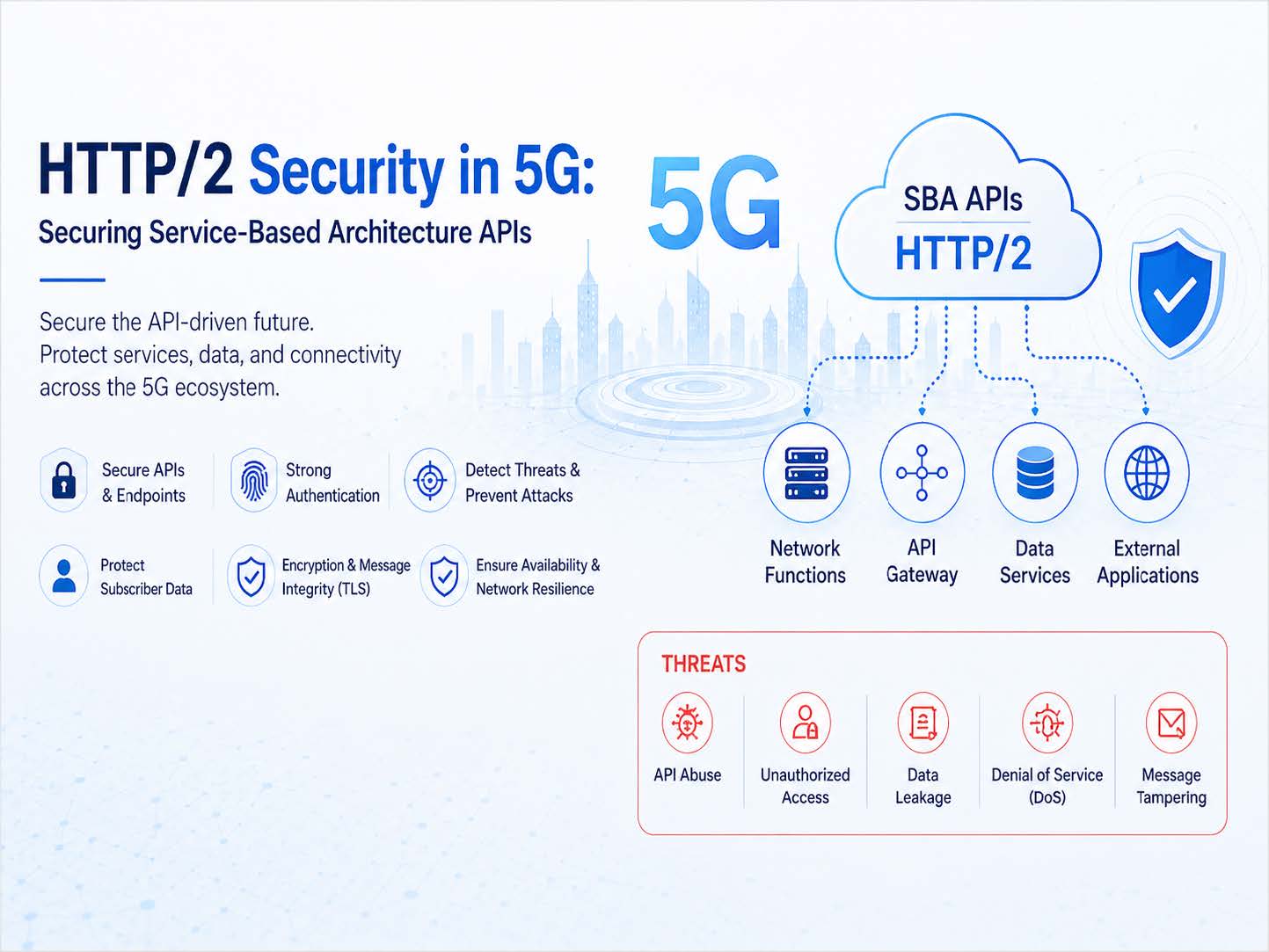
.png)
Telecom networks have gone through a major transformation. Earlier generations relied on rigid signaling protocols like SS7 and Diameter. But with 5G, things have changed. Networks are now built on Service-Based Architecture (SBA)—a model that uses APIs and web technologies to enable communication between network functions.
At the heart of this transformation is HTTP/2, the protocol powering communication between 5G core components.
While this shift brings flexibility and scalability, it also introduces a new challenge: API-driven security risks in telecom networks. This is why HTTP/2 security testing in telecom is becoming critical for ensuring mobile network signaling security in 5G environments.
In 5G, network functions (like authentication, policy control, and session management) communicate using APIs instead of traditional signaling. These APIs are built on HTTP/2, which enables:
According to ENISA, 5G's service-based architecture relies heavily on HTTP/2 and API communication, making it a key area for security validation.
Unlike legacy signaling systems, HTTP/2 introduces a web-based attack surface into telecom networks. This means telecom environments now face risks similar to:
ENISA highlights that API exposure in 5G significantly increases the attack surface, especially if authentication and validation mechanisms are weak.
If APIs are not properly secured, attackers can access sensitive network functions, bypass authentication flows, and expose subscriber data. This directly impacts subscriber data protection in telecom networks.
HTTP/2 allows multiple streams over a single connection. If misused, attackers can:
This makes telecom DoS attack prevention a critical priority.
Weak API validation can lead to unauthorized service access and manipulation of network behavior. API-based architectures require strict identity validation to prevent misuse.
If encryption is not properly implemented, data can be intercepted and messages can be altered. This affects telecom encryption and message integrity, which is critical for trust.
In traditional networks, signaling was confined to telecom protocols. In 5G, signaling moves to APIs, the control plane becomes API-driven, and network functions become interconnected services.
This means control plane security in telecom now depends on API security, HTTP/2 validation, and real-time monitoring.
Securing HTTP/2 requires a structured approach.
Operators must perform:
This is a core part of signaling protocol security testing.
Focus on:
This reduces risks in API security in 5G networks.
Real-time monitoring helps detect abnormal API behavior, identify signaling anomalies, and prevent misuse—strengthening mobile network signaling security.
Industry frameworks define API security requirements, authentication mechanisms, and compliance guidelines. ENISA emphasizes alignment with 3GPP standards for securing 5G service-based architectures.
HTTP/2 environments are dynamic. New APIs, services, and integrations are constantly introduced. API-based systems require continuous validation to prevent evolving threats and misconfigurations, making continuous telecom network security testing critical.
The shift to 5G has redefined how telecom networks operate—and how they must be secured.
With HTTP/2 at the core of service-based architecture, telecom operators must rethink security strategies to focus on APIs, authentication, and continuous validation.
By implementing proactive HTTP/2 security testing and signaling security strategies, organizations can protect their networks, ensure compliance, and build resilient 5G infrastructure.