Blog
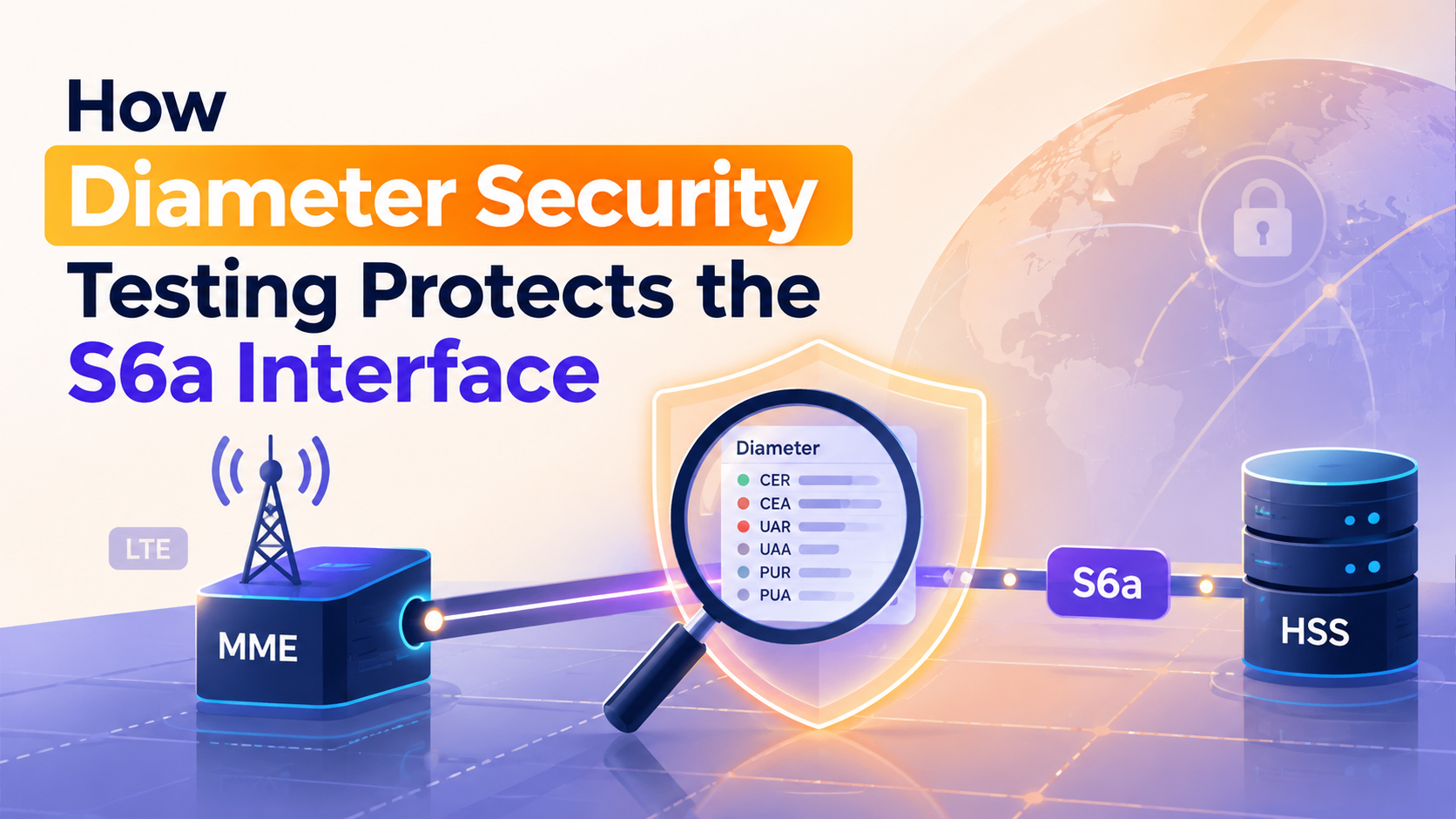

The S6a interface plays a critical role in 4G/LTE networks by enabling communication between the Mobility Management Entity (MME) and Home Subscriber Server (HSS).
This Diameter-based interface supports important network functions, including subscriber authentication, authorization, mobility management, and access to subscription-related information.
Because of its role in the LTE core, weaknesses in S6a security can create risks involving unauthorized signaling, subscriber information exposure, authentication abuse, signaling manipulation, and denial-of-service conditions.
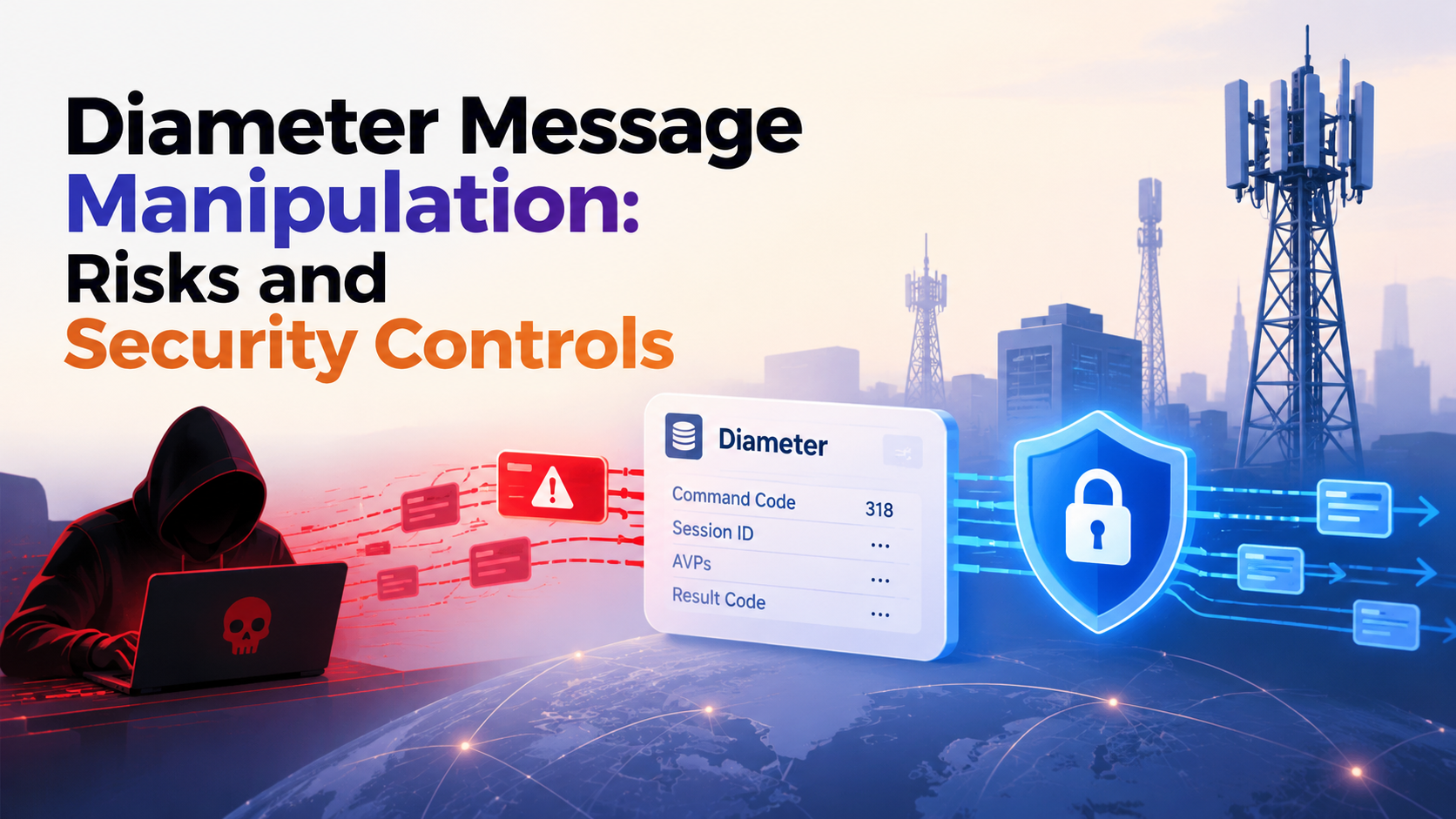
This is where Diameter security testing becomes important.
Rather than looking at S6a as only an interface configuration issue, Diameter security testing evaluates the underlying Diameter trust relationships, message handling, access controls, filtering, transport protection, and monitoring mechanisms that help secure the interface.
A well-designed testing program can help operators identify S6a vulnerabilities, validate S6a Diameter security, assess S6a risks, and strengthen overall MME HSS security.
S6a is a Diameter-based interface used for communication between the MME and HSS in LTE/Evolved Packet System networks.
At a high level:
User Equipment → Radio Access Network → MME → S6a → HSS
The MME handles mobility and access-related procedures, while the HSS maintains subscriber and authentication-related information.
The S6a interface enables these systems to exchange the signaling necessary to perform their respective functions.
This makes S6a an important security boundary within the LTE core.
A weakness in this communication path can potentially affect more than the interface itself. Depending on the architecture and controls involved, it can contribute to broader signaling and subscriber-security risks.
S6a security is important because the interface supports signaling associated with critical LTE network functions.
The security posture of S6a depends on multiple controls working together.
These include:
An operator may have some of these controls in place while still having weaknesses elsewhere.
This is why security testing should evaluate the complete S6a communication path rather than checking a single configuration setting.
S6a Diameter security refers to the mechanisms used to protect Diameter signaling exchanged between the MME and HSS.
It involves more than simply protecting the network connection.
A comprehensive security approach considers:
1. Peer Identity
Can the MME and HSS reliably identify the systems communicating with them?
2. Peer Authorization
Is a legitimate peer restricted to the signaling functions it actually needs?
3. Message Integrity
Are Diameter messages and relevant AVPs appropriately validated?
4. Transport Protection
Is signaling adequately protected during transmission?
5. Access Control
Can unauthorized systems reach the S6a environment?
6. Filtering
Can unnecessary or unauthorized Diameter traffic be blocked?
7. Monitoring
Can suspicious signaling patterns be detected and investigated?
These controls collectively contribute to S6a Diameter security.
Diameter security testing provides a structured way to evaluate whether the controls protecting S6a actually work as intended.
Instead of only reviewing documentation, testing can validate security behavior through controlled scenarios.
The testing process typically covers several key areas.
S6a communication relies on trusted Diameter relationships.
If unauthorized systems can establish or maintain Diameter connections, the security posture of the interface can be weakened.
Diameter security testing can evaluate:
The objective is to confirm that only legitimate signaling peers can communicate with the MME and HSS.
Authentication answers:
Who is the peer?
Authorization answers:
What is that peer allowed to do?
These are different security questions.
A Diameter security assessment should therefore determine whether authenticated peers have only the access and signaling permissions required for their legitimate role.
Testing may examine:
This can help identify S6a vulnerabilities caused by overly broad authorization.
Diameter messages contain structured information and AVPs used by network components.
If incoming messages are not appropriately validated, unexpected or malformed signaling may create security or availability risks.
S6a security testing can evaluate how systems handle:
The objective is to determine whether the MME and HSS process only signaling that meets the expected security and protocol requirements.
Attribute-Value Pairs carry information within Diameter messages.
Some AVPs can be particularly important from a security perspective.
Testing can therefore examine whether:
This helps identify weaknesses that may not be visible during a high-level architecture review.
Transport protection is another important component of S6a security.
Diameter security testing can review how the signaling path between MME and HSS is protected.
Assessment areas can include:
The objective is to reduce the possibility that unauthorized parties can access or interfere with S6a communication.
MME HSS security depends on appropriate restrictions around the systems communicating through S6a.
Testing can determine whether:
This helps ensure that the MME-HSS trust relationship is not broader than necessary.
Filtering provides another layer of protection.
Security teams can review whether unnecessary or unauthorized Diameter signaling can reach the MME or HSS.
Testing can validate:
Effective filtering can reduce the attack surface available to unauthorized signaling sources.
The S6a interface can carry information associated with subscribers and authentication procedures.
Diameter security testing can therefore evaluate whether access to sensitive subscriber-related information is appropriately controlled.
The assessment can examine:
This forms an important part of both S6a security assessment and MME-HSS security.
Authentication is a key function supported by S6a.
Testing should determine whether authentication-related signaling can be accessed or misused by unauthorized systems.
Security teams can evaluate:
This helps operators identify potential weaknesses before they become operational security problems.
S6a signaling can involve information associated with subscriber mobility.
Weak access controls could therefore create privacy and security concerns.
An assessment can examine:
This is an important area when assessing S6a risks.
Diameter environments must establish appropriate trust relationships between peers.
Testing can evaluate whether unauthorized systems can attempt to impersonate or present themselves as legitimate signaling entities.
Relevant testing areas include:
Spoofing should be assessed together with other peer-security controls rather than as a standalone issue.
Availability is another important part of S6a security.
Excessive or malformed Diameter signaling could potentially consume system resources or interfere with legitimate signaling.
Testing can evaluate:
Testing should be performed in a controlled environment or against dedicated test subscribers where appropriate.
A structured testing program can help identify several categories of S6a vulnerabilities.
These terms overlap, but they are not necessarily identical.
A security assessment generally evaluates the overall security posture of the S6a interface.
It may include:
Diameter security testing can include active validation of the controls identified above.
It may involve:
In practice, operators can use both approaches together.
A practical S6a testing methodology can follow these stages.
Step 1: Define Scope
Identify:
Step 2: Map the Architecture
Document:
Step 3: Review Security Configuration
Review:
Step 4: Perform Controlled Testing
Validate:
Step 5: Analyze Findings
Each finding should include:
Step 6: Remediate and Retest
After fixes are implemented, retest the relevant controls to verify that the weakness has been addressed.
A useful S6a security program should consider several risk categories.
Unauthorized Access
Unauthorized systems may attempt to access MME or HSS signaling endpoints.
Subscriber Information Exposure
Weak access controls can increase the possibility of unauthorized access to subscriber-related information.
Authentication Abuse
Unauthorized or excessive authentication-related requests can create security and availability concerns.
Signaling Manipulation
Poor message validation can increase the risk associated with unexpected or manipulated signaling.
Spoofing
Weak peer-security controls can create opportunities for unauthorized systems to present themselves as trusted entities.
Denial of Service
Excessive signaling can potentially consume resources or interfere with normal network operations.
Roaming and Interconnect Exposure
External Diameter relationships can introduce additional trust boundaries that require appropriate controls.
A layered approach is important for effective S6a security.
Restrict Diameter Peers
Maintain explicit controls over which systems can establish Diameter relationships.
Enforce Authentication and Authorization
Use both mechanisms to establish trusted and appropriately permitted peers.
Validate Messages
Check Diameter messages and relevant AVPs before processing.
Protect Transport
Apply appropriate transport and network-level security controls.
Apply Filtering
Prevent unnecessary and unauthorized signaling from reaching critical systems.
Monitor Signaling
Track authentication failures, unusual signaling patterns, unexpected peers, and other security events.
Test Regularly
Conduct S6a security testing periodically and after significant architectural, configuration, roaming, or security-control changes.
Use Controlled Test Subscribers
Where testing involves subscriber-related signaling, dedicated test subscribers can help minimize the risk of affecting live customers.
Retest Remediation
Validate that security weaknesses have actually been addressed after remediation.
S6a should be considered within the broader Diameter security architecture.
A comprehensive Diameter security testing program can extend beyond S6a to examine:
This creates a broader view of signaling security across LTE and inter-operator environments.
Telecom operators can use the following checklist as a starting point:

Case Study