Blog
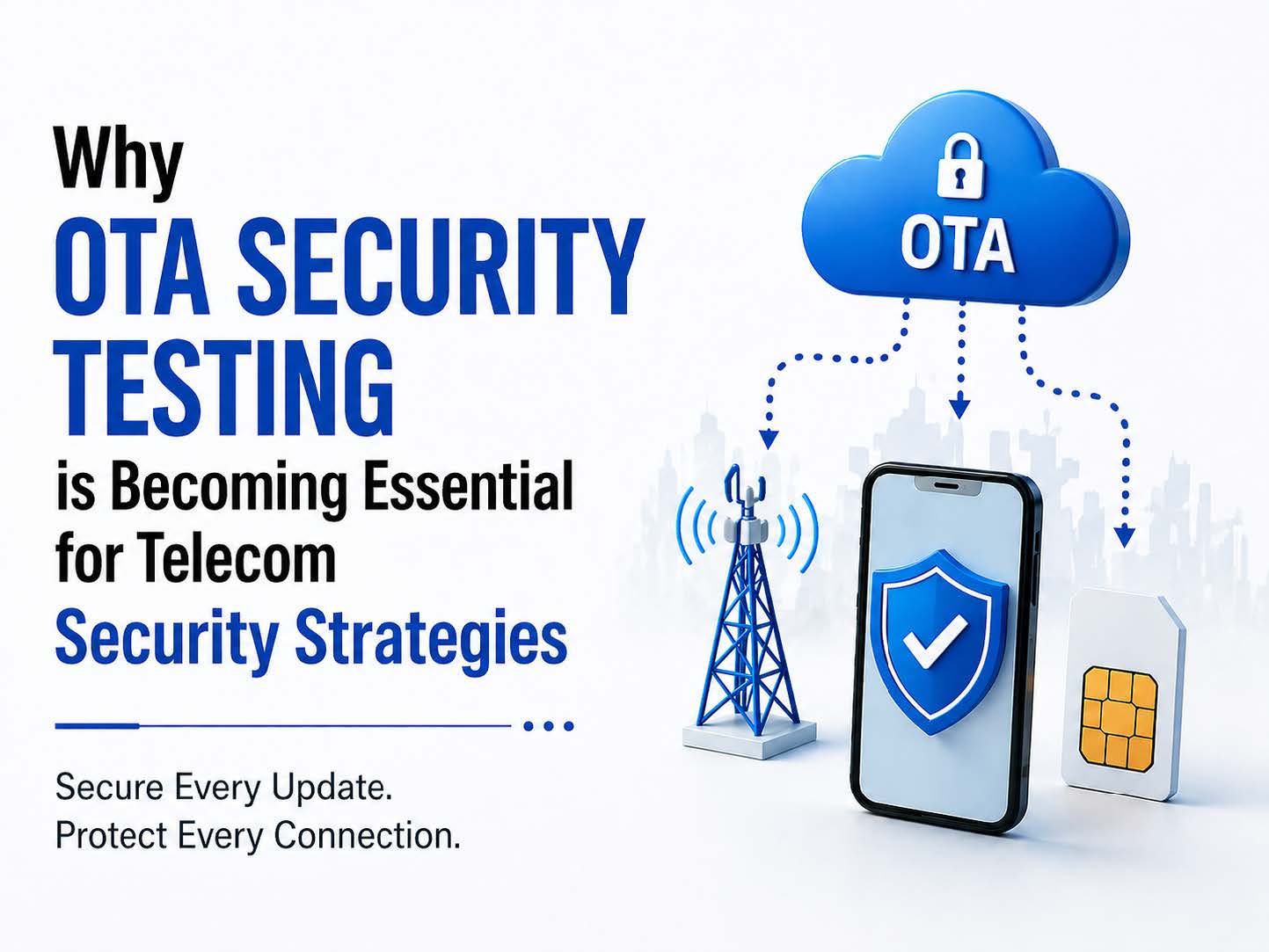
.png)
Telecom networks today are no longer static systems. They are dynamic, continuously updated environments where subscriber identities, configurations, and services are managed remotely.
At the center of this transformation lies Over-the-Air (OTA) communication—a mechanism that allows operators to update SIM and eSIM profiles without physical intervention.
While OTA improves flexibility and scalability, it also introduces one of the most critical risk layers in modern telecom infrastructure. This is why OTA security testing is rapidly becoming a core part of telecom security strategies—not just an optional layer.
OTA is responsible for:
In simple terms, OTA controls how subscriber identity systems evolve over time. OTA provisioning relies on encrypted communication channels (such as TLS) and secure authentication to prevent unauthorized access—but these mechanisms must be continuously validated to remain effective.
If OTA communication is compromised, attackers can directly interfere with mobile network authentication security.
As telecom networks adopt 5G and eSIM ecosystems, OTA has become a major attack surface.
If OTA communication is not properly secured:
ENISA highlights that OTA communication channels are critical points where security validation is required to prevent interception and misuse.
Attackers can exploit weak OTA controls to:
This directly impacts secure mobile authentication and subscriber trust.
With eSIM, OTA is tightly integrated with remote provisioning systems. If provisioning endpoints or communication channels are compromised, attackers can manipulate profiles or trigger unauthorized installations.
Many telecom operators still rely on periodic security audits, static configurations, and generic IT security tools. However, OTA environments are continuously changing, protocol-specific, and integrated with authentication systems.
GSMA emphasizes that telecom security must evolve with continuous threat monitoring and validation to maintain trust in mobile ecosystems. This is where OTA security testing becomes essential.
Testing ensures that:
This directly supports subscriber credential protection and reduces identity-related risks.
OTA testing validates:
This strengthens SIM lifecycle security and prevents unauthorized changes.
Security testing helps identify:
This proactive approach reduces exposure to real-world attacks.
OTA security testing aligns systems with GSMA frameworks, telecom security guidelines, and regulatory requirements. This ensures consistent mobile communication security across regions and networks.
The shift toward eSIM adoption, IoT connectivity, and remote provisioning means that OTA is no longer a backend function—it is a core security layer.
Attackers are increasingly targeting remote communication channels and provisioning systems, making continuous validation essential. For telecom operators, OTA security testing is no longer optional—it is a strategic necessity.
As telecom networks become more dynamic, OTA communication has become central to security, not just operations.
Protecting subscriber identity and ensuring secure authentication now depends heavily on how well OTA mechanisms are tested and validated.
By adopting continuous OTA security testing, telecom operators can stay ahead of evolving threats, protect their infrastructure, and maintain trust in an increasingly complex digital ecosystem.