Blog

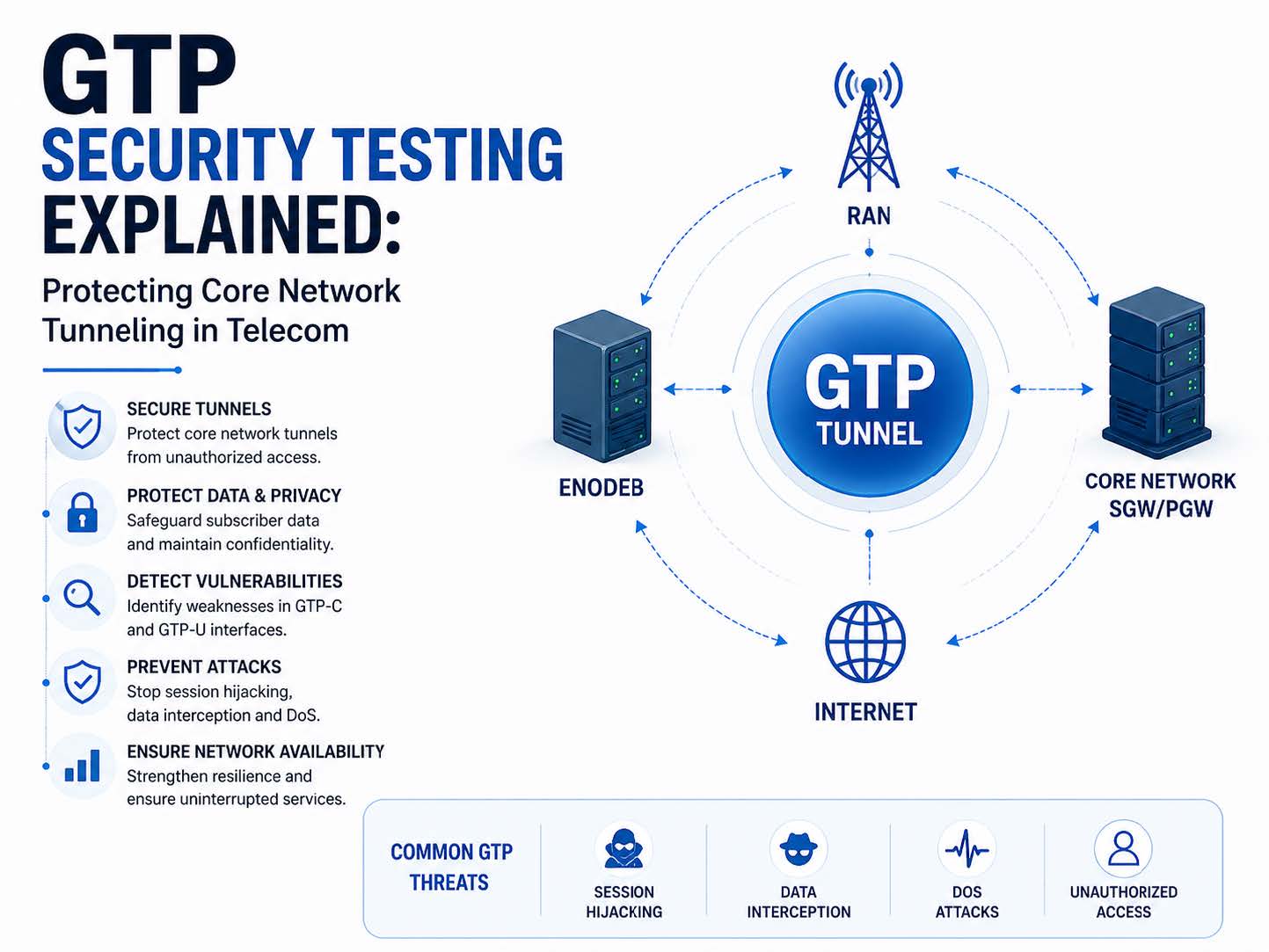
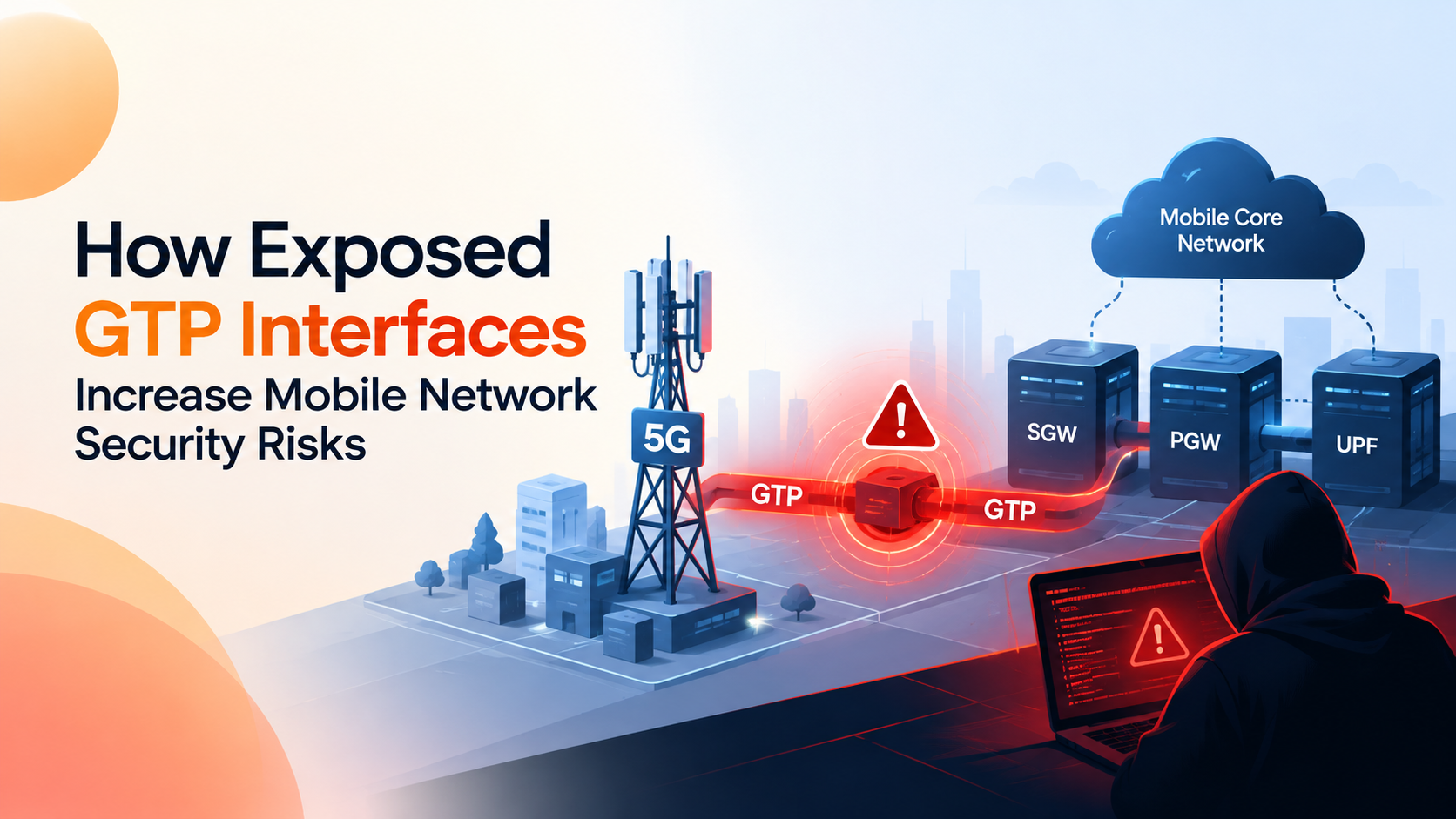
Mobile networks rely on signaling protocols to establish connections, manage subscriber sessions and deliver data services. One of these protocols is the GPRS Tunneling Protocol (GTP), which plays an important role in 4G LTE core networks and is used on specific interfaces in mobile network architectures.
However, insufficient protection of GTP interfaces can expose telecom operators to unauthorized signaling, session manipulation, denial-of-service attempts and other security risks. A GTP firewall helps address these threats by inspecting GTP traffic, validating messages and applying security policies to communication between network elements.
Understanding GTP firewall security is important for operators seeking to protect mobile core infrastructure, improve traffic visibility and strengthen telecom signaling security.
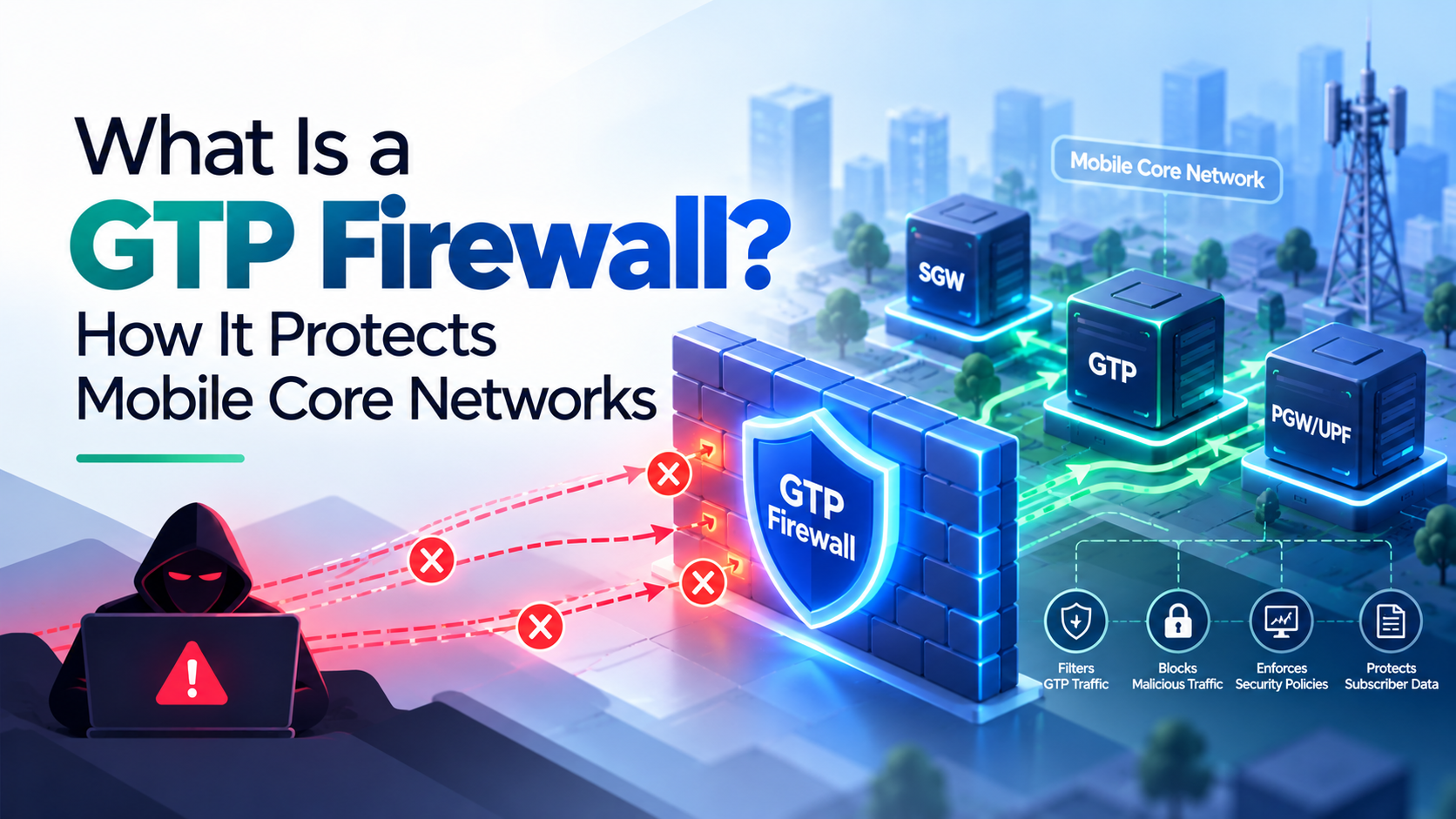
A GTP firewall is a security control designed to inspect and filter traffic that uses the GPRS Tunneling Protocol. Unlike a conventional network firewall that primarily applies rules based on IP addresses, ports and connection information, a protocol-aware GTP firewall can examine GTP messages and apply controls based on protocol-specific information.
Depending on its capabilities and configuration, a GTP firewall may validate signaling messages, verify communicating peers, restrict unauthorized traffic and identify suspicious patterns.
Its purpose is to help ensure that only permitted, appropriately structured and policy-compliant GTP traffic reaches protected network elements.
GTP is used for different functions across mobile networks. GTP-C supports control-plane operations, such as creating, modifying and deleting sessions, while GTP-U carries user-plane data. Effective protection must account for the relevant interfaces, protocol versions and traffic types within the operator's environment.
Mobile core networks connect subscriber devices, gateways and other network functions. If GTP interfaces are exposed or inadequately protected, attackers may attempt to exploit weaknesses in message handling, access controls or network configuration.
Important risks include:
A properly configured GTP firewall helps reduce these risks by enforcing protocol-aware security policies. However, firewall deployment alone cannot eliminate every vulnerability in the mobile core.
GTP traffic filtering determines which messages are permitted to cross a network boundary. Policies can restrict traffic based on trusted peers, permitted interfaces, message types and other supported protocol attributes.
Well-designed filtering reduces unnecessary exposure and helps prevent unauthorized communication with protected network elements.
GTP message filtering examines protocol messages against defined rules. Depending on the implementation, these checks may identify malformed messages, unexpected information elements, invalid field values or messages that do not fit the expected signaling context.
Validation rules should reflect the relevant protocol specifications and the operator's network design. Overly restrictive rules can disrupt legitimate traffic, so policies should be tested before deployment.
GTP peer validation helps ensure that communication is accepted only from authorized network peers. Operators can use approved peer lists, source-network restrictions and other supported identity or trust controls.
Peer validation is particularly important at interconnect boundaries, where traffic may arrive from external networks or roaming partners. Trust should not be based solely on the assumption that traffic originating from a known IP address is legitimate.
Effective GTP firewall configuration requires clear, documented policies for permitted traffic, blocked messages, trusted peers and exception handling.
GTP filtering rules should align with the actual network topology and service requirements. Operators should review rules periodically, remove obsolete permissions and validate changes against legitimate signaling flows.
Poorly maintained rules can leave unnecessary access paths open or accidentally block valid traffic.
GTP signaling monitoring helps operators understand normal signaling activity and identify deviations that may indicate a security issue.
With suitable telemetry and analytics, GTP anomaly detection may identify unusual message rates, unexpected peer activity, abnormal signaling patterns or repeated validation failures.
These capabilities support GTP security monitoring, GTP traffic analysis and broader telecom threat detection. Monitoring complements preventive filtering by helping security teams investigate events that pass through existing controls.
A GTP firewall typically supports several stages of protection:
The precise capabilities depend on the product, deployment architecture and enabled features. Operators should verify that a solution supports the interfaces and protocol versions relevant to their environment.
A GTP firewall and a GTP security assessment serve different but complementary purposes.
A firewall provides an ongoing enforcement layer, but it cannot automatically identify every design flaw, weak configuration or vulnerability in connected network elements.
A security assessment evaluates the wider attack surface, while authorized testing can validate how effective existing controls are under defined conditions. Combining these activities helps operators determine whether firewall policies are correctly configured and whether additional safeguards are needed.
Learn more about GTP security testing and assessment and Matrix Shell's Signaling Security Testing services.
Telecom operators can strengthen GTP firewall protection by following these practices:
These measures should be tailored to the operator's architecture, operational requirements and applicable security guidance.
A GTP firewall is an important security control for protecting mobile core networks against unauthorized signaling and protocol-level threats. Through GTP traffic filtering, message validation, peer verification and anomaly detection, it can help operators strengthen network boundaries and improve visibility into signaling activity.
However, firewall protection is most effective when combined with configuration reviews, continuous monitoring and regular GTP security assessments. This layered approach helps telecom operators identify weaknesses, validate existing controls and maintain a stronger security posture as their networks evolve.
For a broader evaluation of mobile core signaling exposure, explore Matrix Shell's Signaling Security Testing service.