Blog

Modern mobile networks rely on signaling protocols to help network elements communicate with each other. Authentication, subscriber management, mobility, policy control, and roaming all require reliable communication between different parts of the network.
One of the most important signaling technologies used in 4G/LTE networks is the Diameter protocol.
But what is Diameter protocol, and why is it important in mobile networks?
In simple terms, Diameter is an authentication, authorization, and accounting (AAA) protocol framework designed to allow network devices and applications to exchange information securely and reliably. It became particularly important with the evolution of IP-based mobile networks and is widely associated with 4G/LTE signaling.
This guide explains the Diameter protocol, its architecture, nodes, messages, AVPs, applications, and role in LTE and 4G networks.
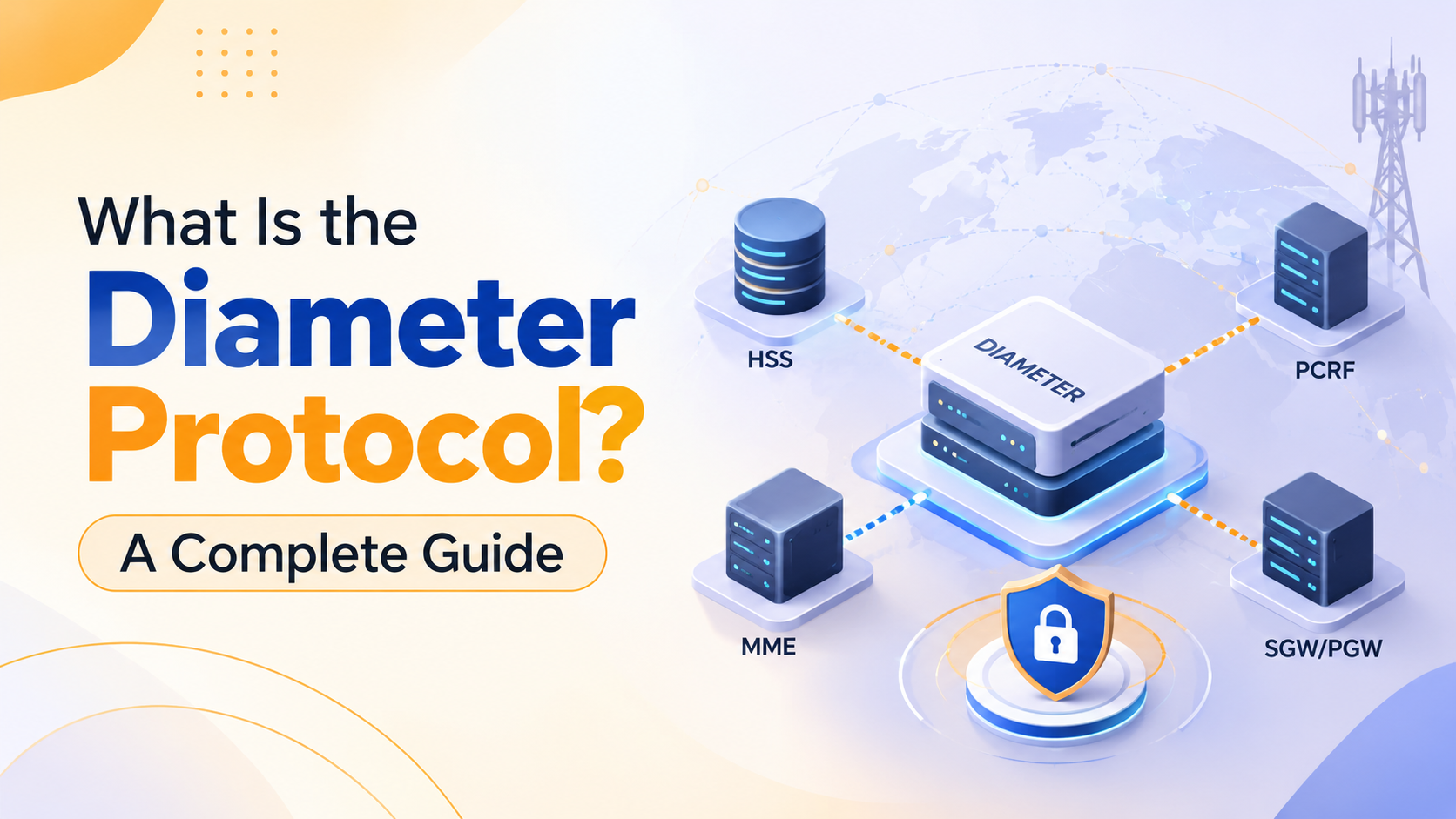
The Diameter protocol is an AAA protocol framework used to exchange authentication, authorization, and accounting information between network elements.
It was designed as a successor to RADIUS for environments requiring more flexibility, reliability, and extensibility.
Diameter supports communication between different network elements through defined messages and attributes. These messages can carry information needed for functions such as:
The protocol is defined by the Internet Engineering Task Force (IETF), with its core specification documented in RFC 6733.
Unlike a simple request-and-response system with a fixed set of fields, Diameter uses a flexible structure that allows different applications to define how messages and attributes are used.
The move toward IP-based mobile networks made Diameter an important part of the signaling architecture.
In Diameter 4G deployments, different network elements use Diameter-based interfaces to exchange information required for subscriber authentication, mobility, policy, and other functions.
For example, in LTE, the S6a interface uses Diameter for communication between the Mobility Management Entity (MME) and the Home Subscriber Server (HSS).
This communication can support activities such as:
As a result, understanding Diameter in LTE is important for understanding how many 4G core-network functions communicate.
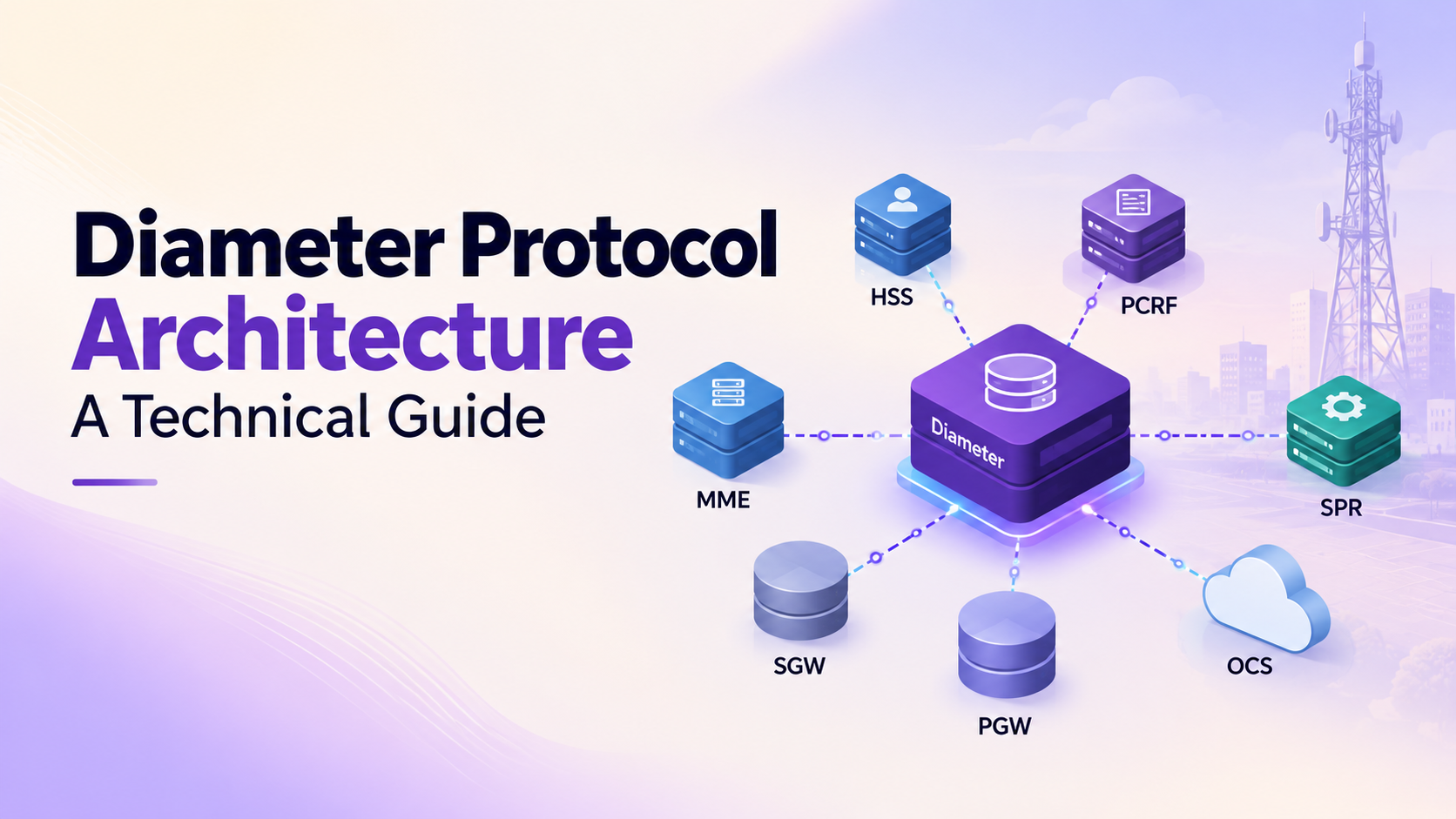
The Diameter protocol architecture consists of several important components that work together to exchange Diameter messages.
At a high level, the architecture can include:
The exact network architecture depends on the Diameter application and the mobile-network environment.
Diameter Client
A Diameter client is typically a network element that initiates a Diameter request.
For example, an LTE network element may request subscriber or authentication information from another network element.
Diameter Server
A Diameter server processes Diameter requests and returns appropriate responses.
In an LTE environment, the HSS can act as a Diameter server for certain applications.
Diameter Agent
A Diameter agent can relay, proxy, redirect, or otherwise assist with Diameter message delivery depending on its role and configuration.
Agents become particularly important in complex environments where messages need to pass through intermediate network elements.
For example, Diameter Edge Agents can help control traffic at interconnection boundaries.
Diameter Peer
Diameter peers are network elements that communicate with each other using Diameter.
A peer relationship typically involves configuration and security controls that determine which systems are authorized to communicate.
A simplified Diameter communication flow looks like this:
Diameter Client → Diameter Request → Diameter Server → Diameter Answer → Diameter Client
A client sends a request containing information relevant to a specific Diameter application.
The receiving system processes the request and returns an answer.
For example, an LTE network element may request subscriber authentication information, and the relevant network function can respond with the information required to continue the authentication procedure.
In real deployments, Diameter agents and multiple network elements can make the communication path more complex.
A Diameter AVP is an Attribute-Value Pair.
AVPs are one of the fundamental building blocks of the Diameter protocol.
An AVP contains information associated with a Diameter message. Different Diameter applications use different AVPs to communicate specific information.
An AVP generally contains information such as:
Examples of information carried through Diameter AVPs can include identities, realms, session information, result codes, subscriber-related data, and application-specific parameters.
Because AVPs carry important information, correct validation and handling of AVPs are important for both interoperability and security.
Diameter communication is based on messages.
A Diameter message contains a header followed by one or more AVPs.
The header provides information needed to identify and process the message, while AVPs carry the actual information associated with the request or response.
Diameter messages can broadly be categorized as:
Request Messages
A request asks another Diameter peer to perform an operation or provide information.
Answer Messages
An answer provides the response to a corresponding request.
Diameter also defines specific commands and applications that determine how these messages are used.
The core Diameter framework provides the underlying protocol capabilities, while different applications define how Diameter is used for particular functions.
Examples associated with mobile networks include:
Each application has its own purpose and can define specific commands and AVPs.
For example, S6a is associated with communication between the MME and HSS in LTE networks.
Gx is associated with policy and charging control between relevant network functions, while other applications support different network requirements.
Diameter in LTE is used across multiple interfaces within the Evolved Packet System (EPS).
A simplified LTE signaling architecture can include:
UE → eNodeB → MME → HSS
The MME communicates with the HSS over the S6a interface using Diameter.
Other Diameter interfaces connect different network functions depending on the operator's architecture.
Diameter can therefore support critical LTE processes such as:
This widespread use makes Diameter a fundamental signaling technology in many 4G networks.
Diameter is also important when LTE operators exchange signaling with roaming partners.
During roaming, Diameter traffic may cross operator boundaries through interconnection environments such as IPX networks.
This introduces additional considerations around:
These considerations form part of broader Diameter roaming security and Diameter interconnect security.
Diameter and RADIUS are both associated with AAA functions, but Diameter was designed to address several limitations associated with earlier AAA environments.
Diameter provides features such as:
This made Diameter suitable for large-scale IP and mobile-network environments.
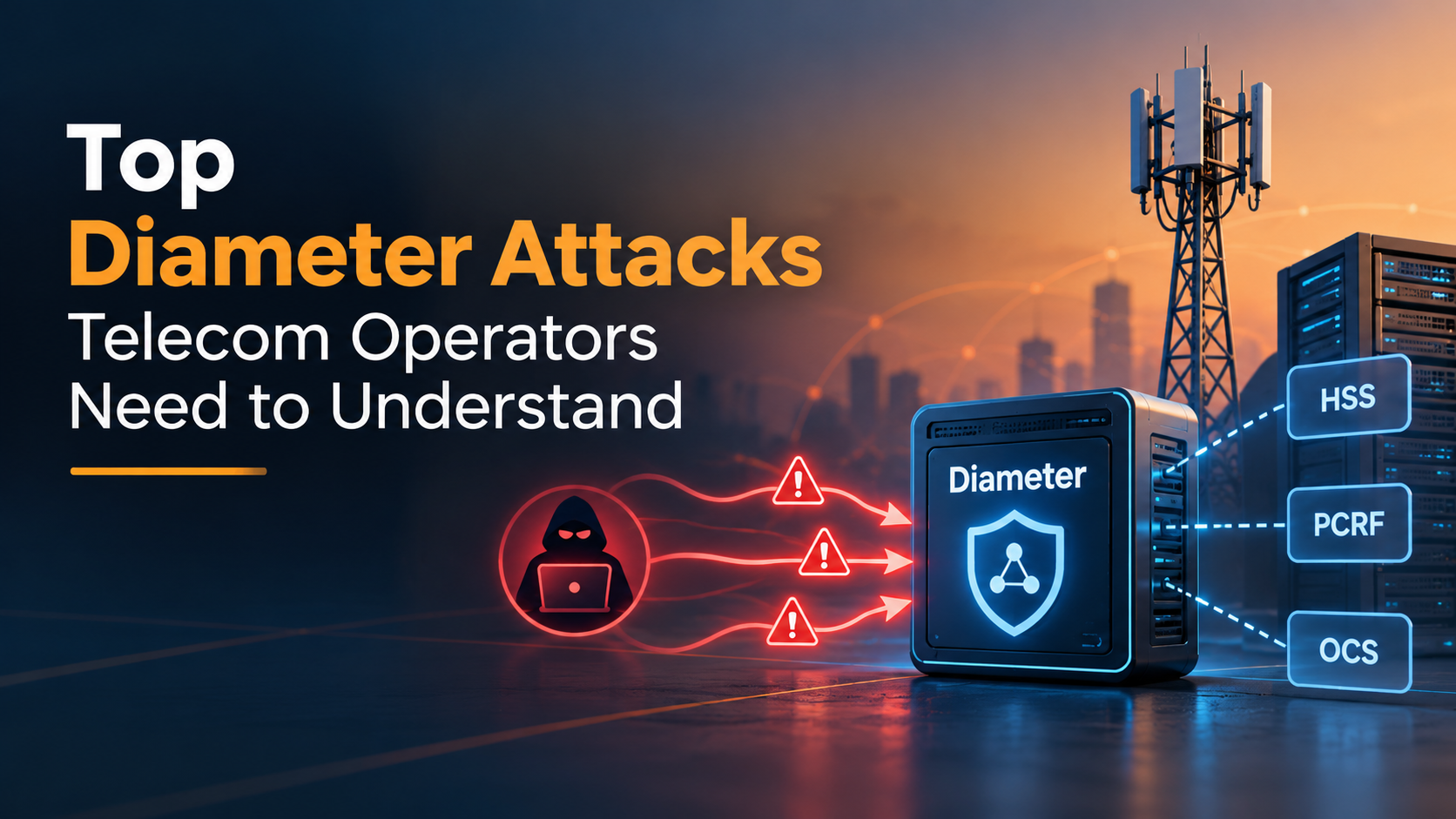
Because Diameter can carry authentication, subscriber, mobility, policy, and charging information, protecting Diameter signaling is important.
Security concerns can include:
Operators can therefore use approaches such as peer authorization, transport protection, message filtering, monitoring, and Diameter security testing to evaluate the security of their Diameter environments.
The Diameter protocol is a fundamental signaling technology in many IP-based and 4G/LTE mobile networks. Understanding what is Diameter protocol, how its architecture works, and how messages and Diameter AVPs are structured provides a foundation for understanding LTE core-network signaling.
Diameter in LTE supports important functions including authentication, subscriber management, mobility, policy, charging, and roaming.
At the same time, the protocol's role in critical network functions means operators need to consider its security throughout the network lifecycle. Understanding Diameter architecture is therefore the first step toward assessing Diameter vulnerabilities, securing Diameter interfaces, and implementing effective Diameter security testing.