Blog
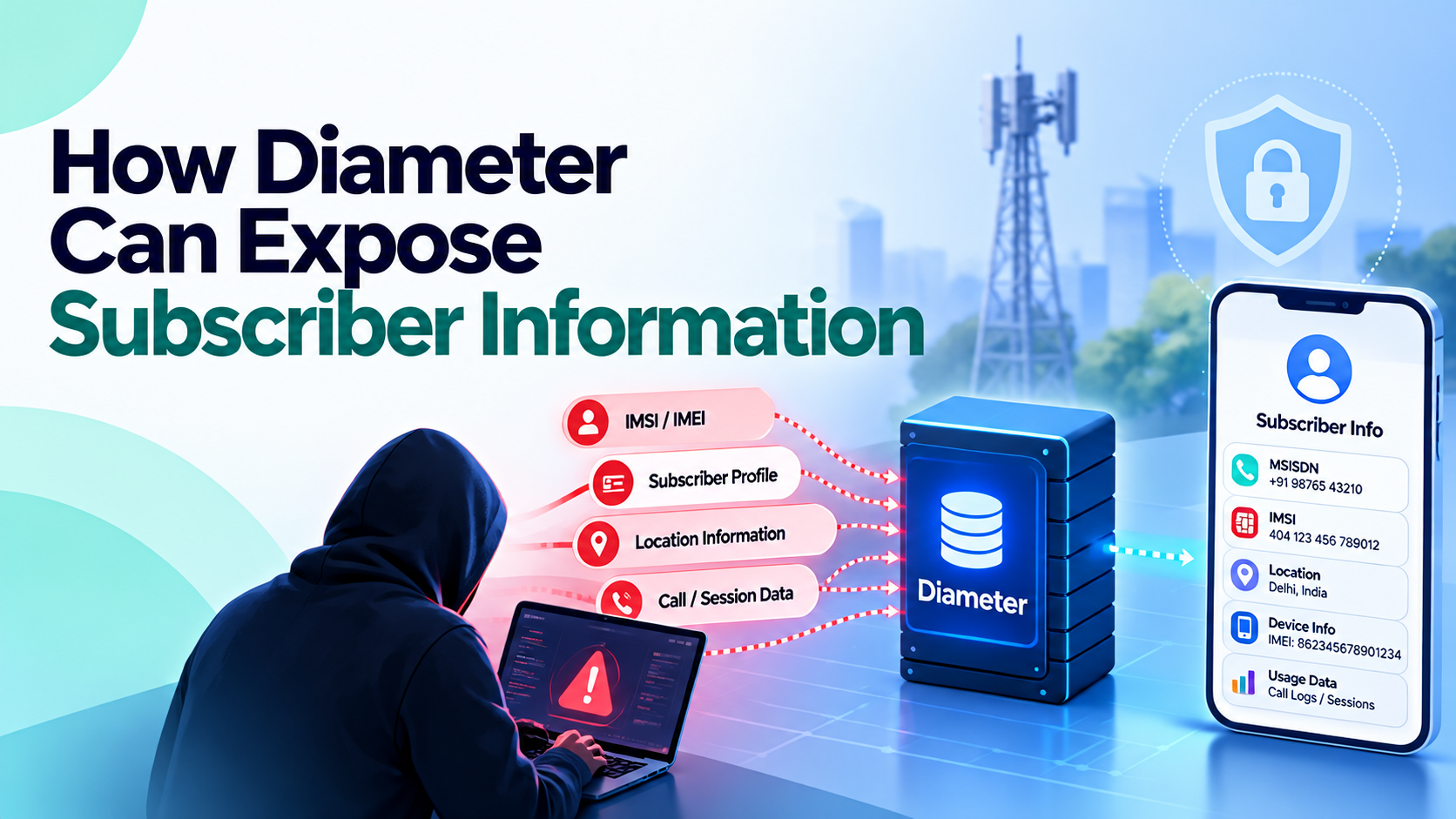

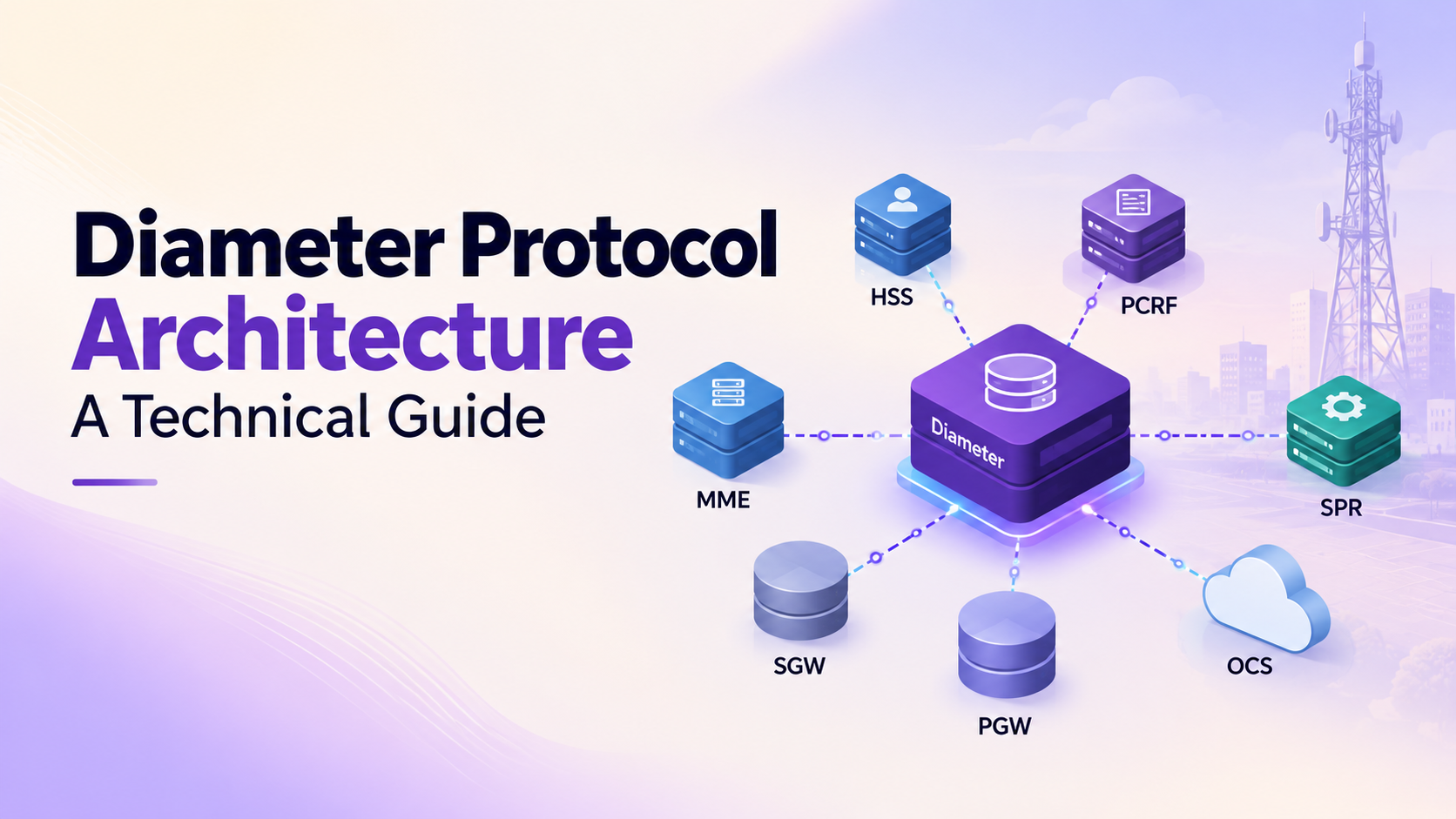
Diameter is a fundamental signaling protocol in 4G/LTE networks. It supports authentication, subscriber management, mobility, policy control, charging, and communication between critical network functions.
Because Diameter signaling can carry or influence sensitive subscriber-related information, weaknesses in Diameter security can create privacy and data protection risks.
The issue is not necessarily that Diameter itself is designed to expose subscriber information. Rather, misconfigured trust relationships, weak access controls, inadequate filtering, insecure interconnects, and signaling vulnerabilities can create opportunities for unauthorized parties to access or manipulate information.
This makes Diameter subscriber data security an important consideration for telecom operators.
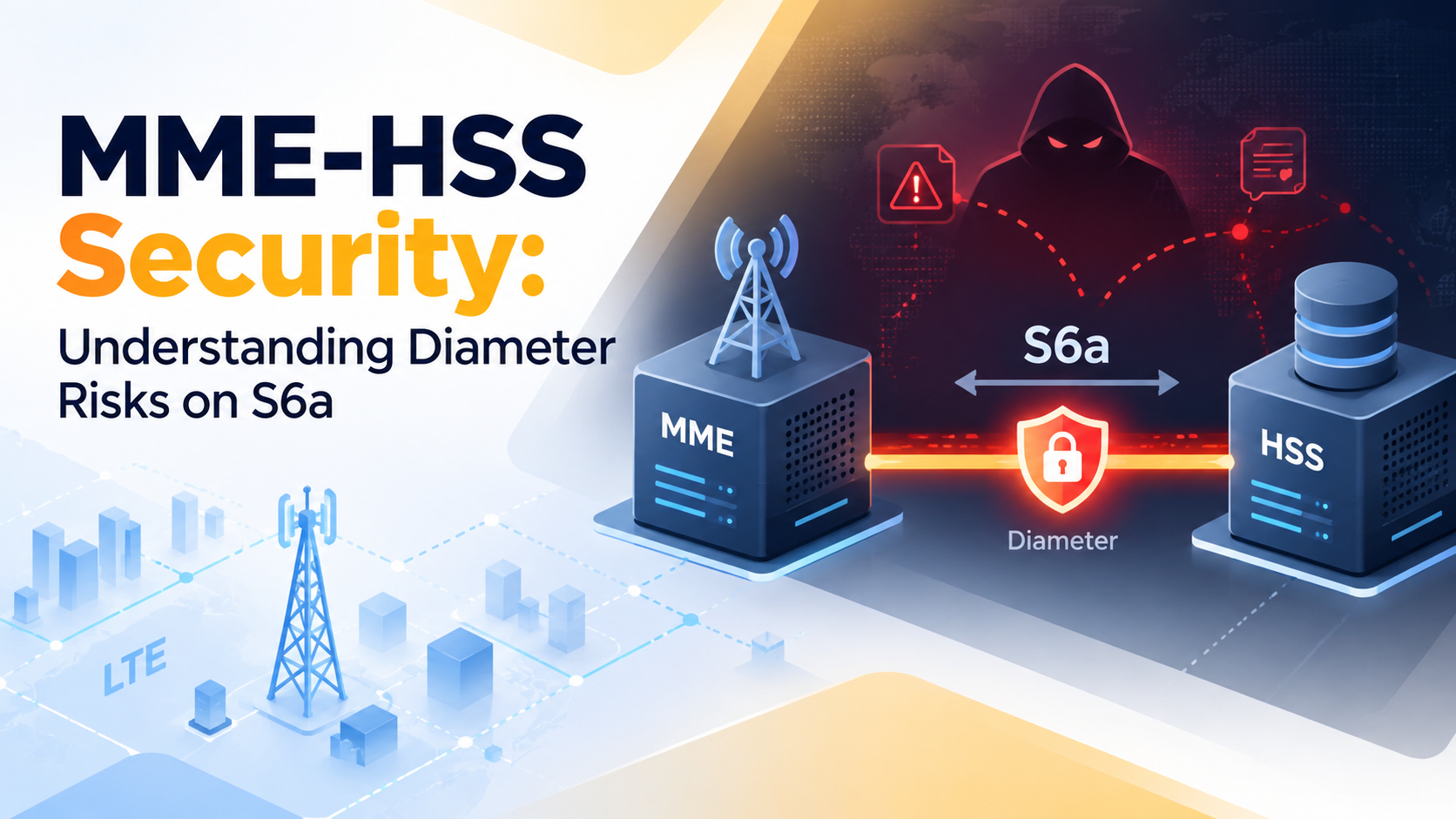
Potential risks include Diameter authentication attacks, unauthorized access to location-related information, Diameter location tracking, loss of location privacy, and subscriber profile manipulation.
The exact information available through Diameter depends on the application, interface, network architecture, and permissions associated with the Diameter peer.
Depending on the environment, Diameter signaling can involve information related to:
This information is necessary for legitimate network operations.
For example, an LTE core network needs subscriber information to authenticate users and provide appropriate services.
The security challenge is ensuring that only authorized network functions and trusted peers can access the information they actually require.
Several security weaknesses can contribute to subscriber information exposure.
1. Unauthorized Diameter Peers
Diameter environments rely on relationships between network elements and peers.
If an unauthorized system is able to establish or abuse a Diameter relationship, it may gain access to signaling that should have remained restricted.
This can create opportunities to request, observe, or manipulate subscriber-related information.
Strong peer authentication and authorization are therefore essential components of Diameter subscriber data security.
2. Excessive Trust Between Networks
Telecom operators often exchange Diameter signaling through roaming and interconnect environments.
A trusted relationship between operators or network providers does not necessarily mean every signaling request should be accepted.
Overly broad trust can result in:
Operators should define exactly which applications, messages, and destinations each external peer is authorized to access.
3. Weak Signaling Filtering
Diameter signaling can contain detailed information through messages and Attribute-Value Pairs (AVPs).
Without appropriate filtering, unnecessary or unauthorized signaling may reach sensitive network functions.
Filtering can help restrict:
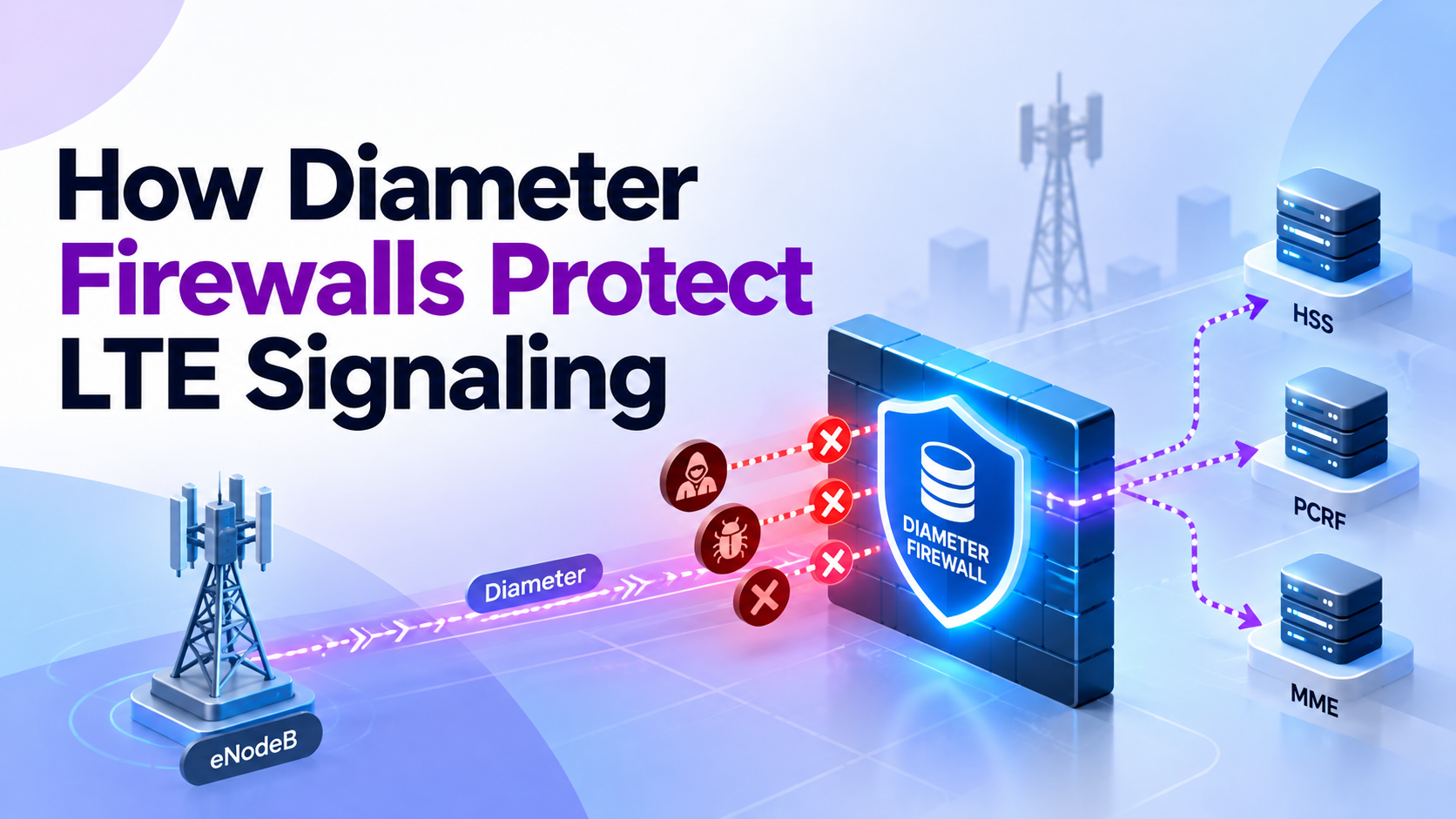
A Diameter firewall or Diameter security gateway can provide an important enforcement point for these controls.
Authentication-related signaling deserves particular attention because it directly connects Diameter with subscriber identity and network access.
Diameter authentication attacks may attempt to:
An attack does not necessarily need to compromise the HSS or another core system directly. Weaknesses in the signaling path or trust model may provide opportunities to interact with systems that process subscriber information.
For this reason, authentication interfaces should be protected through peer authorization, message validation, filtering, monitoring, and security testing.
One of the most sensitive areas of subscriber information is location.
Mobile networks need location-related information to support legitimate mobility and network functions. However, unauthorized access to such information can create significant privacy concerns.
Diameter location tracking becomes a risk when an attacker or unauthorized entity can abuse signaling to obtain information that helps determine where a subscriber is connected or how their network attachment changes.
Location-related information may potentially reveal:
The level of information available depends heavily on the network architecture and the access obtained by an attacker.
Location privacy is important because location information can reveal patterns about an individual's movements and activities.
Operators should therefore minimize unnecessary exposure of location-related signaling and ensure that access is restricted to legitimate network functions.
Controls should include:
External signaling relationships should receive particular attention because information may cross organizational boundaries.
Subscriber information is not only something that needs confidentiality. Its integrity also needs protection.
Subscriber profile manipulation occurs when an unauthorized party attempts to modify, influence, or abuse subscriber-related information.
Depending on the network architecture, profile information can influence:
If profile information is improperly modified, potential consequences could include:
This makes profile integrity an important part of Diameter subscriber data security.
A layered security strategy is essential.
1. Restrict Diameter Peers
Only authorized network elements and trusted external peers should be able to establish Diameter communication.
2. Apply Least-Privilege Access
Peers should receive only the applications, commands, and destinations required for their legitimate functions.
3. Filter Diameter Signaling
Operators should implement appropriate filtering for external, roaming, and interconnect-facing Diameter traffic.
4. Validate Messages and AVPs
Incoming Diameter messages should be validated according to applicable protocol and application requirements.
5. Protect Sensitive Interfaces
Interfaces carrying authentication and subscriber-related information should receive appropriate security controls and monitoring.
6. Monitor Subscriber-Related Signaling
Operators should monitor unusual authentication requests, unexpected peers, signaling spikes, unusual routing, and other anomalies.
7. Protect Interconnects
Roaming and IPX/interconnect environments should not be treated as automatically trusted simply because a business relationship exists.
8. Conduct Diameter Security Testing
Regular security assessments can help identify weaknesses that may expose subscriber information.
Effective monitoring can help detect potential information-exposure scenarios.
Operators should consider monitoring:
Monitoring should focus on meaningful anomalies rather than generating excessive alerts.
Security monitoring can identify suspicious behavior, but testing is needed to determine whether security controls actually withstand realistic scenarios.
A controlled Diameter security assessment can examine:
Testing should be conducted in controlled environments or using approved test subscribers and systems to avoid affecting live subscribers.
Operators should periodically review whether:
Diameter is essential to 4G/LTE network operations, but the subscriber information it carries and supports makes its security particularly important.
Diameter subscriber data security depends on protecting the entire signaling environment—not simply individual network elements. Unauthorized peers, excessive trust, weak filtering, poor message validation, and insecure interconnects can create opportunities for information exposure.
Operators should pay particular attention to Diameter authentication attacks, Diameter location tracking, location privacy, and subscriber profile manipulation because these risks can potentially affect subscribers directly.
A layered approach combining peer authorization, least-privilege access, Diameter firewall controls, message validation, monitoring, secure interconnects, and regular security testing can significantly strengthen the protection of subscriber-related Diameter signaling.
Ultimately, the goal is not only to protect the Diameter protocol itself, but to protect the confidentiality, integrity, privacy, and availability of the subscriber information that depends on it.