
Blog
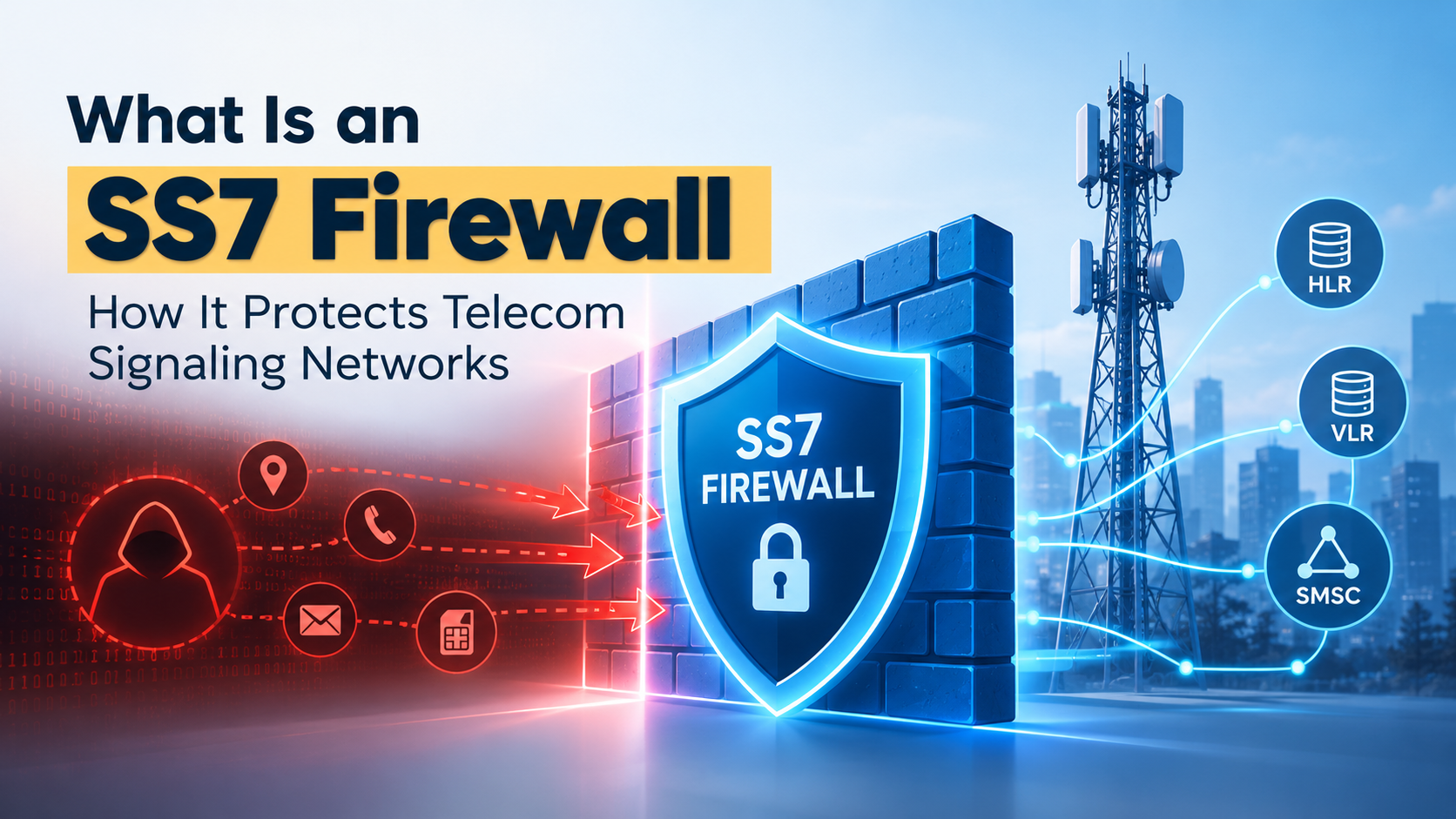

An SS7 firewall is a specialized security control designed to inspect, filter, and regulate signaling messages exchanged across SS7-based telecom networks. It helps telecom operators prevent unauthorized signaling activity that could expose subscriber information, enable fraud, facilitate SMS interception, track users, or disrupt network services.
But what is an SS7 firewall, and how does it actually protect a telecom network?
Unlike a traditional network firewall that primarily controls IP traffic, an SS7 firewall understands telecom signaling messages and applies security policies based on signaling protocols, message types, sources, destinations, and expected network behavior.
As legacy signaling networks continue to operate alongside modern 4G and 5G infrastructure, the role of an SS7 security firewall remains important for protecting the signaling layer.
An SS7 firewall is a signaling security solution that monitors and filters SS7 messages exchanged between telecom networks and network elements.
Its primary purpose is to prevent unauthorized or suspicious signaling traffic from reaching sensitive network functions.
An SS7 firewall can help operators:
The firewall essentially acts as a security layer between external signaling connections and protected telecom infrastructure.
Understanding how an SS7 firewall works requires looking at how it evaluates signaling traffic.
A simplified process is:
Signaling Traffic → Message Inspection → Security Policy Evaluation → Allow, Reject, or Monitor → Network Processing
When an SS7 message enters the network, the firewall can inspect relevant attributes and determine whether the request is legitimate.
Depending on the configured policy, the message may be:
This allows operators to apply security controls to signaling traffic rather than automatically trusting every request received from an interconnected network.
SS7 was originally designed around trusted relationships between interconnected telecom networks. Modern telecom ecosystems are much more interconnected, involving international roaming, multiple signaling providers, third-party services, and legacy infrastructure.
This increases the potential attack surface.
Attackers may attempt to exploit signaling functionality for:
A properly configured signaling firewall helps reduce these risks by introducing policy-based controls into the signaling path.
An SS7 security firewall can protect several important areas of a telecom network.
SS7 signaling can carry information associated with subscriber identity, mobility, and network services.
Firewall policies can help restrict unauthorized requests for sensitive subscriber information.
SMS-related signaling can be targeted by attackers attempting to manipulate message routing or gain access to sensitive communications.
An SS7 security firewall can inspect relevant signaling activity and block requests that violate established security rules.
Location tracking is a well-known signaling security concern.
A signaling firewall can help identify and restrict unauthorized location-related signaling requests, reducing the risk of subscriber tracking.
Certain signaling manipulation techniques can affect call routing and related services.
Filtering inappropriate signaling requests can help protect voice services from unauthorized manipulation.
Attackers can also generate excessive or malicious signaling traffic to affect network resources.
An SS7 firewall can help reduce exposure by filtering inappropriate traffic and enforcing signaling policies.
Although capabilities vary between solutions, an effective SS7 firewall typically provides several important functions.
The firewall examines signaling messages and applies rules based on message type, source, destination, and other relevant attributes.
Operators can define policies specifying which signaling requests should be accepted, rejected, or monitored.
The firewall can help determine whether signaling traffic originates from an expected or authorized network source.
Advanced signaling firewalls can identify unusual signaling behavior that may indicate attempted abuse or an attack.
Maintaining records of signaling activity helps security teams investigate suspicious events and understand emerging attack patterns.
Security policies can be applied to signaling functions involving subscriber information, mobility, SMS, and other sensitive network operations.
An SS7 firewall and a traditional IP firewall serve different purposes.
This distinction is important because conventional network security controls may not understand the business and telecom context contained within signaling messages.
A dedicated signaling firewall provides controls specifically designed for telecom signaling environments.
An SS7 firewall is an important component of SS7 attack mitigation, but it should not be considered a complete security solution on its own.
Its effectiveness depends heavily on:
For example, an improperly configured firewall may allow suspicious signaling traffic to pass even though the technology itself supports blocking it.
This is why firewall deployment should be combined with security testing and ongoing validation.
An effective security program should evaluate whether the deployed firewall actually blocks the signaling scenarios it is expected to prevent.
SS7 security testing can help operators assess:
For more information, see How Signaling Security Testing Helps Prevent Fraud and Network Disruptions.
Testing provides an important validation layer because a firewall’s presence does not automatically mean that the network is secure.
Although SS7 is a legacy signaling technology, many telecom operators continue to operate networks that support multiple generations of mobile technology.
A modern environment may include:
This means an operator’s signaling security architecture should not be designed around SS7 alone.
Security teams should understand how signaling traffic moves across different generations and where controls such as signaling firewalls, security testing, monitoring, and access controls should be applied.
For a broader perspective, see How to Build a Signaling Security Strategy for 2G, 3G, 4G, and 5G Networks.
To maximize the effectiveness of an SS7 security firewall, telecom operators should:
A combination of technology, testing, monitoring, and operational processes provides stronger protection than relying on firewall deployment alone.
An SS7 firewall provides a dedicated security layer for protecting telecom signaling from unauthorized and potentially malicious activity. By inspecting signaling messages and enforcing security policies, it can help reduce risks involving subscriber information, SMS, location tracking, fraud, and service disruption.
However, an SS7 security firewall should be treated as one component of a broader telecom security program. Regular SS7 security testing, continuous monitoring, strong access controls, and appropriate policy management are necessary to ensure signaling defenses remain effective.
As telecom operators continue to run multi-generation networks, a well-designed signaling firewall combined with continuous security assessment can help strengthen signaling protection across legacy and modern telecom environments.





