Blog
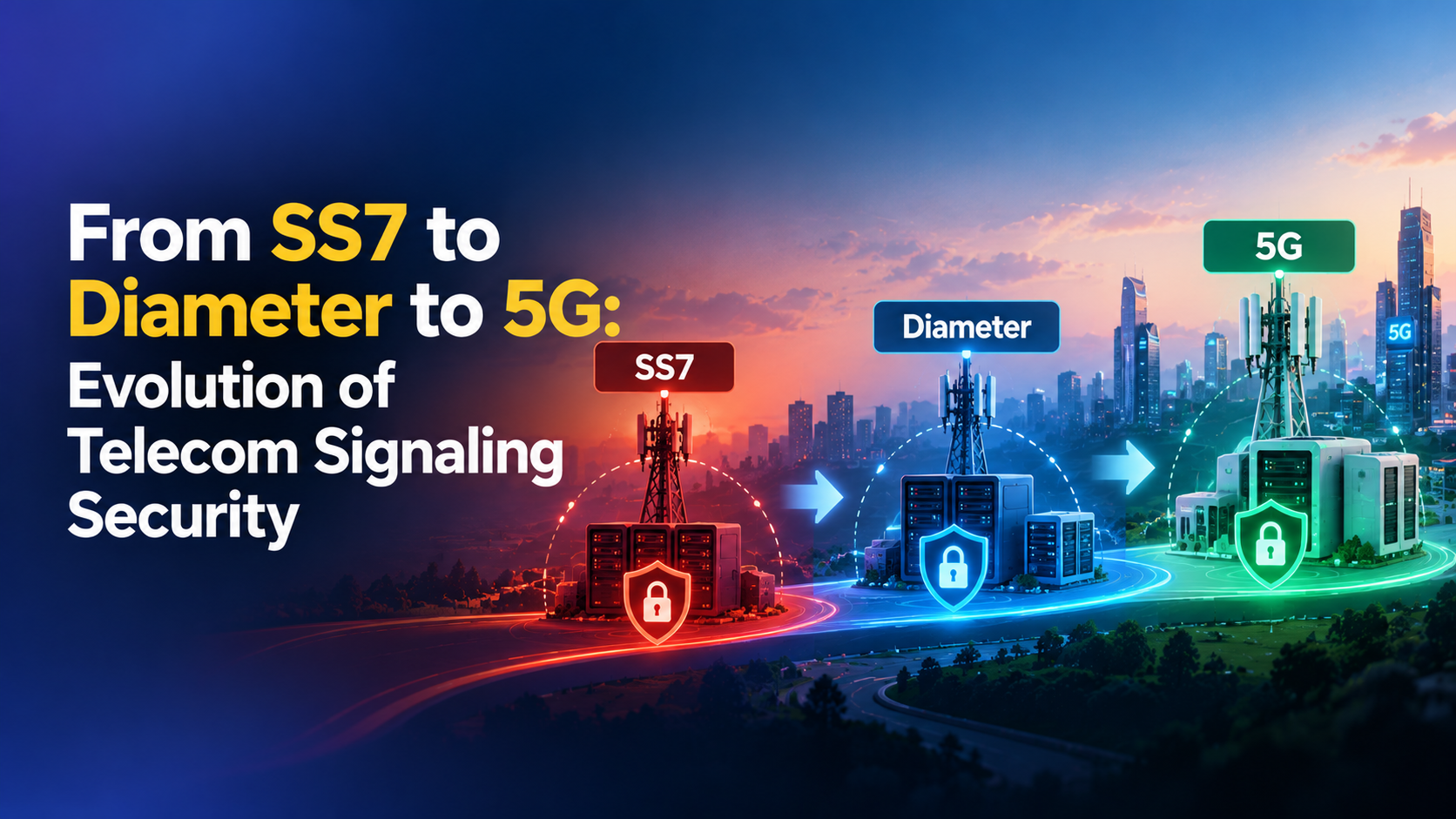

Telecom signaling is the foundation of mobile communication. It enables networks to authenticate subscribers, establish calls, manage mobility, support roaming, and exchange information between network functions. As mobile technology has evolved from 2G and 3G to 4G/LTE and 5G, signaling architectures and their security requirements have also changed.
SS7 (Signaling System No. 7) supported traditional mobile networks, while Diameter became a key signaling protocol for many 4G/LTE functions. The 5G Core introduced a service-based architecture with new communication models and security requirements.
However, each stage of this evolution brings its own challenges. Legacy signaling vulnerabilities may remain relevant in interconnected networks, while newer architectures introduce different risks that require dedicated security controls.
Understanding the evolution from SS7 to Diameter to 5G helps telecom operators identify security gaps, protect subscriber information, and strengthen signaling resilience across network generations.
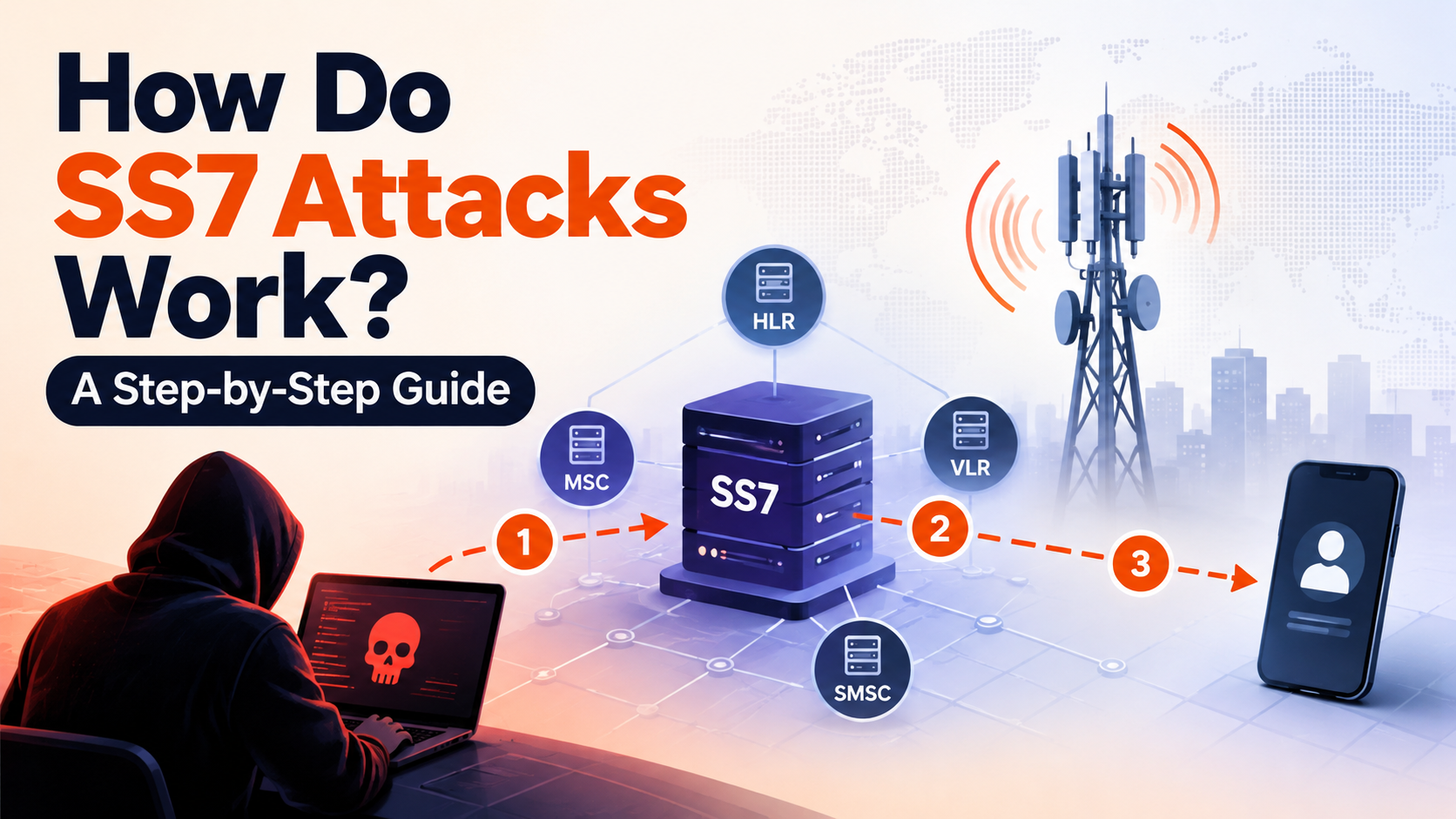
SS7 was developed to enable signaling between telecommunications network elements. It supports functions such as call setup, SMS delivery, mobility management, and roaming in traditional mobile networks.
Historically, SS7 environments relied on established signaling relationships between operators. This model worked within a more controlled telecommunications ecosystem, but the expansion of global roaming and interconnected networks increased the potential exposure to untrusted or inadequately controlled signaling traffic.
Key SS7 security challenges
These risks are not identical across all operators. Their severity depends on network configuration, signaling access, filtering, and monitoring.
SS7's central security challenge is the potential misuse of trust relationships. A signaling message that appears to originate from a recognized network may still require validation and authorization.
As mobile networks moved toward 4G/LTE, operators required signaling capabilities suited to IP-based architectures and evolving service requirements. Diameter emerged as an important protocol for authentication, authorization, accounting, mobility, and policy-related functions.
For example, the Diameter S6a interface supports communication between the Mobility Management Entity (MME) and Home Subscriber Server (HSS) in LTE networks.
How Diameter changed signaling security
More flexible message structures: Diameter uses commands and Attribute-Value Pairs (AVPs), supporting extensible signaling messages and different application requirements.
Support for IP-based infrastructure: Diameter operates in IP environments, allowing operators to use relevant network security technologies and controls.
More structured signaling management: Diameter deployments can use Diameter Edge Agents (DEAs), firewalls, routing policies, and message filtering to manage interconnections.
Transport security options: Depending on the deployment, Diameter communications can use security mechanisms that protect signaling transport. These must be implemented and configured appropriately.
Despite these improvements, Diameter is not automatically secure. Inadequate filtering, excessive trust between network peers, weak authorization, and insufficient monitoring can expose signaling interfaces to abuse.
The key difference in Diameter vs SS7 security is not simply that one protocol replaced another. Diameter brought capabilities suited to newer network architectures, but effective protection still depends on how operators deploy and manage those capabilities.
The comparison between SS7 and Diameter highlights how telecom signaling evolved and why security controls must adapt to each environment.
Neither protocol is inherently secure in every deployment. A well-controlled SS7 environment may be better protected than a poorly configured Diameter environment.
Therefore, SS7 vs Diameter security should be evaluated through actual network exposure, access controls, signaling policies, and testing—not protocol age alone.
5G introduced a significant architectural change. Unlike earlier generations that rely heavily on traditional telecom signaling models, the 5G Core uses a service-based architecture for many network functions.
Relevant 5G Core service communications use HTTP/2-based mechanisms, alongside architecture-specific security protections and interfaces. This does not mean Diameter is the universal signaling protocol for 5G.
However, operators often continue to support multiple generations of mobile technology. SS7 and Diameter may remain relevant in legacy networks, roaming arrangements, and interworking environments.
Legacy risks may persist: Moving to 5G does not automatically remove weaknesses in existing 2G, 3G, or 4G infrastructure.
Interworking needs attention: Connections between network generations and operators must be assessed for trust, authorization, and filtering weaknesses.
New interfaces require dedicated controls: The 5G service-based architecture introduces its own security considerations, including authentication between network functions, authorization, and protection of service communications.
Security visibility must span generations: Operators need to understand where legacy signaling remains active and how it interacts with newer network components.
This is the broader context of SS7 Diameter 5G security: operators must protect both the newer architecture and the legacy signaling environments that may continue to support their services.
Diameter security in 5G is primarily relevant where Diameter remains part of the operator's wider network environment—for example, through LTE infrastructure, roaming, or interworking with legacy systems.
A 5G deployment should not be assumed to eliminate Diameter-related risks. Equally, Diameter controls alone are not sufficient to secure the 5G Core.
Operators should take a layered approach:
A protocol-specific assessment helps operators identify risks that may otherwise be overlooked when security reviews focus only on the newest network generation.
Telecom signaling security will increasingly depend on protecting interconnected environments rather than focusing on a single protocol.
SS7 remains important for understanding legacy network risks. Diameter supports many 4G/LTE functions and may continue to be relevant in multi-generation deployments. The 5G Core introduces different architectural and security requirements that must be addressed independently.
For telecom operators, the priority should be continuous assessment, strong access controls, appropriate filtering, secure interconnections, and monitoring across network generations.
Security testing can help identify weaknesses before they affect network operations or subscriber trust. A comprehensive strategy considers the protocols in use, the interfaces exposed, the relationships between operators, and the controls protecting each environment.