Blog
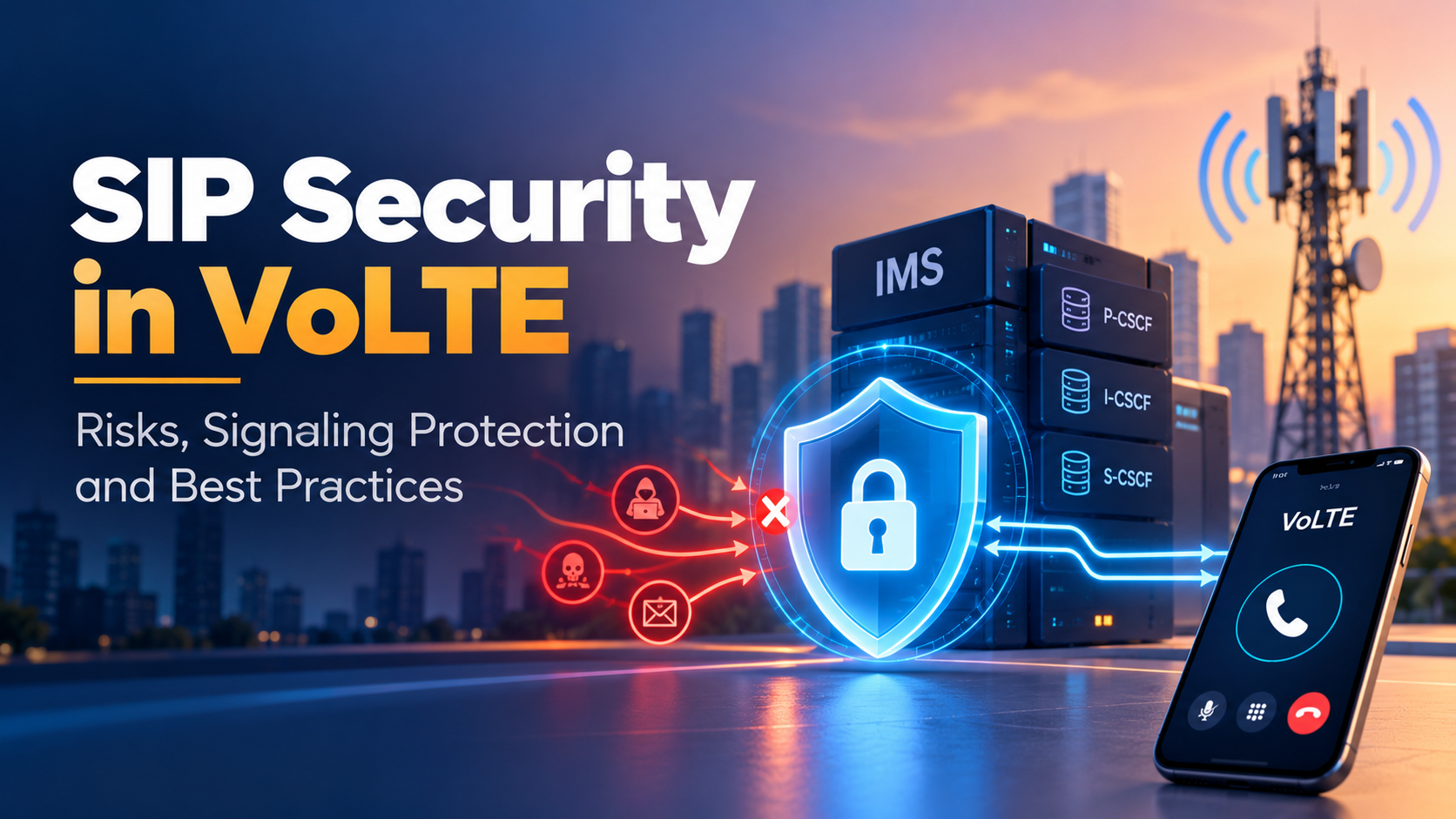

Session Initiation Protocol (SIP) helps establish, manage and end voice sessions in Voice over LTE (VoLTE) networks. Because SIP carries signaling messages that support call setup and session control, weaknesses in its implementation, configuration or surrounding IP Multimedia Subsystem (IMS) can affect service availability, call integrity and subscriber privacy. SIP security in VoLTE is therefore not just a protocol concern: it is part of a wider telecom security strategy that combines network architecture, access controls, signaling protection, monitoring and regular validation.
SIP helps IMS components initiate, modify and terminate multimedia sessions over LTE. SIP security in VoLTE protects these signaling exchanges against unauthorized access, message manipulation, service disruption and information exposure.
IP Multimedia Subsystem security also covers network elements, interfaces, identities, routing, policy enforcement and operations. Reviews should consider signaling between subscribers, access networks, the IMS core and interconnect or roaming partners.
SIP signaling controls call setup and session management. Exposed interfaces, weak authentication, or permissive routing and filtering can enable call failures, service instability or disclosure of metadata about subscriber activity and network structure.
Overly broad access to SIP-facing interfaces can allow untrusted systems to send traffic to network components that should only accept messages from approved peers. Access rules should be based on documented communication paths, trusted sources and least-privilege principles.
Poor validation of SIP headers, message fields or session state can create opportunities for malformed or unexpected signaling to affect call handling. Operators should validate messages at appropriate boundaries, enforce protocol-aware policies and test how network elements respond to invalid or unusual traffic.
High volumes of requests, repeated registration attempts or malformed messages may consume processing and session resources. Rate limits, capacity monitoring, anomaly detection and tested response procedures can reduce the chance that signaling abuse becomes a service outage.
Signaling exchanges can contain identifiers and operational details. Excessive logging, weak transport protection or unnecessary data sharing may expose sensitive metadata. Operators should minimize retained data, restrict log access and apply suitable protections to signaling paths.
Incorrect trust relationships, outdated software, permissive routing or inconsistent security policies between IMS elements and partner networks can create gaps. IMS network risks often arise at boundaries, so security reviews should cover both internal interfaces and external connections.
Without useful telemetry, operators may struggle to distinguish legitimate traffic surges from suspicious signaling patterns. Monitoring should cover relevant authentication events, registration behavior, error rates, traffic anomalies and service-health indicators, with clear escalation paths.
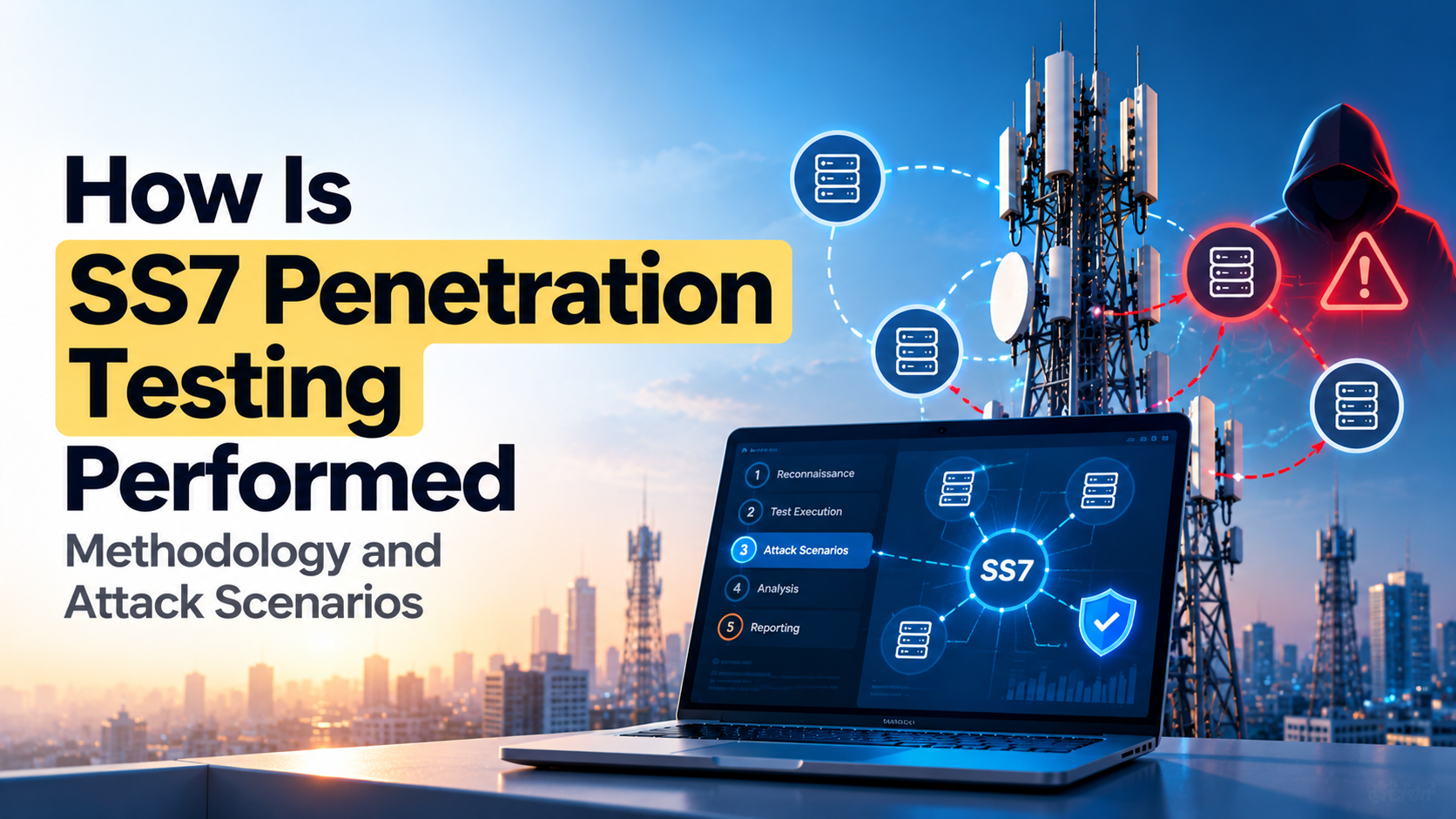
A SIP security assessment combines architecture and configuration reviews with controlled technical testing. It must be authorized, scoped and designed to avoid disrupting live services.
Map relevant IMS elements, SIP interfaces, access paths, interconnects, roaming relationships and dependencies. Confirm asset owners, test windows, production safeguards and exclusions before testing begins.
Examine trust boundaries, routing policies, access lists, authentication settings, transport protections, software versions, logging and monitoring. Compare observed configurations with approved baselines and vendor guidance.
Within the agreed scope, evaluate how components handle unexpected messages, invalid fields, unauthorized sources, repeated requests and abnormal traffic rates. IMS security testing should validate controls and document reproducible evidence without creating avoidable service impact.
Report each finding with its affected asset, evidence, potential business and subscriber impact, severity, remediation guidance and owner. After fixes, retest the relevant controls and update the risk register. IMS penetration testing is most useful when findings lead to measurable corrective action.
Strengthen VoLTE signaling protection through layered security: maintain an inventory of IMS assets and trust relationships, separate management and service traffic, apply least privilege, standardize vendor configurations and review changes. Include interconnects and roaming interfaces in security governance.
SIP security in VoLTE is essential to reliable voice services and broader IMS network security. Weak access controls, signaling validation gaps, resource exhaustion, information exposure and misconfigured interconnects can all increase risk. A combination of strong IMS security controls, ongoing SIP security testing, clear monitoring and structured remediation helps operators reduce exposure while maintaining service quality. Regularly validating the real configuration and behavior of the network is the most dependable way to identify and address VoLTE security weaknesses.