Blog
.png)
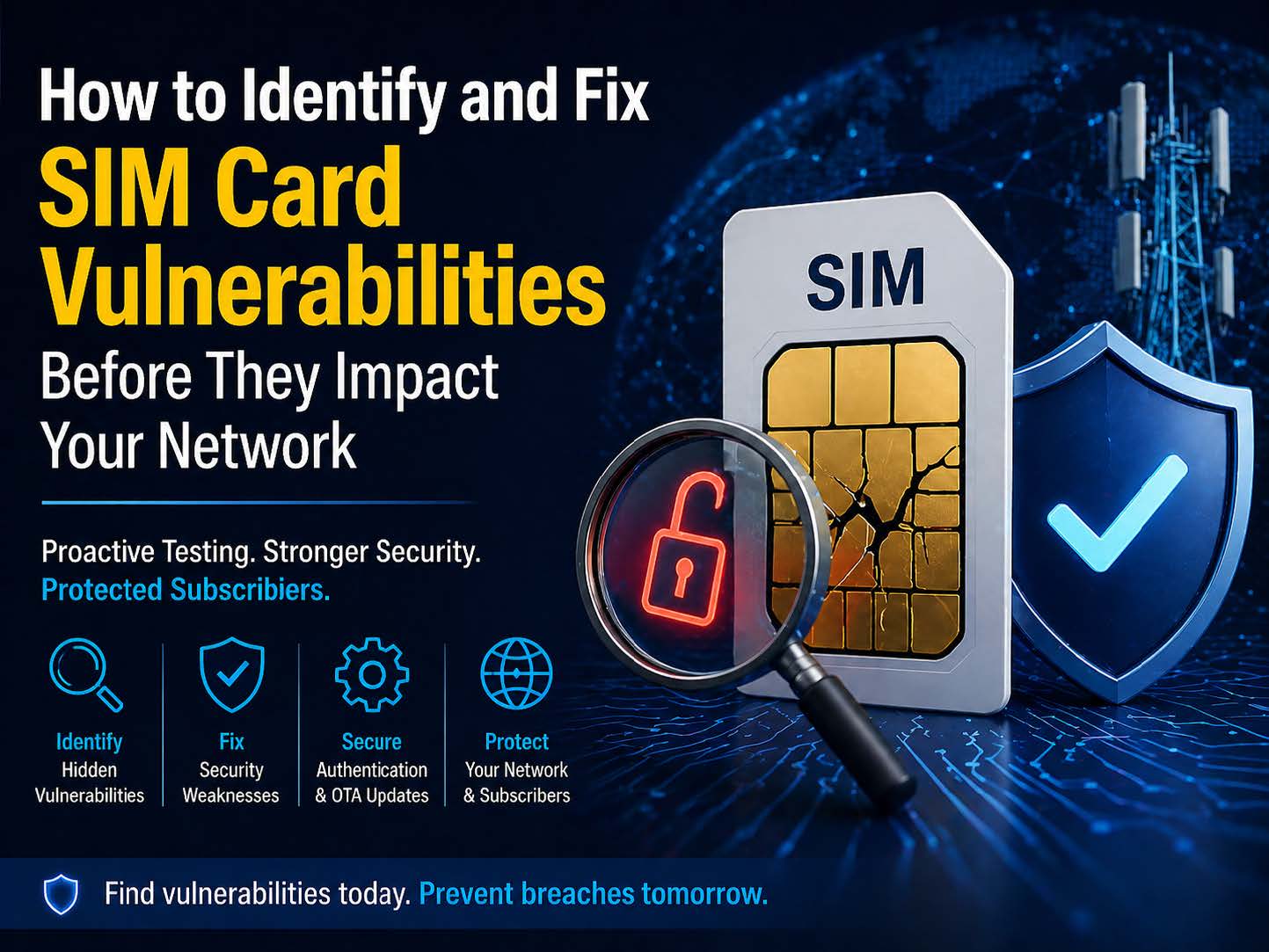
SIM cards remain a foundational component of mobile network authentication security, storing subscriber credentials used for identity verification across telecom networks. However, modern architectures—spanning 4G, 5G, and eSIM ecosystems—have exposed new weaknesses in Subscriber Identity Module security.
Research into telecom authentication systems shows that vulnerabilities in SIM-based security contexts can allow attackers to impersonate users, bypass authentication, and access network services without authorization.
Identifying and fixing SIM card vulnerabilities is no longer optional—it is essential to maintaining secure mobile authentication and protecting subscriber identity.
SIM vulnerabilities typically arise across three key areas:
SIM cards act as secure elements for authentication, but their effectiveness depends on proper implementation and testing. As noted by GSMA, SIM and eSIM technologies provide a trusted identity mechanism only when supported by strong security controls and compliance frameworks.
Improper handling of authentication keys (Ki) can lead to:
These risks directly impact mobile network credential security and are often discovered during SIM vulnerability assessment.
Flaws in authentication flows can allow attackers to:
Such weaknesses undermine SIM-based authentication security and expose networks to fraud and misuse.
SIM cards rely heavily on OTA mechanisms for updates. Weak OTA communication security can result in:
ENISA highlights OTA mechanisms as a critical risk vector, especially in modern SIM and eSIM ecosystems.
Effective SIM card security testing requires a multi-layered approach:
This structured approach ensures strong subscriber data protection in SIM environments and helps identify weaknesses before exploitation.
Once vulnerabilities are identified, remediation must focus on:
GSMA standards emphasize strong encryption and secure key storage to prevent unauthorized access and ensure secure subscriber identity management.
Static testing is insufficient. Operators must implement:
Compliance with GSMA and telecom security frameworks ensures baseline protection and interoperability across networks.
SIM cards remain central to telecom identity systems, but evolving architectures have introduced new risks across authentication, OTA communication, and lifecycle management.
By implementing proactive SIM vulnerability assessment and continuous SIM security testing, telecom operators can identify and fix weaknesses before they impact network integrity, compliance, and subscriber trust.