Blog
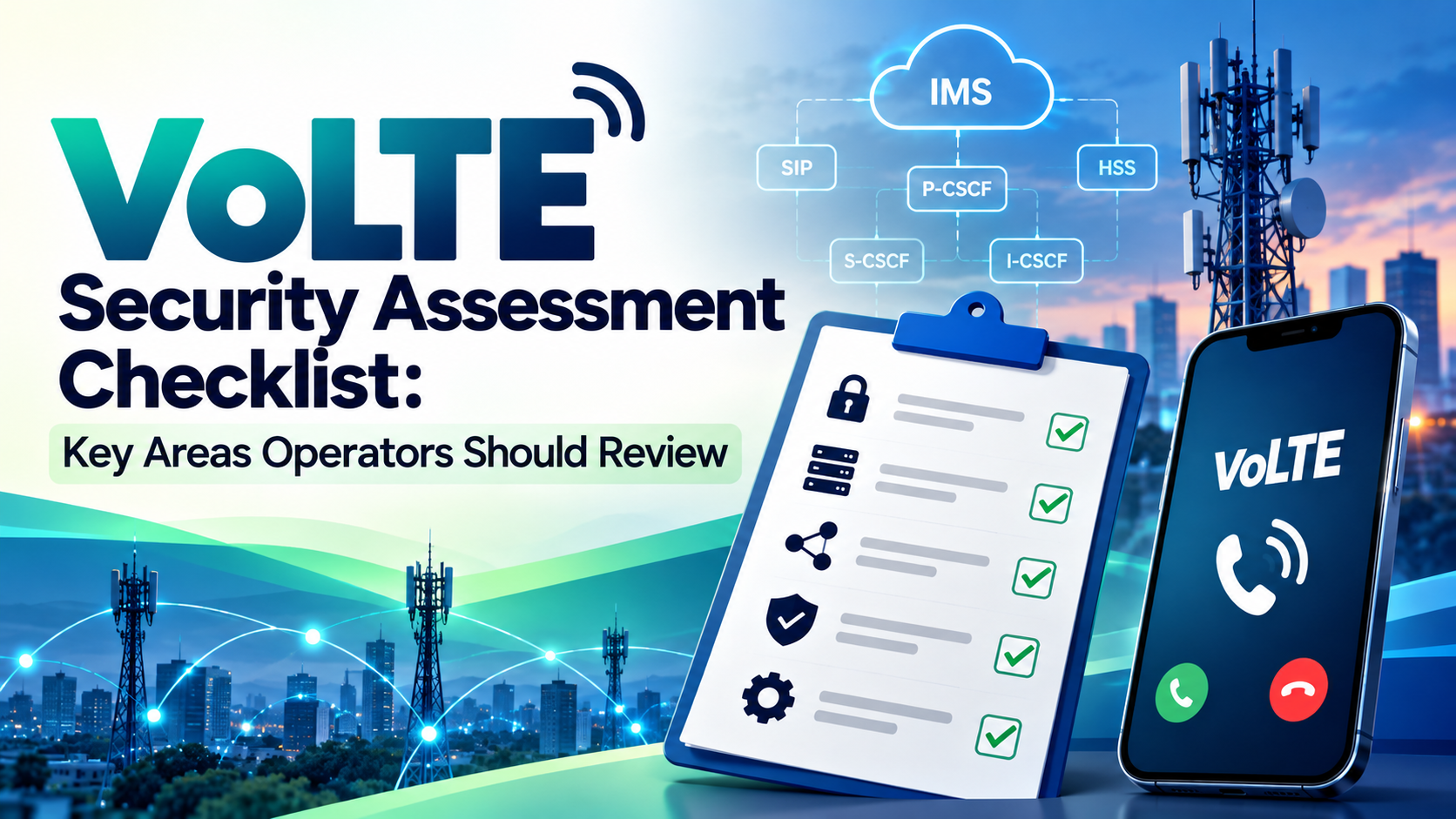

Voice over LTE (VoLTE) supports high-quality voice services over LTE networks, but its reliance on IP-based connectivity and the IP Multimedia Subsystem (IMS) creates security considerations that operators must review. A structured VoLTE security assessment checklist helps teams examine exposed interfaces, signaling, routing, access policies and subscriber-data protection before weaknesses affect service reliability or privacy.
This guide outlines the key checks to include in a VoLTE network security testing programme, explains how VoLTE penetration testing fits into the wider assessment, and shows what operators should expect from the IMS security assessment process. The checklist can support internal reviews, a VoLTE security audit, or a broader telecom network security assessment.
A VoLTE security assessment checklist is a repeatable set of review and testing activities used to evaluate whether VoLTE and supporting IMS components are configured and protected appropriately. It can combine configuration review, architecture analysis, controlled technical testing and evidence-based reporting. Unlike a simple compliance tick-box, it should connect each check to the operator’s architecture, threat exposure, service requirements and remediation priorities.
The checklist should be tailored to the VoLTE assessment scope: the network elements, interfaces, environments, interconnections and testing permissions agreed before work begins. IMS security testing may form one workstream, while telecom security testing may also consider related network boundaries and operational controls.
Document the VoLTE architecture, relevant IMS components, trust boundaries, external connections and dependencies. Confirm which systems and interfaces are in scope, which are excluded, and who authorises testing. Identify internet-facing or partner-facing paths, management interfaces and any routes that could expose internal services. A clearly defined scope makes the VoLTE security audit checklist practical and helps prevent unapproved testing.
Review how Session Initiation Protocol (SIP) signaling is authenticated, validated and handled across the environment. Check whether signaling policies restrict unexpected methods, malformed messages and unauthorised requests. Assess relevant controls for session establishment and termination, error handling, rate limits and logging. IMS security testing should verify that protections work as intended rather than relying only on configuration statements.
Check whether traffic is allowed only between approved sources, destinations and network functions. Review routing rules, filtering policies, access-control lists and rules governing communications between internal components and external networks. Look for overly broad permissions, unnecessary services and paths that bypass expected security boundaries. These checks help validate VoLTE security controls and reduce the chance of unauthorised access or service abuse.
Examine whether critical IMS components are appropriately separated from less-trusted systems and management networks. Review configuration baselines, administrative access, credential handling, unnecessary features and change-control practices. Confirm that responsibilities for configuration ownership and updates are clear. The checklist should record deviations, their operational relevance and the evidence needed to validate fixes.
Identify where subscriber identifiers, call-related metadata and other sensitive information are processed, stored or logged. Review whether access is restricted to legitimate operational needs and whether logs avoid unnecessary exposure of sensitive data. Assess controls designed to prevent unauthorised service manipulation, misuse of signaling and disruption of legitimate calls. A VoLTE vulnerability assessment should consider both technical exposure and the possible effect on subscribers and service operations.
Confirm that security-relevant events are recorded, time-synchronised, protected from unauthorised modification and available to the teams that need them. Check whether alerts cover suspicious signaling patterns, unexpected access and policy violations, and whether escalation paths are documented. VoLTE security reporting should distinguish confirmed findings from observations and explain how monitoring could help detect recurrence.
Prioritise findings using severity, exploitability, exposure and potential business or service impact. Assign an owner and target date to each remediation action, then retest fixes where appropriate. Record residual risk and any compensating controls. This closes the loop between assessment and improvement instead of treating the review as a one-time exercise.
A VoLTE security assessment can include architecture and configuration reviews, while VoLTE penetration testing focuses on safely validating whether weaknesses can be exploited within the agreed scope. IMS penetration testing may examine SIP and IMS-related trust boundaries, access restrictions and handling of unexpected traffic. Telecom penetration testing can extend to other authorised telecom assets, but the scope should be explicit and service-impact safeguards must be agreed in advance.
The right approach depends on the network design and risk priorities. A documented VoLTE security testing methodology typically includes scoping and rules of engagement, information gathering, network discovery, controlled security tests, analysis, reporting and retesting. Testing on live networks should be carefully planned with operational teams, approved test windows and rollback or stop conditions.
A useful IMS security assessment process produces an evidence-based report that explains the issue, affected assets, potential impact, severity, supporting evidence and recommended remediation. VoLTE security reporting should also include scope and limitations, methodology, prioritised actions and retest status. Operators should be able to translate the findings into clear technical tasks and governance decisions.
For an effective review, combine this checklist with relevant internal standards, architecture documentation and applicable operator requirements. It is not a substitute for a tailored assessment: controls and test cases should reflect the specific network, vendor implementation, interconnections and service model.
A practical VoLTE security assessment checklist helps operators systematically review the controls that protect voice services, IMS infrastructure and subscriber information. By combining scope definition, signaling and access-control checks, configuration review, monitoring and remediation validation, operators can make assessment results actionable. Matrix Shell can support telecom operators with a structured VoLTE security assessment tailored to their architecture, risk priorities and operational requirements.