Blog
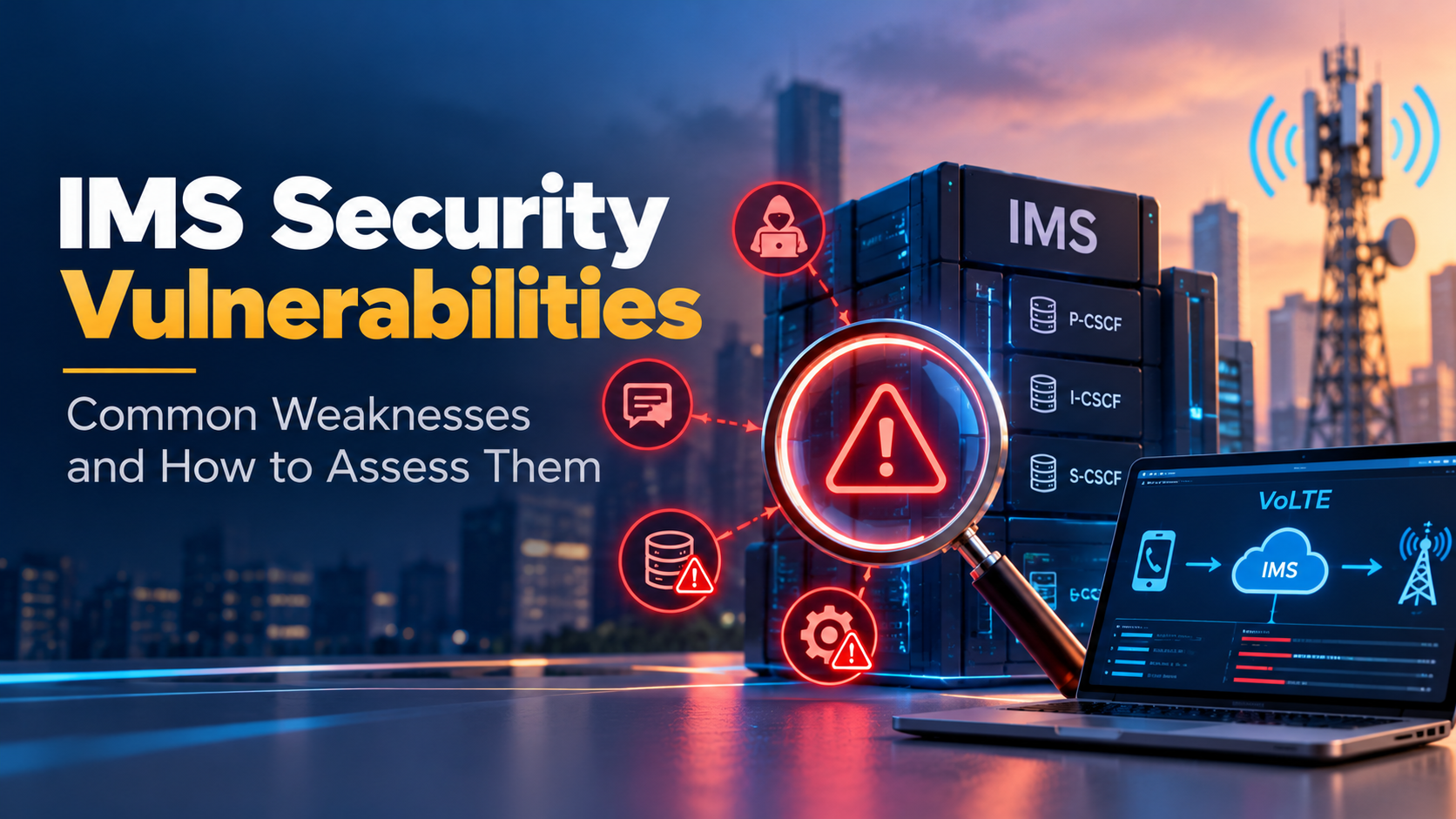

The IP Multimedia Subsystem (IMS) helps mobile operators deliver IP-based services such as Voice over LTE (VoLTE). Because IMS relies on interconnected network elements, signaling protocols and trusted interfaces, a weakness in one area can affect call availability, subscriber privacy or the wider service environment. Understanding IMS security vulnerabilities helps operators identify where controls may fail, validate the actual exposure and prioritize fixes before weaknesses are abused.
IMS security vulnerabilities are weaknesses in network design, configuration, software, access controls or procedures that may enable unauthorized activity, information exposure or service disruption. IP Multimedia Subsystem security covers core components, SIP signaling, interfaces, routing, identity management, logging and partner links.
IMS network security is particularly important in VoLTE environments, where signaling helps establish and manage voice sessions. A vulnerable interface, permissive trust relationship or outdated component can create risk even when other parts of the network are well protected.
VoLTE IMS security supports reliable call setup, session management and subscriber privacy. Weak controls may enable signaling abuse, call failures, resource exhaustion, unauthorized access or metadata exposure. Impact depends on architecture, implementation, safeguards and attacker access.
Interfaces that accept unnecessary sources can expose IMS components to unauthorized requests. Review permitted peers, segmentation, firewall rules and signaling gateway policies, applying least privilege to documented communication paths.
SIP vulnerabilities may arise when network elements handle malformed, unexpected or inconsistent messages incorrectly. Weak validation can affect session handling or create opportunities for signaling misuse. SIP signaling security reviews should check message validation, routing decisions, error handling and protocol-aware filtering.
IMS components often rely on defined trust relationships. Overly broad peer trust, permissive routing or inconsistent policies across internal and external connections can allow traffic to reach systems that should not accept it. Review interconnects and roaming paths as well as the internal core.
Repeated requests or abnormal signaling volumes can exhaust processing and session resources. Rate limiting, resilience controls, capacity monitoring and anomaly detection help prevent service disruption.
Signaling messages, diagnostic output and logs may reveal subscriber identifiers, network details or operational metadata. Limit access to sensitive records, minimize data retention and apply appropriate protections to signaling paths and monitoring systems.
Unpatched software, unsupported components and differences between approved and live configurations can leave known weaknesses unresolved. Maintain an asset inventory, track vendor advisories, use controlled change processes and periodically compare deployed settings with secure baselines.
Without visibility, operators may miss unusual registrations, signaling error spikes or unexpected sources. Define monitoring, investigation ownership, escalation paths and response playbooks.
An IMS security assessment should combine architecture and configuration reviews with controlled technical testing. The scope must be authorized, documented and designed to protect service continuity.
Map IMS components, SIP interfaces, management paths, external connections and roaming or interconnect relationships. Confirm owners, dependencies, test windows and exclusions.
Inspect access rules, authentication, routing, filtering, transport protection, software, logging and monitoring. Compare configurations with approved baselines and vendor guidance to confirm IMS security controls are applied.
Within the agreed scope, assess how components respond to unauthorized sources, malformed messages, unusual request rates and unexpected signaling behavior. IMS security testing should use safe, repeatable methods and avoid uncontrolled activity on production systems. SIP security testing can focus on relevant SIP-facing controls, while broader testing examines the wider IMS environment.
Document affected assets, evidence, impact, severity, remediation and owners. Separate confirmed vulnerabilities from hardening opportunities, prioritizing by exposure and service impact. IMS penetration testing should produce actionable findings and clear retesting criteria.
Apply fixes through change management, verify results and update the risk register. Retest controls and reassess after major architecture changes, new exposures or significant software updates.
Operators can strengthen IMS security by combining preventive, detective and corrective measures:
IMS security vulnerabilities can stem from weak access controls, SIP signaling gaps, misconfigured trust, resource-exhaustion exposure, information leakage or outdated components. A structured IMS security assessment helps operators determine which weaknesses are present, understand their likely impact and prioritize corrective action. Combining secure configurations, ongoing IMS security testing, monitoring and retesting supports more resilient IMS network security and helps reduce VoLTE security weaknesses.