Blog
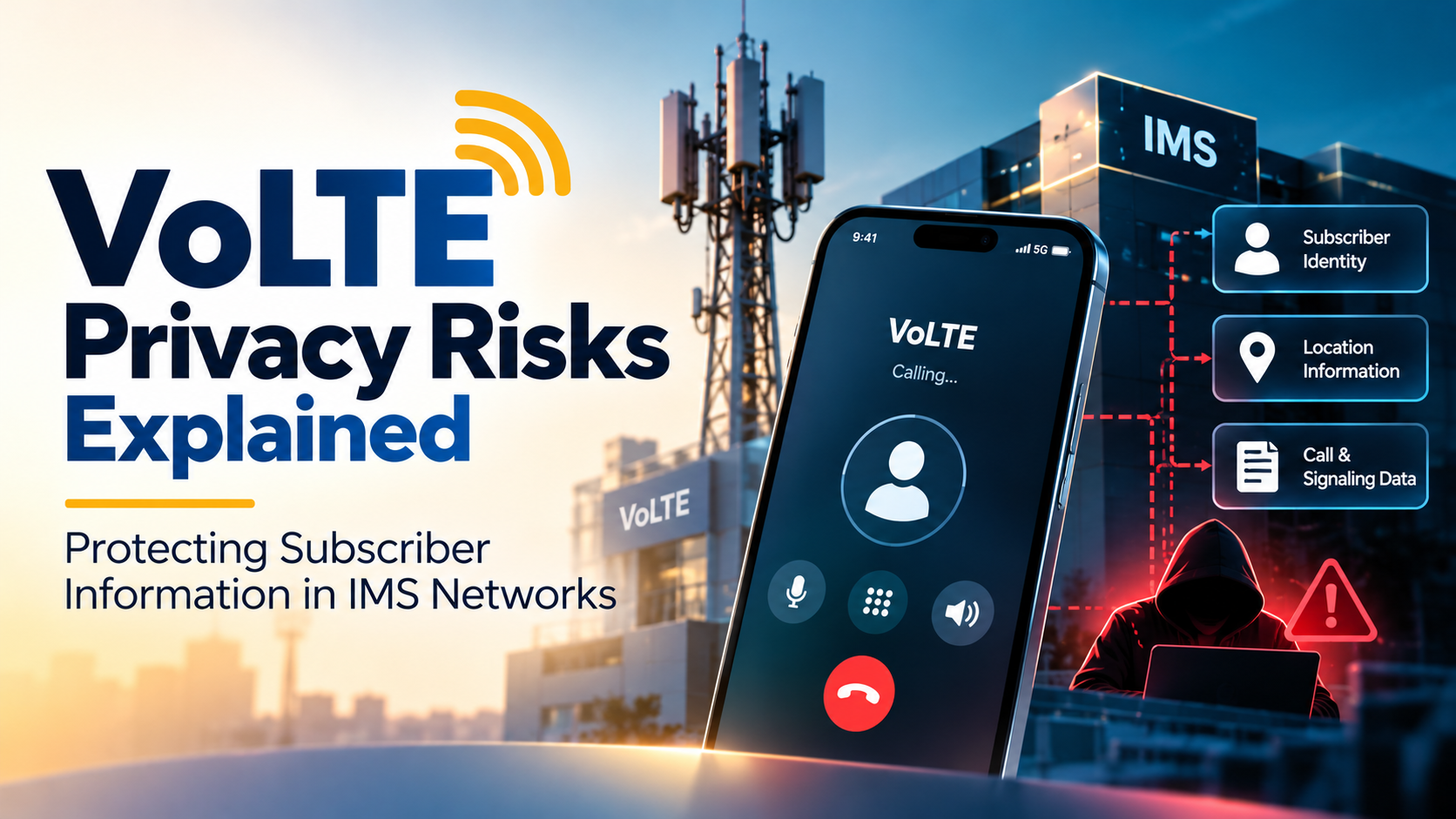

Voice over LTE (VoLTE) delivers voice services across LTE networks using IP-based communication and the IP Multimedia Subsystem (IMS). As calls and related signaling are managed through interconnected network components, subscriber identifiers, call-related metadata and operational records must be handled carefully. Weak controls can create VoLTE subscriber privacy risks, even when the core voice service appears to work normally.
This guide explains how VoLTE vulnerabilities and IMS vulnerabilities can affect subscriber information, where privacy risks may emerge, and how operators can strengthen IMS subscriber data protection. The actual exposure depends on the network architecture, implementation and controls in place; risks should be validated through an authorised, clearly scoped review.
Subscriber information can include identifiers, call-related metadata, signaling records and details held in operational logs or diagnostic tools. Such information may reveal patterns of use or other sensitive context if it is accessible to people or systems without a legitimate need. Protecting it is part of service trust, operational security and broader telecom network security.
VoLTE privacy risks do not arise from one single component. They may result from how IMS functions communicate, how access is granted, how logs are created and retained, and how external connections are governed. Operators should assess the full information lifecycle rather than focusing only on the voice path.
Overly broad permissions can allow more users or systems than necessary to view subscriber identifiers, call-related records or diagnostic information. Review role-based access, privileged accounts, support access and third-party permissions. Subscriber information security improves when access is based on business need, periodically reviewed and logged.
Troubleshooting tools and logs can unintentionally retain sensitive identifiers or details that are not required for operational analysis. Review what is captured, who can access it, how long it is retained and whether sensitive fields can be masked or minimised. Protect logs against unauthorised access and modification, and avoid copying production data into lower-trust environments without suitable safeguards.
VoLTE signaling vulnerabilities or permissive interface policies may create opportunities for unauthorised probing or access to information, depending on the implementation. Review signaling validation, authentication assumptions, traffic filtering and trust boundaries. VoLTE network security weaknesses should be assessed using approved methods that reflect the actual architecture.
Insufficient separation between critical IMS components, management networks and less-trusted environments can increase the consequences of a compromise. Review network paths, filtering rules and access between segments. IMS network security controls should restrict unnecessary communication and make trust boundaries explicit.
Keeping sensitive records longer than necessary or distributing them across uncontrolled systems increases the number of places where information may be exposed. Define retention periods, secure disposal procedures, approved storage locations and handling rules for exports or support cases. Ensure practices align with applicable legal, regulatory and contractual obligations.
Privacy incidents may go unnoticed when access events are not logged, alerts are incomplete or teams do not know how to escalate concerns. Review monitoring for unusual access, policy violations and configuration changes. Ensure logs are protected, time-synchronised and available to authorised responders without granting unnecessary broad access.
Depending on the weakness and network design, VoLTE network attacks may seek to misuse signaling, exploit exposed interfaces, access restricted resources or disrupt services. A privacy impact is not automatic: it depends on what information is reachable, the attacker’s access and the safeguards in place. Operators should avoid assuming a worst-case outcome without evidence, while treating credible exposure paths seriously.
IMS security risks should be evaluated alongside service availability and integrity. For example, a control gap may primarily expose an administrative interface, while another may affect access to logs or subscriber-related records. A risk-based review should identify the affected assets, possible data exposure, likelihood and practical remediation.
A structured VoLTE security assessment can help operators identify weaknesses and prioritise improvements. Consider these protective measures as part of an IMS security checklist:
Controls should be tested against the operator’s actual environment. A checklist helps make the review repeatable, but it does not replace technical validation or a risk-based assessment.
A VoLTE vulnerability assessment can identify weaknesses across the agreed service scope, while IMS security testing focuses on the supporting IMS environment and its controls. Depending on the objectives, work may include architecture review, configuration analysis, access-control checks, signaling testing, segmentation review and authorised penetration testing.
Broader telecom security testing may cover adjacent network domains only when they are explicitly included. Define the VoLTE assessment scope, testing permissions, service-impact safeguards, reporting requirements and retesting expectations before work begins. Findings should distinguish confirmed weaknesses from theoretical concerns and provide evidence-based remediation guidance.
Protecting subscriber information in VoLTE requires more than securing the voice service alone. Operators should review access, signaling, interfaces, segmentation, logs, retention and incident response across the supporting IMS environment. A structured VoLTE security assessment and IMS security testing can help identify relevant gaps, validate exposure and prioritise practical improvements. Matrix Shell can support telecom operators with assessments tailored to their architecture, operational requirements and agreed scope.

Case Study