Blog


The arrival of 5G has transformed mobile network architecture, enabling faster connectivity, lower latency, and new services for consumers and enterprises. However, the transition to 5G does not mean that every legacy network component disappears overnight.
Many telecom operators continue to manage interconnected 2G, 3G, and 4G/LTE environments alongside newer 5G deployments. In these multi-generation networks, Diameter remains important wherever it supports LTE services, roaming, or interworking with other network systems.
This creates an ongoing security responsibility. Operators must protect the 5G infrastructure they are building while ensuring that legacy signaling systems do not become overlooked entry points.
Understanding Diameter security in 5G requires looking beyond the 5G Core itself to examine how existing network components communicate, how signaling traffic is controlled, and whether security policies are consistently enforced.
Diameter is a signaling protocol widely used in 4G/LTE networks. It supports functions such as subscriber authentication, mobility management, and policy control.
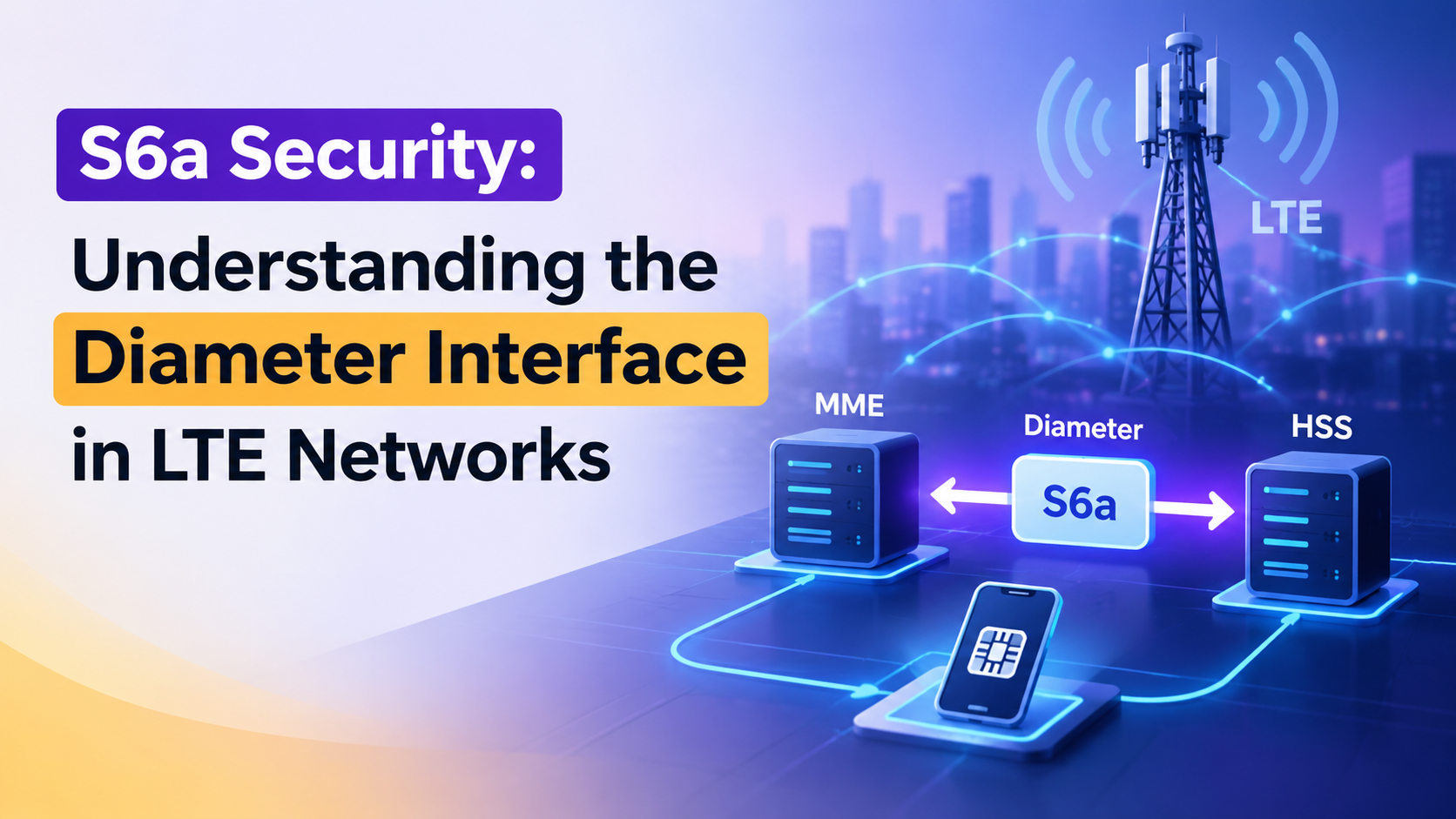
For example, the S6a interface enables communication between the Mobility Management Entity (MME) and Home Subscriber Server (HSS), helping an LTE network authenticate subscribers and manage their access.
As operators introduce 5G, their existing LTE infrastructure may continue supporting customers, coverage, roaming, and interworking requirements. Diameter may therefore remain part of the wider signaling environment even when a 5G Core is deployed.
Three factors help explain its continuing relevance:
The result is that Diameter security remains an operational concern, not simply a legacy technology issue.
SS7 and Diameter serve different roles in mobile network evolution. SS7 is associated with traditional 2G/3G signaling, while Diameter is widely used in 4G/LTE environments.
Both protocols can face security challenges when signaling traffic is insufficiently controlled.
The comparison of Diameter vs SS7 security should not be reduced to deciding which protocol is safer. Diameter offers capabilities suited to IP-based mobile networks, but its protection depends on implementation and configuration.
Likewise, SS7 risks may persist wherever legacy networks remain active. Operators need security measures appropriate to each protocol and the interfaces through which it communicates.
Diameter supports essential network functions and may carry sensitive subscriber-related information. If security controls are weak, an attacker with suitable signaling access may attempt to exploit those weaknesses.
Inadequate message filtering
A Diameter firewall or DEA that permits excessive or unexpected traffic may allow unauthorized requests to reach sensitive network functions.
Operators should validate messages and apply policies based on the signaling relationship, interface, command, and relevant message attributes.
Weak interconnect controls
Roaming and interconnection arrangements can involve multiple operators and technology providers. If network boundaries rely on excessive trust, suspicious signaling requests may not be adequately restricted.
Operators should review peer configurations, routing policies, and authorization rules regularly.
Subscriber information exposure
Diameter exchanges information required for subscriber authentication and mobility. Inadequate access controls may expose sensitive information to entities that should not be able to request it.
Appropriate authorization and filtering can help limit this risk.
Denial of service and signaling abuse
Unexpected or excessive signaling requests may consume network resources or affect service availability. Monitoring traffic patterns, validating messages, and applying appropriate rate controls can help operators detect and mitigate suspicious activity.
These are potential risks, not guaranteed outcomes. Actual exposure depends on the network architecture, access available to an attacker, and the controls deployed.
The relationship between SS7, Diameter, and 5G is especially important for operators managing interconnected network generations.
The 5G Core uses a service-based architecture for many core network functions, with HTTP/2-based communication on relevant interfaces. It has its own security requirements, including protections for service communication and authorization between network functions.
Diameter is not the universal native signaling protocol for the 5G Core. Nevertheless, it may remain relevant around 5G deployments through LTE infrastructure, roaming, and interworking with legacy systems.
This is why SS7 Diameter 5G security needs to be considered across the broader network environment.
Operators should ask:
A security review that examines only the newest infrastructure may miss weaknesses in the systems that continue to support subscribers and roaming services.
Protecting modern mobile networks requires a coordinated approach to legacy signaling, LTE infrastructure, and 5G-specific security.
1. Map signaling dependencies
Document where Diameter is used, which network functions depend on it, and how those systems connect to roaming partners or legacy infrastructure.
2. Review Diameter firewall and DEA policies
Ensure that signaling controls restrict unauthorized requests, validate messages, and enforce policies appropriate to each interface and peer.
3. Strengthen authorization and access controls
Limit signaling access to the entities and operations that are genuinely required. Review trust relationships instead of assuming that recognized connections are always safe.
4. Monitor signaling activity
Establish baselines for normal traffic and investigate unusual request volumes, unexpected messages, repeated policy violations, and other suspicious patterns.
5. Assess legacy and 5G interfaces separately
Test SS7 and Diameter controls where those protocols remain in use. Assess 5G service-based interfaces according to their own architecture and security requirements.
6. Conduct regular security testing
Periodic assessments can identify configuration weaknesses, inadequate filtering, and gaps in network segmentation or authorization. Retesting after major infrastructure changes helps verify that controls remain effective.
Telecom environments change continuously as operators expand coverage, introduce services, modify roaming relationships, and update network components. A configuration that was suitable for one network design may become inadequate after a change.
Ongoing signaling security assessments help operators understand their exposure, validate existing controls, and prioritize remediation.
A comprehensive assessment should consider the protocols in use, exposed interfaces, interconnection arrangements, access permissions, monitoring capabilities, and the relationship between legacy and newer network systems.
This approach helps operators manage the practical security implications of network evolution instead of assuming that adopting 5G automatically resolves earlier signaling weaknesses.
Diameter remains relevant in the 5G era because mobile network evolution is gradual, and operators often continue to rely on LTE, roaming, and interworking infrastructure.
The relationship between SS7 vs Diameter security and newer 5G requirements demonstrates why operators need a layered, protocol-aware security strategy. Legacy signaling risks must be addressed where SS7 remains active, Diameter controls must be maintained wherever the protocol is used, and 5G interfaces require their own appropriate protections.
By mapping signaling dependencies, enforcing authorization, strengthening filtering, monitoring traffic, and conducting regular security assessments, telecom operators can reduce exposure across interconnected network generations.