Blog
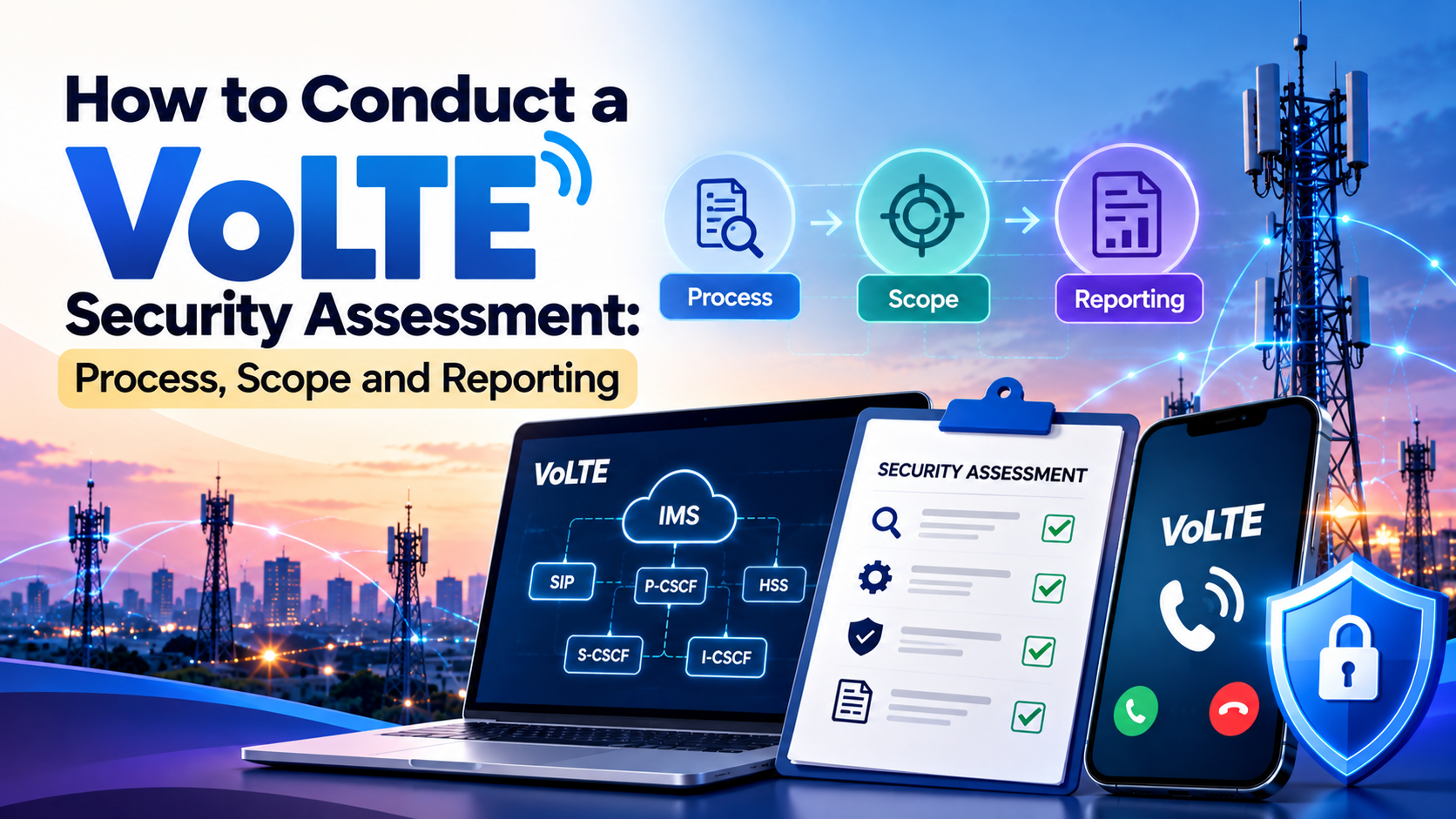

Voice over LTE (VoLTE) delivers voice services across LTE networks using IP-based communication and the IP Multimedia Subsystem (IMS). This architecture supports modern voice experiences, but it also makes signaling, interfaces, routing and configuration important parts of the security picture. A structured VoLTE security assessment helps telecom operators identify weaknesses, validate protective measures and prioritise improvements without losing sight of service availability.
This guide explains how to plan and conduct an assessment, define the VoLTE assessment scope, choose appropriate testing methods and prepare useful findings. It also shows how VoLTE penetration testing, IMS security testing and a wider telecom network security assessment can work together.
A VoLTE security assessment is a structured review of the systems, interfaces, configurations and operational controls that support VoLTE services. Depending on its objectives, it may include architecture review, configuration analysis, access-control checks, signaling assessment and controlled technical testing. The goal is to understand how well the environment is protected, identify security gaps and provide practical remediation guidance.
The assessment may include a VoLTE vulnerability assessment to identify weaknesses, a VoLTE security audit to examine policies and configurations, and VoLTE penetration testing to validate whether selected weaknesses can be exploited within an authorised scope. These activities overlap, but they are not identical. The right mix depends on network design, risk priorities and the questions the operator needs answered.
Start by agreeing the assessment objectives, systems and interfaces to be reviewed, testing permissions, exclusions and expected deliverables. Map the relevant IMS components, trust boundaries, interconnections, management paths and dependencies. Identify whether the work covers production, staging or lab environments, and document any restrictions on testing.
A clear scope prevents assumptions about which assets are included and helps protect service continuity. It should name accountable contacts, test windows, escalation routes and stop conditions. For a broader telecom security testing engagement, list any additional network domains explicitly rather than assuming they are covered.
Review network diagrams, data flows, interface exposure, security responsibilities and configuration standards. Check whether access is limited to approved sources and destinations, whether unnecessary services are disabled, and whether administrative access is appropriately restricted. Examine routing, filtering and segmentation between critical components and less-trusted environments.
Use an IMS security checklist to organise the review. Consider authentication and access management, configuration baselines, change control, logging, incident escalation and protection of sensitive subscriber information. Evaluate whether VoLTE security controls are documented, consistently implemented and supported by evidence—not merely described in policy documents.
IMS security testing should reflect the architecture and interfaces in scope. Review how SIP signaling and related messages are validated and handled, and whether controls restrict unexpected requests or traffic. Assess relevant access restrictions, rate limits, error handling and logging. Where authorised, use controlled tests to validate that the expected protections operate correctly.
VoLTE network security testing may also examine trust boundaries, routing and filtering rules, management interfaces and connections with external or partner networks. The testing team should avoid disruptive techniques unless explicitly approved and supported by a documented safety plan. Production testing requires close coordination with network operations.
A repeatable VoLTE security testing methodology usually includes scoping and rules of engagement, information gathering, architecture and network discovery, controlled testing, evidence analysis, reporting and remediation validation. The depth of each phase should reflect the operator’s environment, risk tolerance and objectives.
Telecom penetration testing and IMS penetration testing can provide deeper technical validation for selected attack paths. They should be distinguished from configuration or compliance reviews, which may identify control gaps without demonstrating exploitability. Combining methods can give decision-makers a more complete view of likelihood, impact and remediation priority.
For each finding, record the affected asset or interface, supporting evidence, the security weakness, potential impact and recommended corrective action. Assign severity using a consistent method that considers exploitability, exposure, service impact and subscriber or business risk. Separate confirmed vulnerabilities from observations and improvement opportunities.
A useful report makes remediation practical: identify owners where agreed, recommended priorities, dependencies and target dates. Avoid unsupported claims or overstating impact. Where a risk cannot be removed immediately, document residual risk and any compensating controls.
VoLTE security reporting should include the agreed scope, objectives, methodology, limitations, summary of findings, technical evidence, risk ratings and prioritised recommendations. Include an executive summary for decision-makers and sufficient technical detail for engineering teams to reproduce and address issues. Record whether fixes have been retested and whether any risks remain open.
The IMS security assessment process should finish with a remediation review, not simply delivery of a report. Retesting confirms whether corrective actions resolved the original issue and helps identify regressions. Update the VoLTE security audit checklist as the environment changes, while retaining evidence of decisions and follow-up work.
A well-planned VoLTE security assessment gives operators a structured view of the risks affecting voice services and the controls intended to protect them. Clear scope, architecture review, IMS security testing, controlled penetration testing, risk-based analysis and thorough reporting turn technical observations into actionable improvements. Matrix Shell can support telecom operators with an assessment tailored to their network architecture, operational constraints and security priorities.