Blog
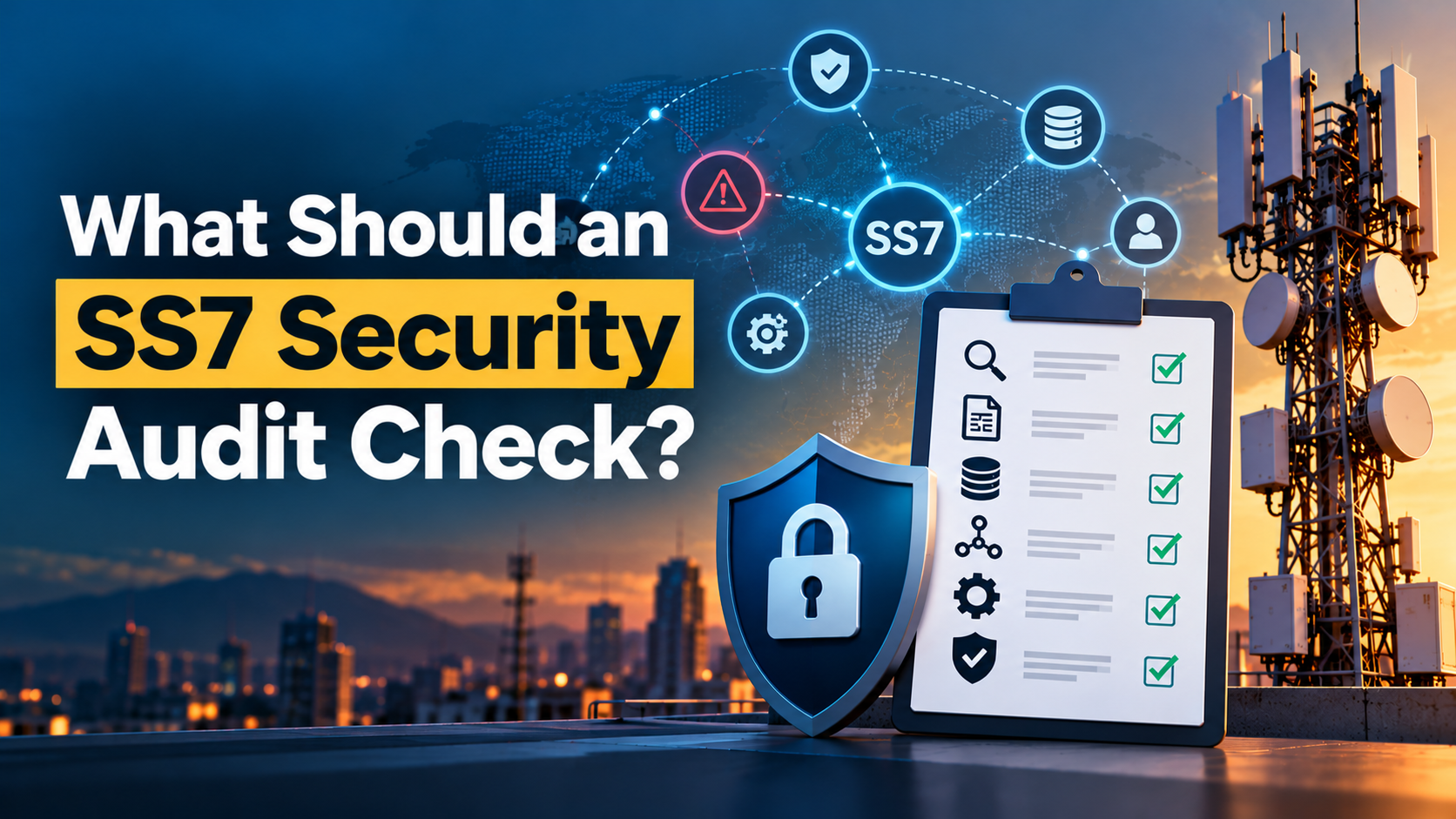

An SS7 security audit should examine more than individual vulnerabilities. It should provide a structured review of the signaling environment, including network architecture, signaling access, firewall controls, configurations, interconnections, monitoring, and potential security exposure.
Because SS7 supports critical telecom functions such as call routing, SMS delivery, subscriber mobility, and inter-network communication, weaknesses in signaling controls can create risks for both subscribers and network operations.
A well-defined set of SS7 audit checks helps telecom operators determine whether their signaling infrastructure is adequately protected and whether existing security controls are working as intended.
This guide explains the key areas an SS7 security audit should check and provides a practical SS7 audit checklist for telecom operators.
An SS7 security audit should examine the complete signaling security posture rather than focusing on a single network component.
The primary areas include:
The exact scope can vary depending on the operator’s infrastructure, but these areas form the foundation of an effective SS7 audit.
The first area of an SS7 security audit should be the network architecture.
Auditors should understand how signaling traffic moves through the environment and identify the network elements responsible for routing, processing, and controlling SS7 messages.
Key SS7 audit checks include:
Understanding the architecture provides the foundation for evaluating other security controls.
Access control is another critical area of an SS7 audit.
SS7 networks often rely on trusted relationships between connected entities. If signaling access is not appropriately restricted, unauthorized signaling traffic may reach sensitive network functions.
An SS7 audit checklist should verify:
Operators should also periodically review whether existing access permissions are still required.
Signaling firewalls play an important role in controlling SS7 traffic and preventing unauthorized or suspicious signaling activity.
A security audit should therefore examine whether firewall policies are appropriately configured for the operator’s network requirements.
Important SS7 audit checks include:
The objective is not simply to confirm that a signaling firewall exists, but to determine whether its configuration provides effective protection.
Message filtering is closely connected to signaling firewall security.
An audit should evaluate whether signaling controls appropriately distinguish legitimate traffic from potentially harmful or unauthorized requests.
The review may examine:
Weak filtering can increase the risk of signaling abuse, particularly where networks have multiple external connections.
Configuration weaknesses can create unnecessary security exposure.
An SS7 security audit should review the security configuration of relevant network elements and determine whether configurations follow established security baselines.
The SS7 audit checklist should include checks for:
Configuration reviews should also consider whether security settings remain appropriate after network upgrades or architecture changes.
Telecom networks rarely operate in isolation. Operators may maintain signaling relationships with roaming partners, other carriers, service providers, and external networks.
These connections can expand the signaling attack surface.
An audit should therefore examine:
This is particularly important because a weakness outside the operator’s immediate infrastructure can potentially introduce additional signaling risk.
Security controls are most effective when suspicious activity can be identified quickly.
An SS7 security audit should assess whether signaling activity is appropriately monitored and whether relevant security events are logged.
Important checks include:
Strong monitoring can help operators detect abnormal signaling behavior before it develops into a larger security or operational issue.
An audit should also consider the potential impact of signaling weaknesses on subscribers.
SS7 security gaps can contribute to risks involving:
The audit should determine whether appropriate controls are in place to reduce these risks.
An SS7 audit should not stop at identifying technical weaknesses. Findings need to be assessed according to their potential impact.
Each finding can be evaluated based on:
This enables operators to prioritize remediation instead of treating every finding with the same urgency.
A practical SS7 audit checklist should cover the following:
The frequency of SS7 audit checks depends on the operator’s risk profile, infrastructure, regulatory requirements, and network changes.
An SS7 security audit should be considered following:
Periodic reviews are also valuable because signaling environments and threat conditions evolve over time.
An effective SS7 security audit should provide a comprehensive view of how signaling infrastructure is exposed, protected, monitored, and managed.
From architecture and access controls to signaling firewalls, configurations, interconnections, monitoring, and vulnerability management, each area contributes to the overall security posture.
Using a structured SS7 audit checklist ensures that critical controls are not overlooked, while systematic SS7 audit checks help operators identify and prioritize weaknesses.
For telecom operators, the objective should not be a one-time compliance exercise. Regular auditing combined with targeted signaling security testing can help continuously strengthen SS7 defenses, protect subscribers, and improve network resilience.

Case Study