Blog
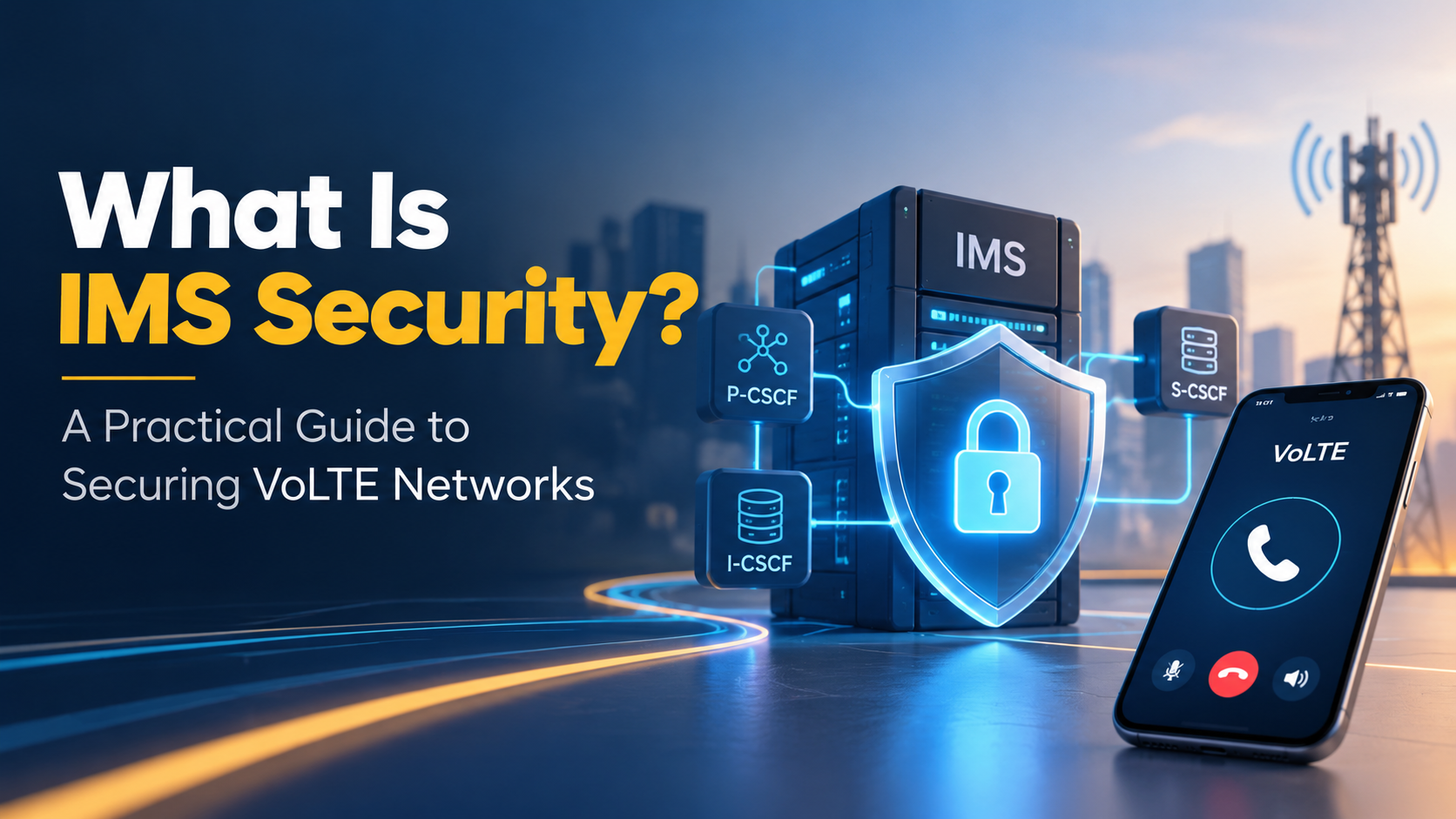

The IP Multimedia Subsystem (IMS) enables IP-based communication services, including Voice over LTE (VoLTE). It coordinates functions involved in setting up, managing and ending sessions, making its components, interfaces and signaling policies important parts of a telecom operator’s security posture. IMS security focuses on protecting this environment against unauthorised access, signaling misuse, configuration weaknesses and exposure of sensitive information.
This practical guide explains IMS network security, how it relates to VoLTE IMS security, and which controls operators should review. It also outlines how SIP signaling security, IMS security assessment and targeted testing can help identify gaps. The exact controls and risks depend on each network’s architecture, implementation and interconnections.
IMS security is the combination of technical controls and operational practices used to protect the IMS architecture, its signaling, interfaces, network functions and supporting information. It aims to ensure that only authorised systems and users can communicate with relevant components, that signaling is handled according to policy, and that security events can be detected and investigated.
IMS network security is not a single product or setting. It includes architecture design, access control, secure configuration, traffic filtering, segmentation, monitoring, change management and response procedures. For VoLTE services, these protections help support voice-service integrity and availability while reducing the risk of exposing subscriber-related information.
VoLTE uses IMS to manage voice sessions over LTE infrastructure. If signaling rules are too permissive, interfaces are unnecessarily exposed or administrative access is weak, the environment may be more vulnerable to service misuse or unauthorised access. Poorly protected logs and diagnostic tools may also create privacy concerns.
VoLTE IMS security should therefore be reviewed end to end. Operators need to understand how components communicate, where trust boundaries exist, how external and partner connections are controlled, and whether policies are consistently applied. A review should validate the real environment rather than assume every network has the same risks.
Limit access to IMS components and management interfaces to approved users and systems. Review authentication requirements, role assignments, privileged accounts, credential handling and remote administration paths. Apply least privilege, remove unused accounts and periodically confirm that permissions remain appropriate.
Session Initiation Protocol (SIP) supports session signaling used by VoLTE. SIP signaling security reviews should examine how messages are validated and processed, how unexpected requests are handled, and whether relevant authentication, filtering, rate limits and logging are in place. The goal is to prevent unnecessary signaling exposure and detect suspicious behavior without disrupting legitimate service.
Document the interfaces and communication paths required by the architecture. Check that routing and filtering rules permit only justified traffic between approved endpoints. Remove unnecessary exposure and review exceptions, especially around external connections, partner networks and management paths. Changes to the network should trigger a review of related access rules.
Critical IMS functions should be separated from less-trusted systems where appropriate, with inter-segment traffic restricted to necessary paths. Review configuration baselines, enabled services, administrative protocols and change-control records. Configuration drift and undocumented exceptions can weaken otherwise sound security design.
Review where subscriber identifiers and call-related metadata may appear in logs, diagnostic output or support records. Restrict access to sensitive information, minimise unnecessary collection and retention, and protect logs from unauthorised access or alteration. Clear handling rules help strengthen subscriber information protection.
Confirm that relevant access events, signaling anomalies, configuration changes and policy violations are logged and reviewed. Logs should be protected and time-synchronised, with clear ownership for alert triage and escalation. Test whether incident procedures give teams the information and authority needed to investigate suspicious activity.
Potential weaknesses may include overly broad access permissions, exposed interfaces, inconsistent filtering, insecure configurations, insufficient segmentation and gaps in signaling validation or monitoring. SIP vulnerabilities should be evaluated in the context of the specific implementation; the presence of a protocol alone does not establish that a system is vulnerable.
IMS vulnerabilities can also arise from operational practices, such as undocumented changes, unreviewed third-party access or unresolved assessment findings. Operators should prioritise risks based on evidence, exposure and possible service or subscriber impact, rather than treating every observation as equally severe.
An IMS security assessment begins by defining objectives, assets, interfaces, exclusions, authorisation and operational safeguards. Review architecture and configurations, examine access and signaling controls, assess segmentation and monitoring, and validate selected controls through approved technical tests. Document the evidence and distinguish confirmed weaknesses from potential concerns.
IMS security testing may include configuration review, access-control validation, SIP security assessment, SIP security testing and authorised penetration testing. IMS penetration testing focuses on validating selected attack paths within an agreed scope, while a broader assessment may also examine architecture and operational controls. Production testing should be coordinated with network operations, with approved test windows and clear stop conditions.
Use the checklist as a repeatable starting point, not as proof that all risks have been found. The controls and test cases should reflect the operator’s architecture, service requirements and applicable obligations.
IMS security is foundational to protecting VoLTE services and their supporting network functions. By reviewing access, SIP signaling, interfaces, segmentation, configuration, subscriber information and monitoring, operators can identify and reduce avoidable exposure. A structured IMS security assessment, supported by targeted IMS security testing, helps turn findings into prioritised improvements. Matrix Shell can support telecom operators with assessments tailored to their architecture, service requirements and agreed scope.