Blog

Telecom networks rely on signaling systems to manage critical services such as subscriber authentication, mobility, call routing, SMS delivery, and roaming. Among these systems, SS7 continues to play an important role in many legacy and interconnected telecom environments.
However, the trust-based design of SS7 can create security risks when signaling traffic is not properly controlled. Attackers may attempt to exploit signaling weaknesses to track subscribers, intercept SMS messages, access sensitive information, commit fraud, or disrupt services.
This is where an SS7 firewall becomes an important security control.
But why SS7 firewall protection is necessary when telecom operators already have conventional network security tools? The answer lies in the unique nature of telecom signaling. Traditional security controls may protect IP infrastructure, but they may not understand the context and behavior of SS7 signaling messages.
An SS7 firewall provides specialized protection for this critical signaling layer.
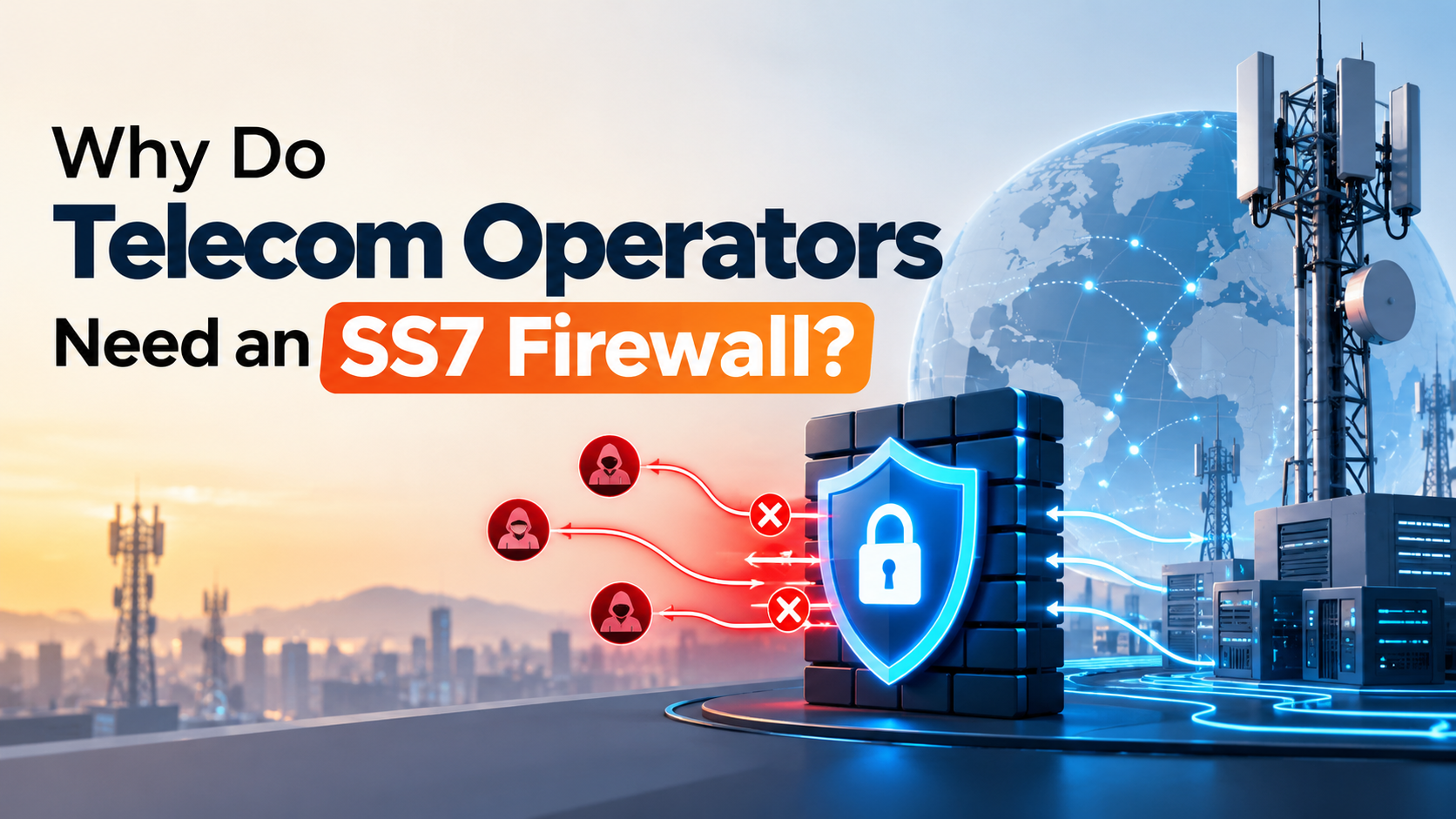
The primary reason operators need an SS7 firewall is to control signaling traffic entering and leaving their networks.
SS7 depends heavily on trusted relationships between interconnected telecom networks. In today’s environment, operators may have numerous roaming partners, signaling providers, interconnections, and legacy systems.
Without appropriate controls, a compromised or malicious signaling source may attempt to send requests that appear technically valid but are inappropriate for the requested network function.
An SS7 firewall helps operators inspect these requests, apply security policies, and block or monitor suspicious signaling activity.
The SS7 firewall benefits extend beyond simply blocking malicious traffic. A properly deployed firewall can help improve subscriber privacy, fraud protection, signaling visibility, and overall network resilience.
Subscriber-related signaling information can be a valuable target for attackers.
Unauthorized signaling requests may potentially be used to obtain information about subscribers, their network status, or mobility.
An SS7 firewall can apply policies to sensitive signaling requests and restrict access based on factors such as source, destination, message type, and network context.
This helps reduce unnecessary exposure of subscriber information.
Location tracking is one of the major security and privacy concerns associated with SS7.
Attackers may attempt to abuse signaling functions to determine where a subscriber is registered or identify their serving network.
A signaling firewall can inspect location-related requests and block those that do not meet defined security policies.
This makes subscriber location protection one of the important SS7 firewall benefits for telecom operators.
SMS is still widely used for communication, notifications, and authentication.
Attackers may attempt to manipulate signaling associated with SMS delivery to intercept or redirect messages.
An SS7 firewall can inspect relevant signaling traffic and enforce policies designed to prevent unauthorized SMS-related requests.
This is particularly important when SMS is used to deliver authentication codes or other sensitive information.
SS7 can also be abused to facilitate different forms of telecom fraud.
Suspicious signaling activity may involve unusual requests, unauthorized service manipulation, or abnormal signaling patterns.
An SS7 firewall provides a control point where operators can identify and restrict signaling activity that violates established policies.
By reducing unauthorized signaling access, operators can make it more difficult for attackers to abuse telecom services.
Another important benefit is visibility.
Without dedicated signaling security controls, operators may have limited insight into which external sources are generating requests and what those requests are attempting to accomplish.
An SS7 firewall can provide monitoring and logging capabilities that help security teams understand:
This visibility can support both proactive security monitoring and incident investigation.
SS7 attacks are not limited to confidentiality and privacy.
Attackers can also generate excessive or inappropriate signaling activity that may affect network resources and services.
A properly configured SS7 firewall can filter unauthorized or suspicious signaling traffic and help reduce the potential impact of signaling-based disruption.
This supports network availability and service continuity.
A conventional network firewall primarily focuses on network and IP traffic.
An SS7 firewall, in contrast, is designed to understand telecom signaling and apply security policies to signaling messages.
This distinction matters because a signaling message can be technically valid while still being suspicious in the context of a particular subscriber, network relationship, or service.
For example, a signaling request may use a legitimate SS7 procedure but originate from a source that should not be requesting that information.
An SS7 firewall can evaluate these signaling-specific conditions and apply appropriate controls.
An SS7 firewall should be considered part of a broader telecom signaling security strategy rather than a standalone product.
Operators need to understand their signaling architecture, identify external connections, assess trust relationships, and determine which signaling functions require stronger protection.
Security policies should then be developed around legitimate signaling behavior.
This approach helps operators move from simply reacting to attacks toward proactively controlling signaling exposure.
Deploying an SS7 firewall does not automatically make a network secure.
The effectiveness of the firewall depends heavily on its configuration and the quality of its security policies.
Operators should regularly review:
Poorly configured rules can create security gaps, while overly restrictive policies can potentially interfere with legitimate telecom services.
A balance between security and operational requirements is therefore essential.
Another important consideration is validating whether the firewall actually provides the expected protection.
SS7 security testing can simulate relevant signaling attack scenarios and determine whether security policies correctly identify and block unauthorized requests.
Testing can help operators identify:
For a practical look at how testing helps strengthen telecom environments, see How Signaling Security Testing Helps Prevent Fraud and Network Disruptions.
Testing and firewall protection therefore serve different but complementary purposes: the firewall enforces security policies, while testing validates whether those policies work effectively.
One of the important SS7 firewall benefits is its role in protecting legacy signaling within increasingly complex telecom environments.
Modern operators may operate multiple network generations simultaneously:
Even when newer technologies are deployed, legacy SS7 infrastructure may remain relevant because of roaming, interworking, and existing network dependencies.
Operators therefore need to consider SS7 protection as part of a broader multi-generation signaling security architecture.
A useful next step is to review How to Build a Signaling Security Strategy for 2G, 3G, 4G, and 5G Networks.
To maximize the value of an SS7 firewall, operators should:
These practices help ensure the firewall remains effective as telecom infrastructure and threat patterns change.
The answer to why SS7 firewall protection matters is rooted in the unique security challenges of telecom signaling.
An SS7 firewall provides a dedicated layer for inspecting, filtering, and controlling signaling traffic. It can help protect subscriber information, reduce location tracking and SMS interception risks, limit signaling-based fraud, improve visibility, and support network availability.
However, firewall deployment should not be treated as the end of the security process. Strong SS7 attack prevention requires continuous testing, monitoring, policy management, and broader signaling security controls.
For telecom operators maintaining legacy SS7 alongside modern network technologies, an appropriately configured SS7 firewall can be a critical component of a resilient and comprehensive signaling security strategy.