Blog
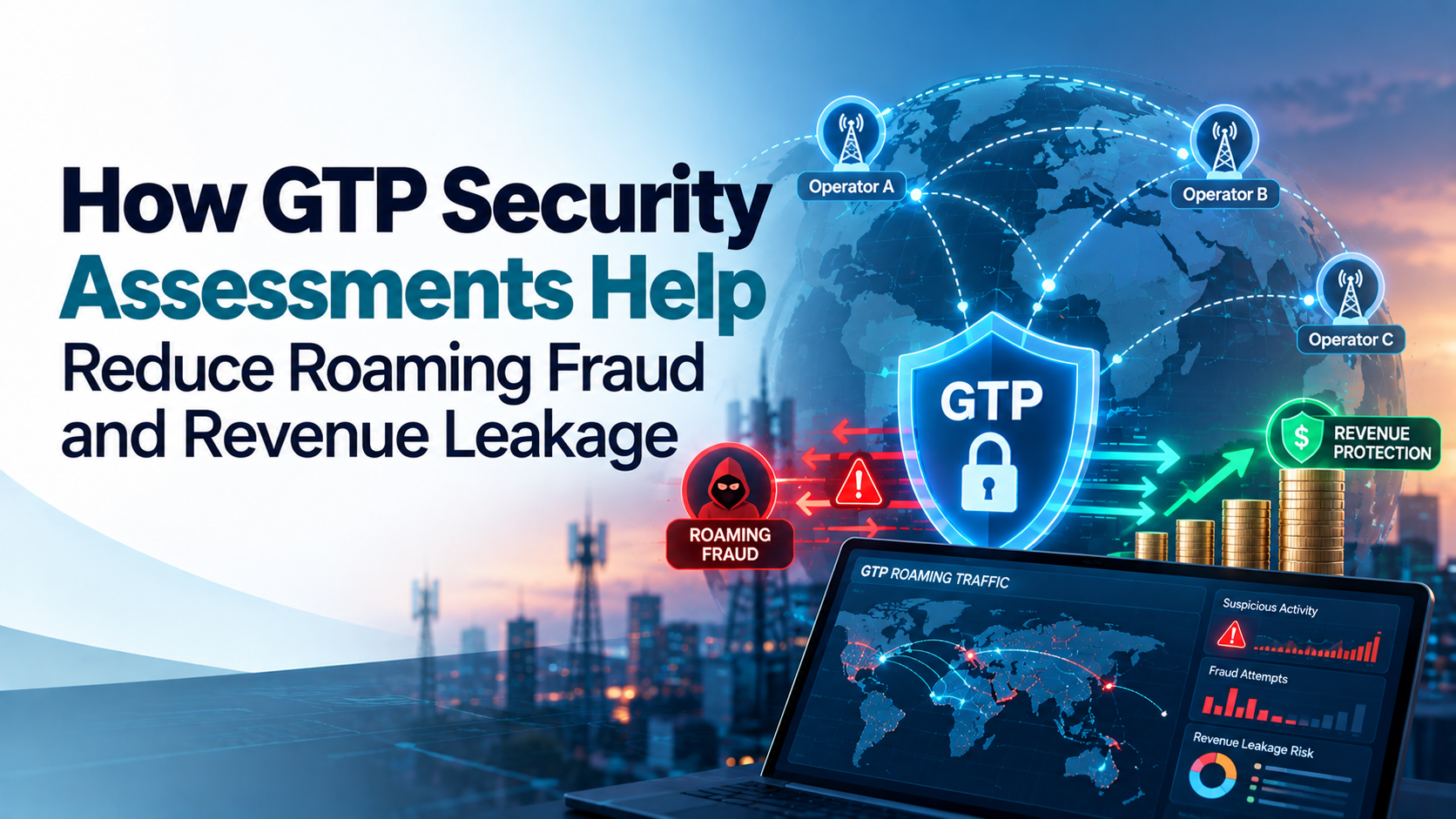

Mobile roaming allows subscribers to use data services outside their home operator's network. Behind this convenience, telecom operators must manage signaling, subscriber sessions and usage across interconnected networks and roaming partners.
However, weaknesses in the GPRS Tunneling Protocol (GTP), permissive interconnect configurations and inadequate monitoring can increase exposure to unauthorized activity. In some circumstances, these weaknesses may contribute to roaming fraud, unauthorized data usage or telecom revenue leakage.
A structured GTP security assessment helps operators identify weaknesses in their mobile core environment, evaluate existing security controls and prioritize remediation. This article explains how GTP security assessments support roaming fraud prevention and help protect telecom operations.
GTP roaming fraud refers to fraud-related risks involving weaknesses or misuse of GTP communications and associated roaming services. The exact risk depends on the network architecture, the security controls in place and how the weakness could affect subscriber sessions or service delivery.
GTP-C supports control-plane procedures, including session creation, modification and deletion. GTP-U carries user-plane data on applicable interfaces. Inadequately protected interfaces or insufficient validation may increase the risk of unauthorized signaling or misuse of network resources.
Not every GTP vulnerability results in fraud, and revenue leakage can have operational or commercial causes unrelated to protocol security. However, identifying and addressing relevant weaknesses can help reduce exposure and improve the integrity of roaming services.
Roaming services depend on coordination between home networks, visited networks and interconnection providers. When security controls are insufficient, several risks may require investigation.
Weak access restrictions or session-handling controls may increase the risk of unauthorized activity in certain network environments. Such activity can affect service integrity and create discrepancies between expected and observed usage.
Security assessment helps determine whether interfaces are adequately restricted and whether relevant signaling procedures are validated as intended.
GRX and IPX networks provide connectivity between telecom operators and other service providers. However, connectivity through a managed interconnect does not automatically establish that all traffic is legitimate.
Gaps in GRX security, IPX security or broader roaming interconnect security may arise from excessive trust, inappropriate filtering policies or insufficient monitoring at network boundaries.
Telecom revenue leakage can occur for many reasons, including charging discrepancies, operational errors and fraud. Security weaknesses may contribute where they enable unauthorized service use or undermine the integrity of session-related processes.
A GTP security assessment helps identify technical weaknesses that could contribute to these risks. Operators should correlate security findings with usage records, charging data and fraud investigations before attributing financial losses to a particular vulnerability.
Limited monitoring can make suspicious signaling harder to identify and investigate. If logs, alerts and incident-response processes are inadequate, operators may struggle to establish what happened, which interfaces were affected and whether subscriber services were exposed.
Improving visibility helps teams investigate potential incidents and make more informed decisions.
A security assessment examines relevant interfaces, configurations and security controls to identify weaknesses before they contribute to operational or financial impact.
The assessment begins by reviewing the network architecture and identifying relevant GTP interfaces, interconnections and communication paths.
This helps determine whether interfaces are exposed beyond their intended purpose and whether access restrictions align with the operator's network design.
GTP roaming interface security depends on appropriately defined trust relationships. Assessors review whether communication is limited to authorized peers and whether access policies reflect each partner's intended role.
The review may include peer restrictions, network boundaries, permitted communication paths and relevant configuration exceptions.
Assessors examine whether applicable security controls handle GTP messages according to protocol requirements and the operator's policies.
Depending on the agreed scope, this can include reviewing filtering rules, validation behavior, unexpected message handling and restrictions on unauthorized traffic.
These checks help identify weaknesses that may allow inappropriate signaling to pass through existing controls.
Telecom fraud detection requires sufficient visibility into relevant network activity. An assessment can review whether security events are logged, alerts provide useful context and investigation procedures support timely escalation.
Operators should consider whether their monitoring can highlight unexpected peer activity, repeated validation failures and unusual signaling patterns. These indicators require investigation and should not be treated as proof of fraud on their own.
Assessment findings should be documented with supporting evidence, potential impact and recommended corrective actions.
Operators can prioritize remediation according to factors such as interface exposure, exploitability, service impact and the strength of existing safeguards. After changes are implemented, retesting helps confirm that the identified weaknesses have been addressed without disrupting legitimate roaming services.
A sustainable roaming fraud prevention strategy combines technical security controls with operational monitoring and coordination.
Telecom operators should:
These practices strengthen telecom roaming security while helping operators investigate potential unauthorized data usage and reduce avoidable exposure.
A GTP security assessment identifies and evaluates potential weaknesses, while GTP security testing can validate selected controls and findings within an authorized scope.
Together, these activities help operators understand whether their security measures are effective in practice. The scope may include interface exposure, partner authorization, filtering, message handling, configuration reviews and monitoring coverage.
The objective is not simply to produce a list of vulnerabilities. It is to provide actionable findings that help security and network teams prioritize remediation, validate improvements and strengthen their overall security posture.
Explore GTP Security Testing Explained or learn more about Matrix Shell's Signaling Security Testing services.
GTP roaming fraud is a risk area that telecom operators should evaluate as part of their wider roaming and mobile core security strategy. Weak interface restrictions, inadequate message validation and limited monitoring can create exposure that may affect service integrity and, in certain circumstances, contribute to revenue leakage.
A structured GTP security assessment helps identify relevant weaknesses, evaluate existing controls and guide remediation. Combined with GRX/IPX security reviews, monitoring, fraud-detection processes and authorized security testing, it supports a more resilient approach to telecom roaming security.