Blog

Telecom networks depend on signaling to manage authentication, subscriber mobility, call routing, messaging, and network services. Because signaling systems such as SS7 can influence critical network functions, weaknesses in signaling can create security and operational risks.
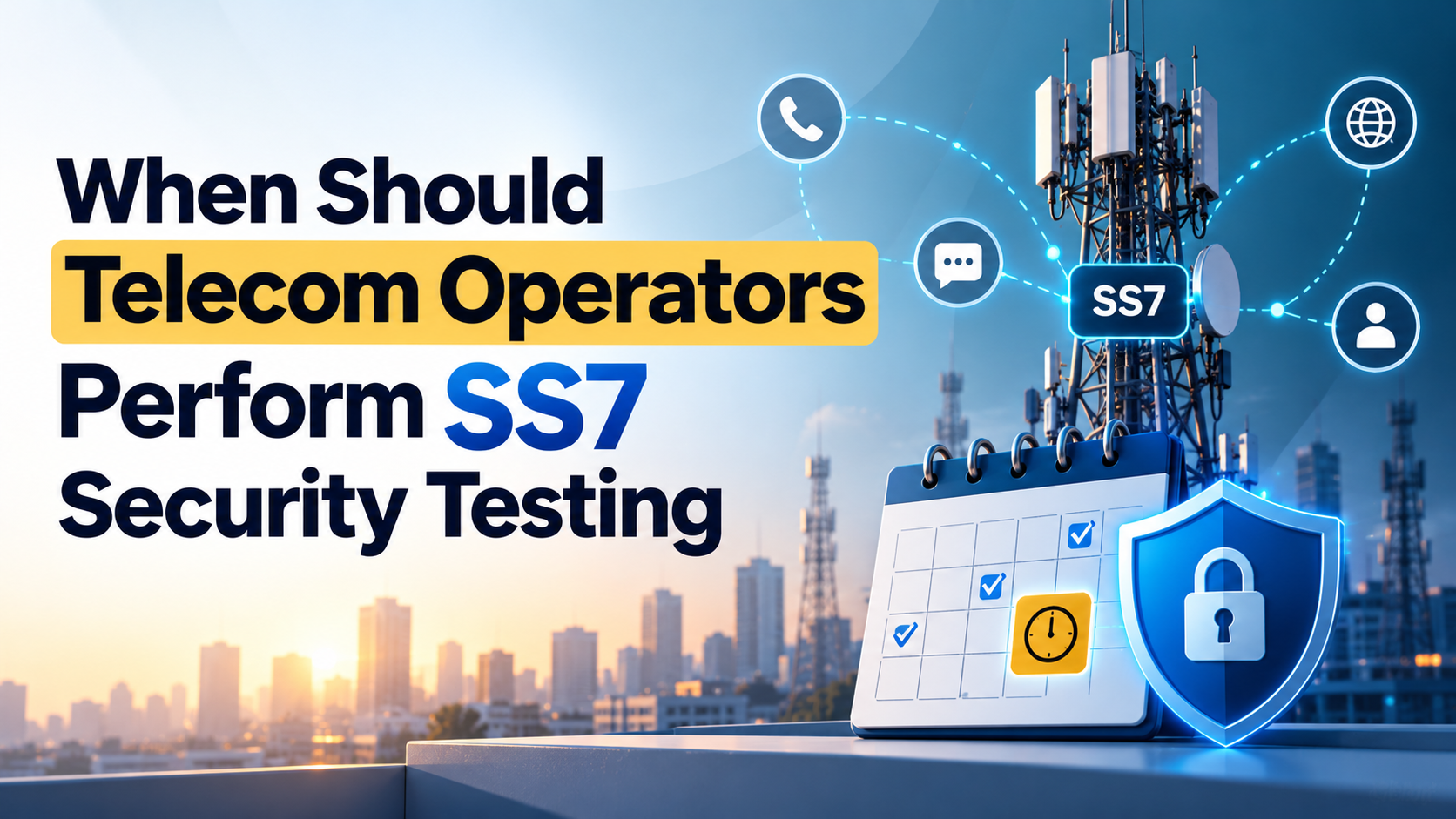
For telecom operators, SS7 security testing should not be treated as a one-time activity. Testing should be performed at key points throughout the network lifecycle, including before major deployments, after configuration changes, during security assessments, and at regular intervals.
Understanding when to perform SS7 testing helps operators identify vulnerabilities before they can be exploited and verify that signaling security controls continue to work as intended.
Telecom operators should perform SS7 security testing whenever there is a meaningful change in the signaling environment or a reason to validate the effectiveness of existing security controls.
The most important testing periods include:
This approach ensures that signaling security is validated throughout the network lifecycle rather than only during initial deployment.
One of the most important times for SS7 security testing is before introducing a new service or major network capability.
New services can introduce additional signaling interactions, routing requirements, interconnections, or dependencies. Even when the underlying SS7 infrastructure has not changed significantly, new service workflows can create unexpected exposure.
Testing before launch can help operators determine whether:
Early testing allows vulnerabilities to be addressed before the service reaches production.
Another important answer to when to perform SS7 testing is after significant network changes.
Telecom environments are continuously modified. Operators may change routing configurations, signaling nodes, firewall policies, interconnections, subscriber-management systems, or other network components.
A configuration change that appears operationally safe can unintentionally affect security controls.
Post-change SS7 security testing helps validate that:
Testing should therefore be included in the change-management process for security-sensitive signaling infrastructure.
Interconnection points are particularly important because telecom operators exchange signaling traffic with external networks, roaming partners, service providers, and other ecosystem participants.
Whenever a new signaling interconnection is introduced or an existing one is substantially modified, operators should validate the associated security controls.
This includes reviewing whether signaling traffic is appropriately trusted, filtered, monitored, and validated.
Operators can also use SS7 security testing to identify weaknesses associated with unauthorized signaling activity and excessive trust between interconnected networks.
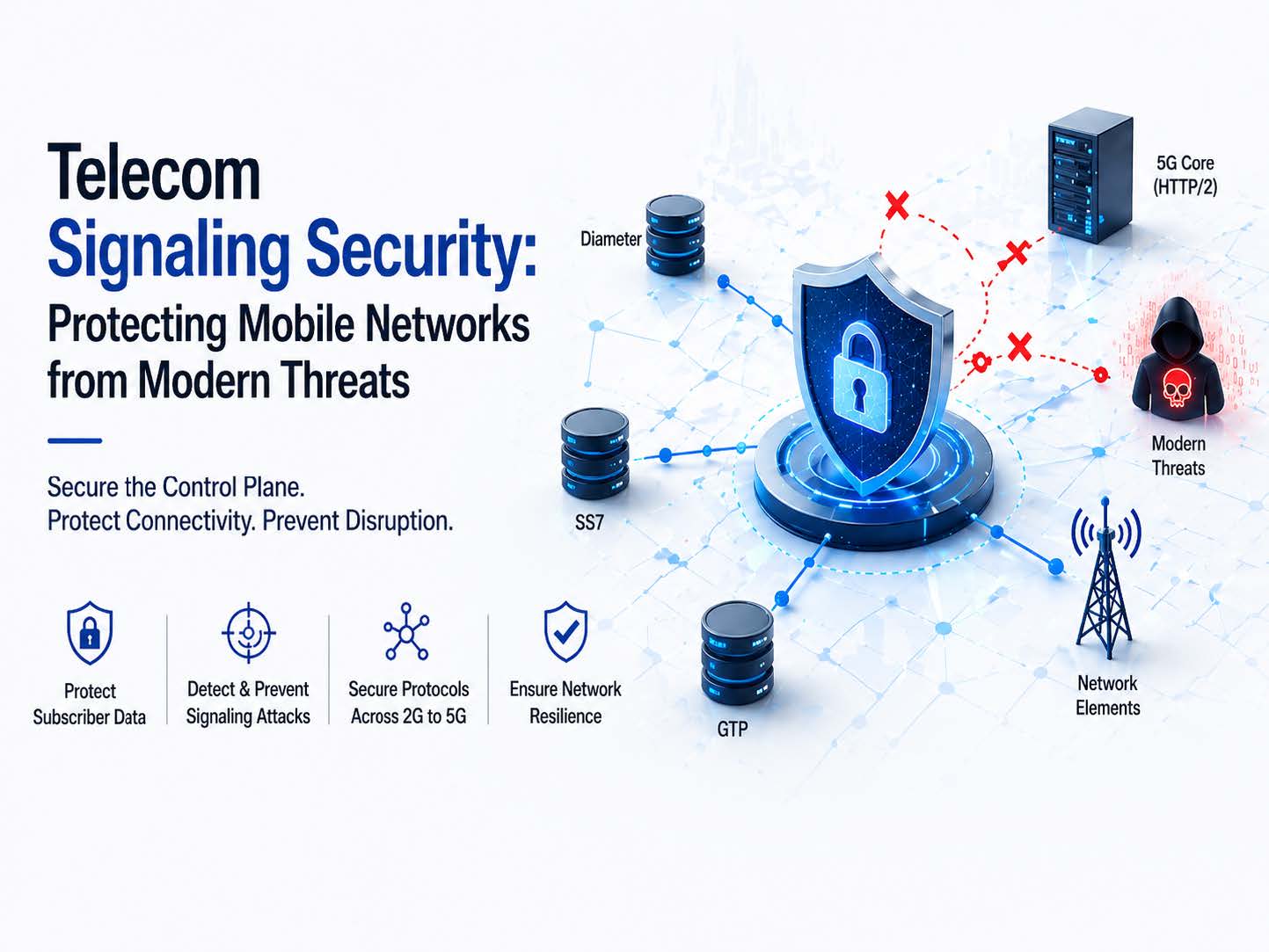
For a broader understanding of these risks, operators should also consider how signaling security applies across SS7, Diameter, GTP, and modern 5G environments.
SS7 testing should also form part of periodic telecom security assessments and audits.
A security audit provides an opportunity to evaluate whether technical controls are actually protecting the signaling environment rather than relying solely on documented configurations and policies.
Testing can help validate:
Combining documentation reviews with technical validation provides a more complete picture of the organization’s signaling security posture.
If an operator experiences a signaling-related security incident, unusual signaling traffic, suspected fraud, unauthorized access, or another security event, SS7 security testing can help determine whether underlying weaknesses remain.
Post-incident testing should focus on validating affected controls and identifying related exposure that may not have been detected during the original investigation.
This is important because fixing the visible symptom does not necessarily address the underlying signaling weakness.
A structured assessment can help operators understand whether the incident resulted from:
Security controls themselves need to be tested.
When an operator deploys or upgrades an SS7 firewall, signaling monitoring platform, traffic-filtering mechanism, or other security technology, testing can determine whether the control behaves correctly under different signaling conditions.
For example, operators need confidence that legitimate signaling traffic continues to function while suspicious or unauthorized activity is appropriately identified or blocked.
This makes validation an important part of deploying new signaling security technologies.
Perhaps the most important principle is that SS7 security testing should be performed regularly, even when there have been no major network changes.
Threats evolve, configurations change, interconnections expand, and previously unknown weaknesses can become relevant over time.
Periodic testing provides operators with ongoing visibility into their signaling security posture.
The testing frequency can depend on factors such as:
Continuous or recurring testing is particularly valuable for operators managing multi-generation environments where legacy SS7 operates alongside Diameter, GTP, and 5G signaling technologies.
There is no single testing frequency that is appropriate for every telecom operator.
A practical approach is to combine event-driven testing with periodic testing.
Event-driven testing should occur after significant network changes, new interconnections, service launches, security incidents, or major security-control upgrades.
Periodic testing should then provide an independent validation of the signaling environment even when no major changes have occurred.
This creates a more resilient security lifecycle than relying on a single annual assessment.
Delaying SS7 security testing can allow weaknesses to remain undetected for extended periods.
Potential consequences include greater exposure to subscriber privacy risks, signaling abuse, fraud, unauthorized activity, service disruption, and network-wide operational impact.
More importantly, operators may assume that existing security controls are effective without technically validating them.
Testing replaces that assumption with evidence.
SS7 should not be assessed in isolation from the rest of the telecom signaling environment.
Modern networks can include SS7, Diameter, GTP, and 5G service-based interfaces. A security strategy should therefore consider how these technologies interact and where control-plane risks can move between network generations.
A broader signaling security strategy can combine architecture reviews, security testing, firewall validation, monitoring, protocol assessment, and continuous improvement.
Operators can learn more about this approach through a dedicated guide on building a signaling security strategy across 2G, 3G, 4G, and 5G networks.
Knowing when to perform SS7 testing is just as important as knowing how the testing process works. Telecom operators should integrate SS7 security testing into the complete network security lifecycle rather than treating it as a standalone compliance exercise.
Testing before deployments, after significant changes, during audits, following incidents, and at regular intervals helps operators continuously validate their signaling security posture.
As telecom networks evolve toward multi-generation environments, ongoing signaling security testing provides the visibility needed to protect critical network functions, subscriber information, and service availability.