Blog

Telecom operators use signaling systems to support critical functions such as subscriber management, authentication, mobility, call routing, messaging, and network communication. Because signaling directly influences network operations, weaknesses in signaling infrastructure can create significant security and operational risks.
Two terms frequently used in this area are SS7 penetration testing and SS7 security testing. Although they are closely related, they are not necessarily the same activity.
Understanding SS7 pentesting vs security testing helps telecom operators choose the right assessment approach based on their security objectives, network architecture, and risk profile.
The simplest distinction is this:
SS7 security testing is a broader process for evaluating the security posture of SS7 infrastructure and its associated controls, while SS7 penetration testing focuses more specifically on controlled validation of how potential attack scenarios could affect the environment.
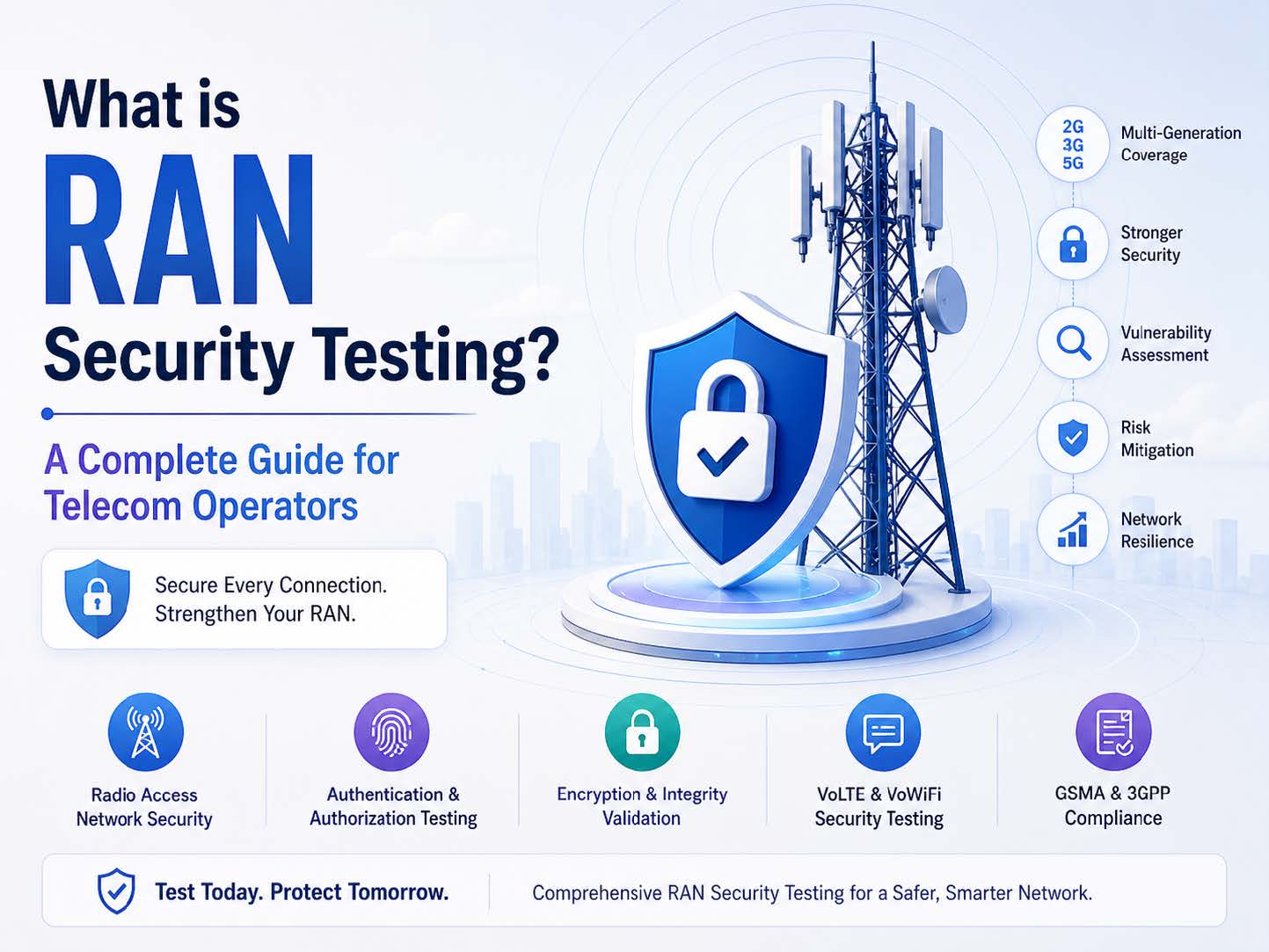
SS7 security testing may include architecture reviews, vulnerability assessments, configuration analysis, security-control validation, protocol assessment, and monitoring evaluation.
SS7 penetration testing adds an adversarial perspective by using authorized and controlled attack scenarios to validate whether identified weaknesses could potentially be abused.
Therefore, penetration testing can be considered one component of a broader signaling security testing program.
The distinction becomes clearer when comparing their objectives and approaches.
Both approaches are valuable, but they answer slightly different security questions.
SS7 penetration testing is a specialized assessment that evaluates whether weaknesses in an SS7 environment could potentially be abused through controlled and authorized security scenarios.
The assessment can examine areas such as:
The objective is to provide practical evidence about the effectiveness of security controls and the potential impact of identified weaknesses.
Unlike generic IT penetration testing, SS7 testing requires knowledge of telecom signaling architecture and the operational sensitivity of mobile networks.
SS7 security testing takes a broader view.
It can evaluate the overall security posture of signaling infrastructure, including technical controls, configurations, network exposure, vulnerabilities, and security processes.
A comprehensive assessment may include:
This makes SS7 security testing useful when an operator wants a broader understanding of its signaling security posture rather than focusing primarily on attack validation.
The methodology is another important difference when considering SS7 pentesting vs security testing.
An SS7 security assessment may begin with architecture mapping and vulnerability identification before reviewing security controls and configurations.
A penetration test typically builds on this foundation by introducing controlled adversarial scenarios.
A typical SS7 penetration testing engagement may follow these stages:
The assessment begins by defining authorized signaling systems, interfaces, interconnections, testing boundaries, and safety requirements.
The testing team evaluates signaling flows, network relationships, exposure points, and relevant security controls.
Potential weaknesses in signaling exposure, access control, filtering, configuration, or protocol handling are identified.
Selected scenarios are safely simulated to determine whether identified weaknesses can produce meaningful security impact.
The assessment evaluates whether firewalls, filtering mechanisms, monitoring, and other controls detect or prevent suspicious activity.
Findings are evaluated based on technical severity, likelihood, and potential impact on subscribers and network operations.
Results are documented with evidence, risk prioritization, and remediation recommendations.
Testing should be conducted under an authorized scope with appropriate safeguards to avoid unintended disruption to telecom services.
SS7 penetration testing is particularly valuable when operators need practical validation of their defensive controls.
Common situations include:
For example, an operator may identify a signaling exposure during a broader security assessment and then use penetration testing to determine whether that weakness could have a meaningful operational or subscriber impact.
A broader SS7 security testing engagement may be preferable when an operator wants to understand its overall signaling security posture.
This can be useful when:
In these situations, limiting the assessment to penetration testing may not provide sufficient visibility into configuration, architecture, governance, and control effectiveness.
Yes. In many cases, the strongest approach combines both.
A broader security assessment can identify vulnerabilities and weaknesses across the signaling environment. SS7 penetration testing can then provide deeper validation of selected high-risk findings.
This creates a security lifecycle such as:
Assess → Identify → Validate → Remediate → Retest
Such an approach can help operators move from theoretical risk identification to practical security validation.
For a broader understanding of how signaling security testing can help identify fraud and network-disruption risks, operators can also review [How Signaling Security Testing Helps Prevent Fraud and Network Disruptions].
SS7 should be considered within the broader telecom signaling environment.
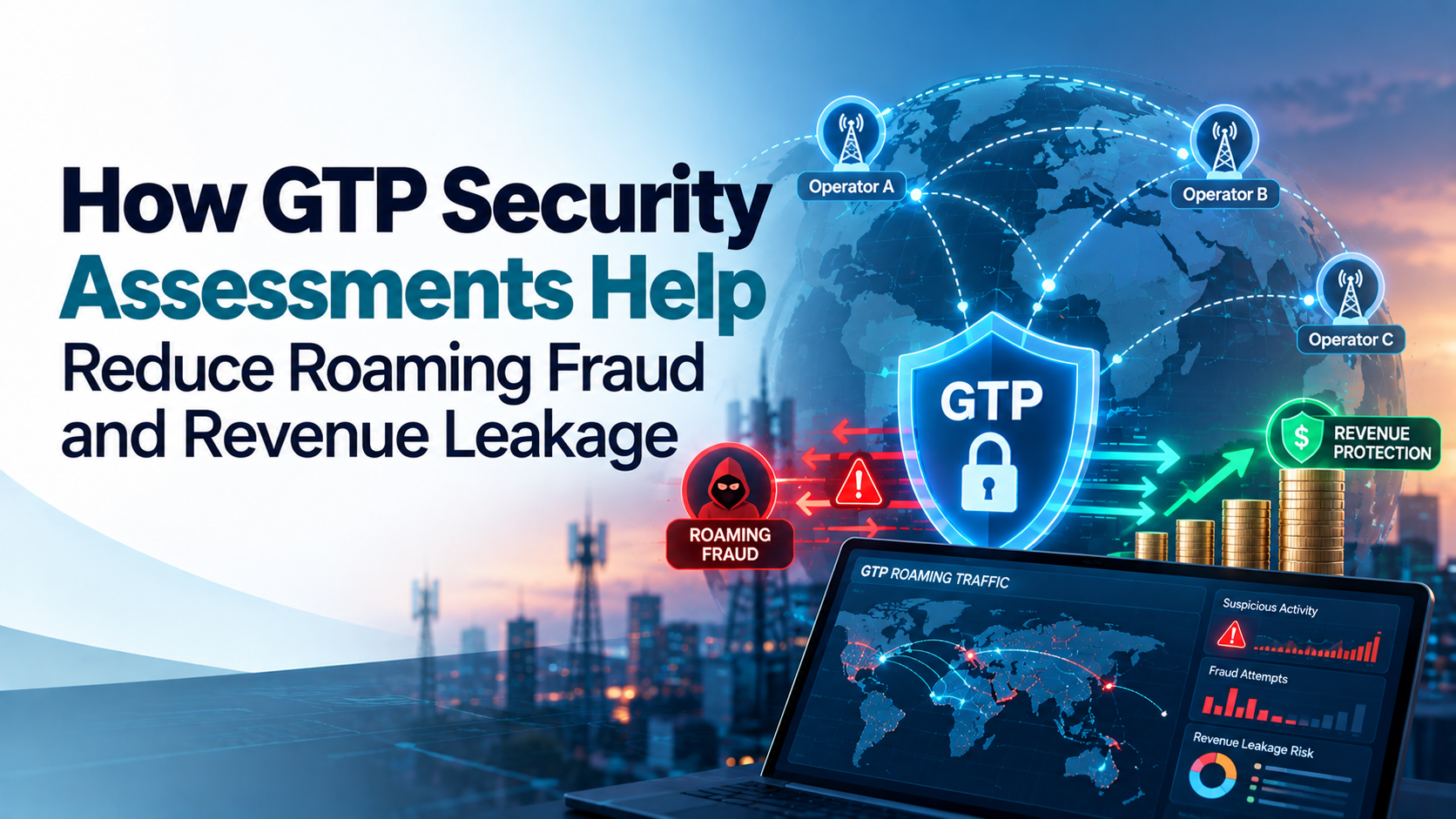
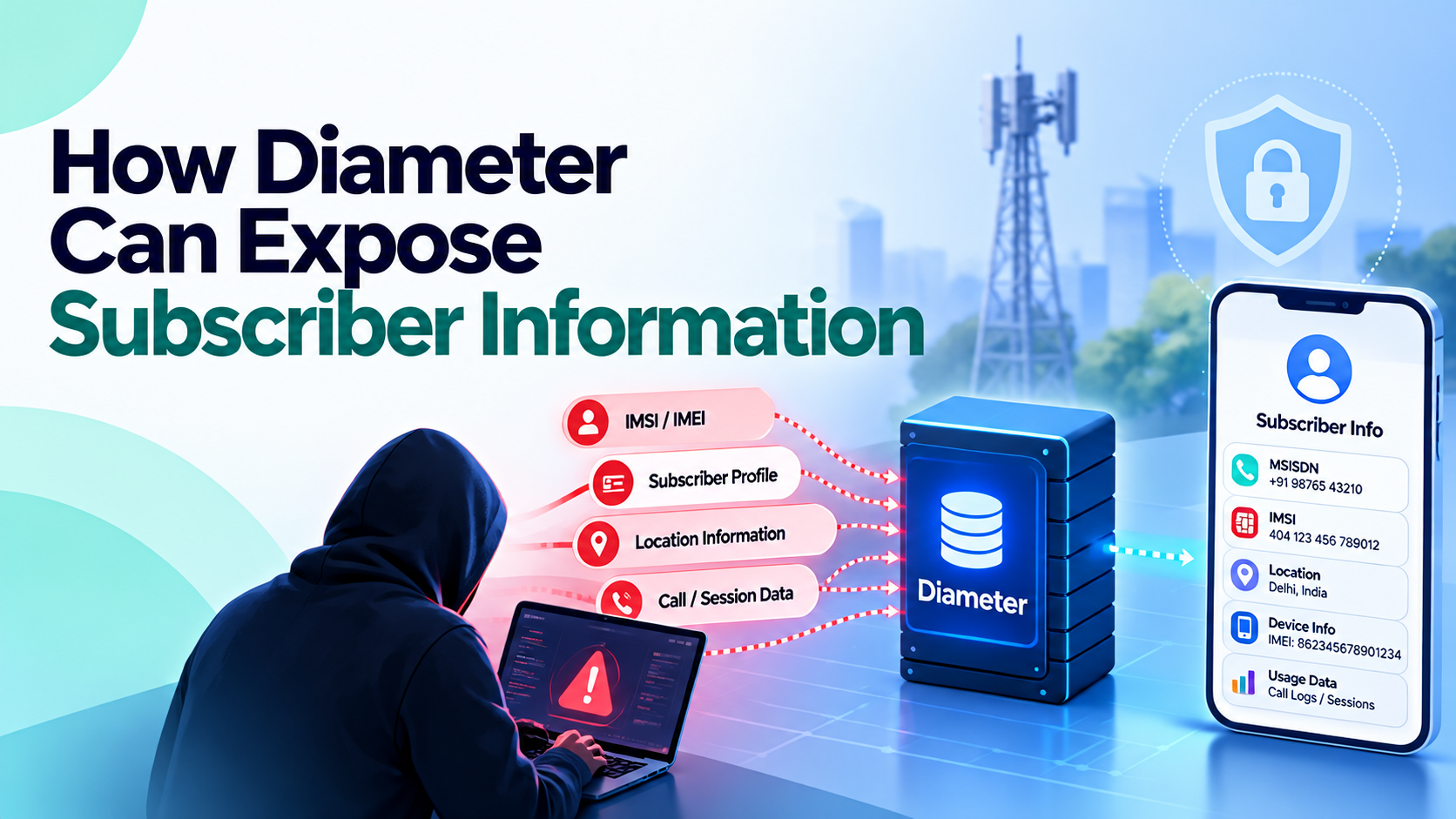
Modern networks can contain SS7 alongside Diameter, GTP, and 5G service-based interfaces. Security teams therefore need to understand how signaling risks can span multiple network generations.
A broader strategy can combine SS7 security testing, penetration testing, signaling firewalls, monitoring, control-plane protection, and ongoing validation.
The multi-generation perspective is particularly important for operators managing legacy and modern network technologies simultaneously.
The distinction between SS7 penetration testing and SS7 security testing primarily comes down to scope, objective, and depth of adversarial validation.
SS7 security testing provides a broader assessment of signaling vulnerabilities, architecture, configurations, and security controls. SS7 penetration testing goes further by using controlled attack scenarios to validate whether selected weaknesses could potentially be abused.
For telecom operators, the two approaches should not necessarily be viewed as alternatives. Used together, they can provide a more complete understanding of signaling security risks and help organizations prioritize remediation based on practical evidence.
As telecom environments evolve across 2G, 3G, 4G, and 5G, integrating specialized signaling security testing and penetration testing into a continuous security program can help strengthen protection across the network control plane.