Blog
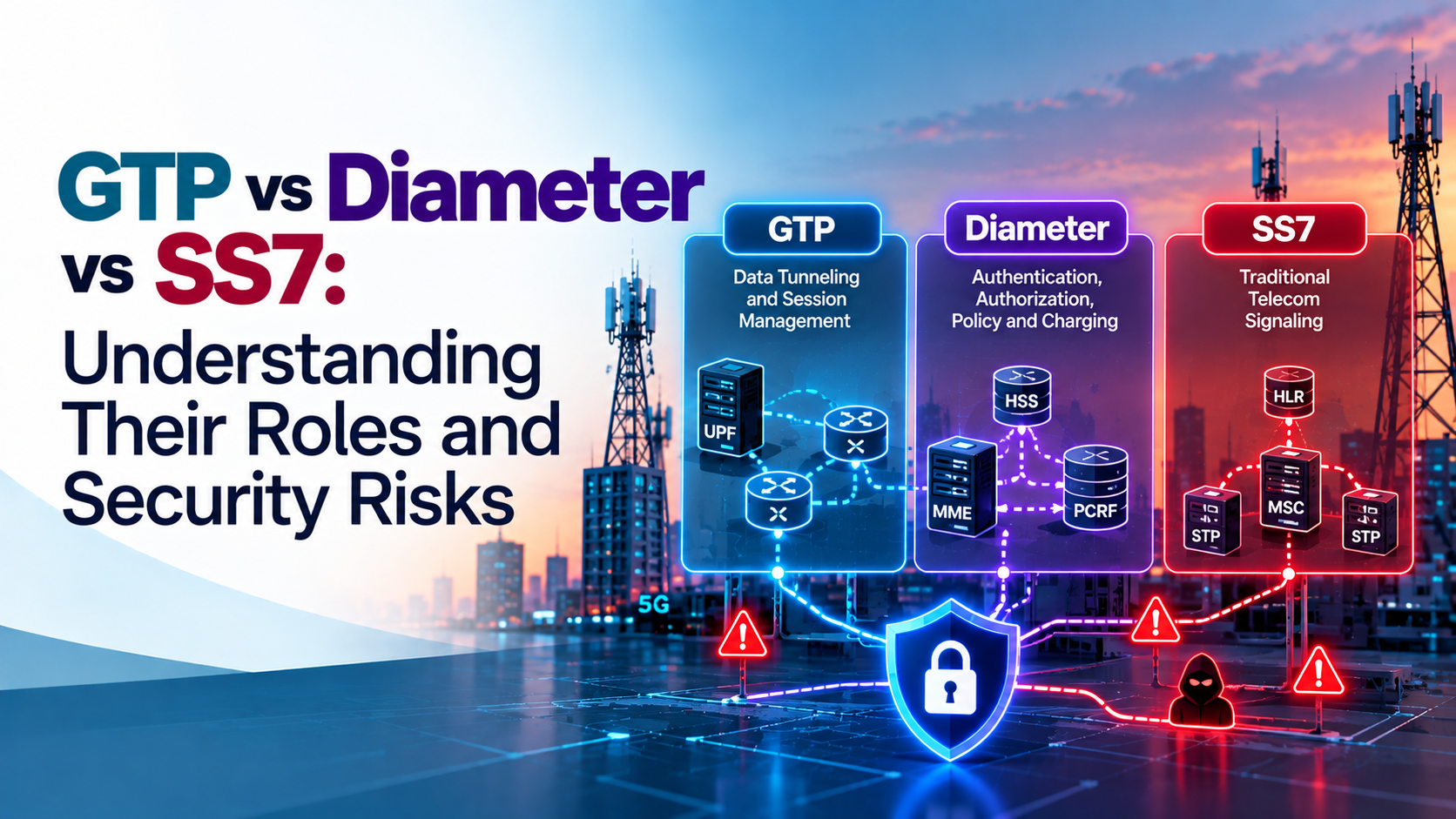

Mobile networks rely on multiple signaling protocols to connect subscribers, authenticate users, manage data sessions, and enable communication across networks. Three important protocols are SS7, Diameter, and GPRS Tunnelling Protocol (GTP). Although they support different functions, weaknesses in any of them can expose telecom operators to security threats.
Understanding GTP vs Diameter vs SS7 helps operators identify where security controls are needed and how to build a stronger telecom signaling security strategy. This guide compares their roles, common security risks, and practical protection measures across legacy, LTE, and relevant 5G network environments.
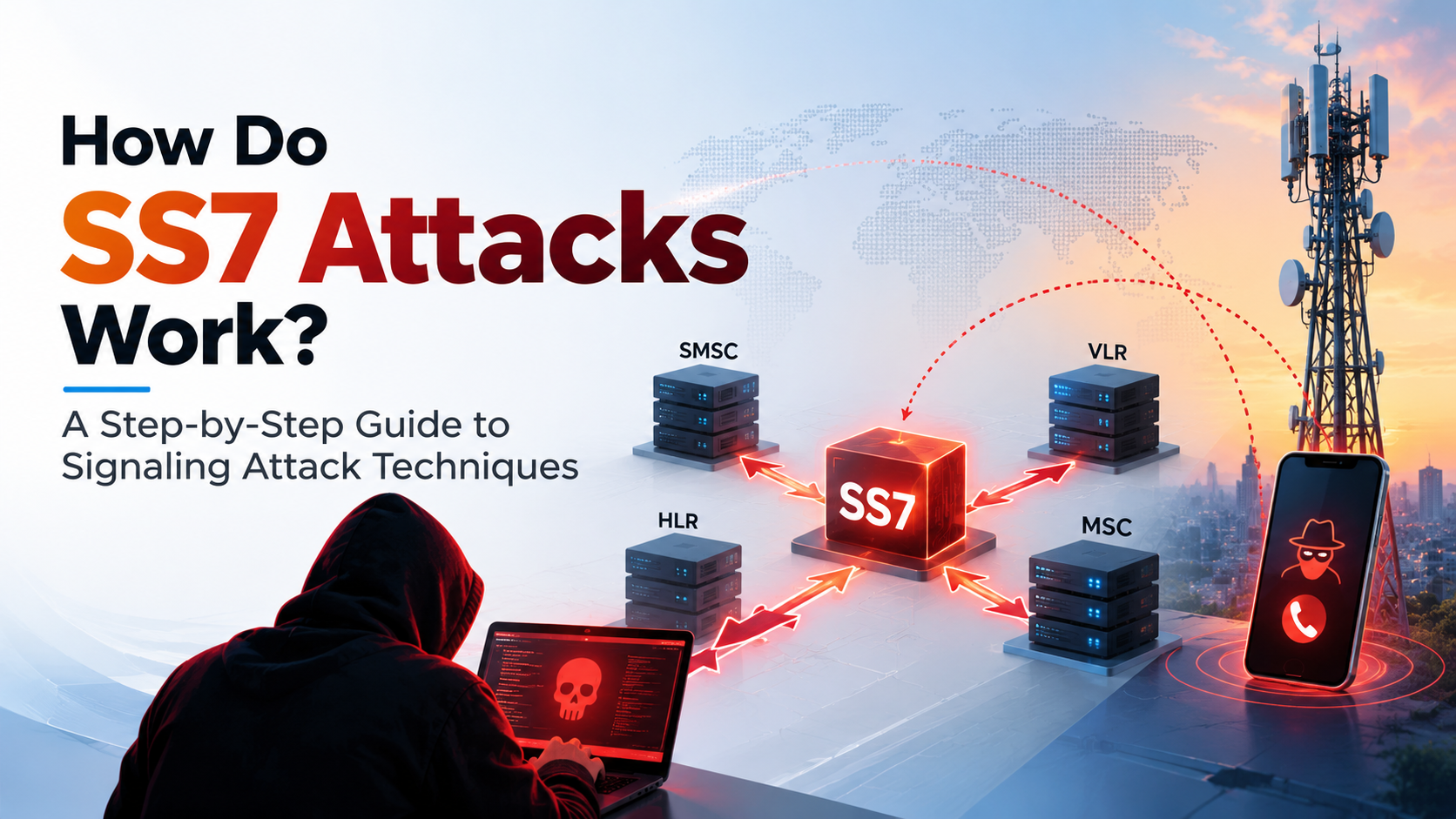
Signaling System No. 7 (SS7) is a suite of signaling protocols historically used to manage call setup, SMS delivery, mobility, and other functions in traditional telecommunications and mobile networks.
SS7 supports communication between network elements and operators. However, trust assumptions built into older deployments can create risks when networks connect to external signaling environments without sufficient validation and filtering.
Common SS7 vulnerabilities include unauthorized signaling requests, subscriber-location exposure, SMS interception opportunities in vulnerable environments, and misuse of mobility-management procedures. Actual exploitability depends on network configuration, access, and deployed protections.
Diameter is an AAA (authentication, authorization, and accounting) protocol used for functions such as subscriber authentication, policy control, and charging in relevant mobile network architectures. It is widely associated with LTE and evolved packet core deployments.
Diameter introduced capabilities beyond traditional SS7 signaling, but it is not automatically secure. Weak peer authorization, inadequate message filtering, and incorrect configuration can expose network functions to unauthorized requests or signaling abuse.
Diameter security focuses on trusted-peer management, message validation, access restrictions, secure configuration, and monitoring. Operators should also review how Diameter messages cross network boundaries, particularly where roaming and interconnect arrangements are involved.
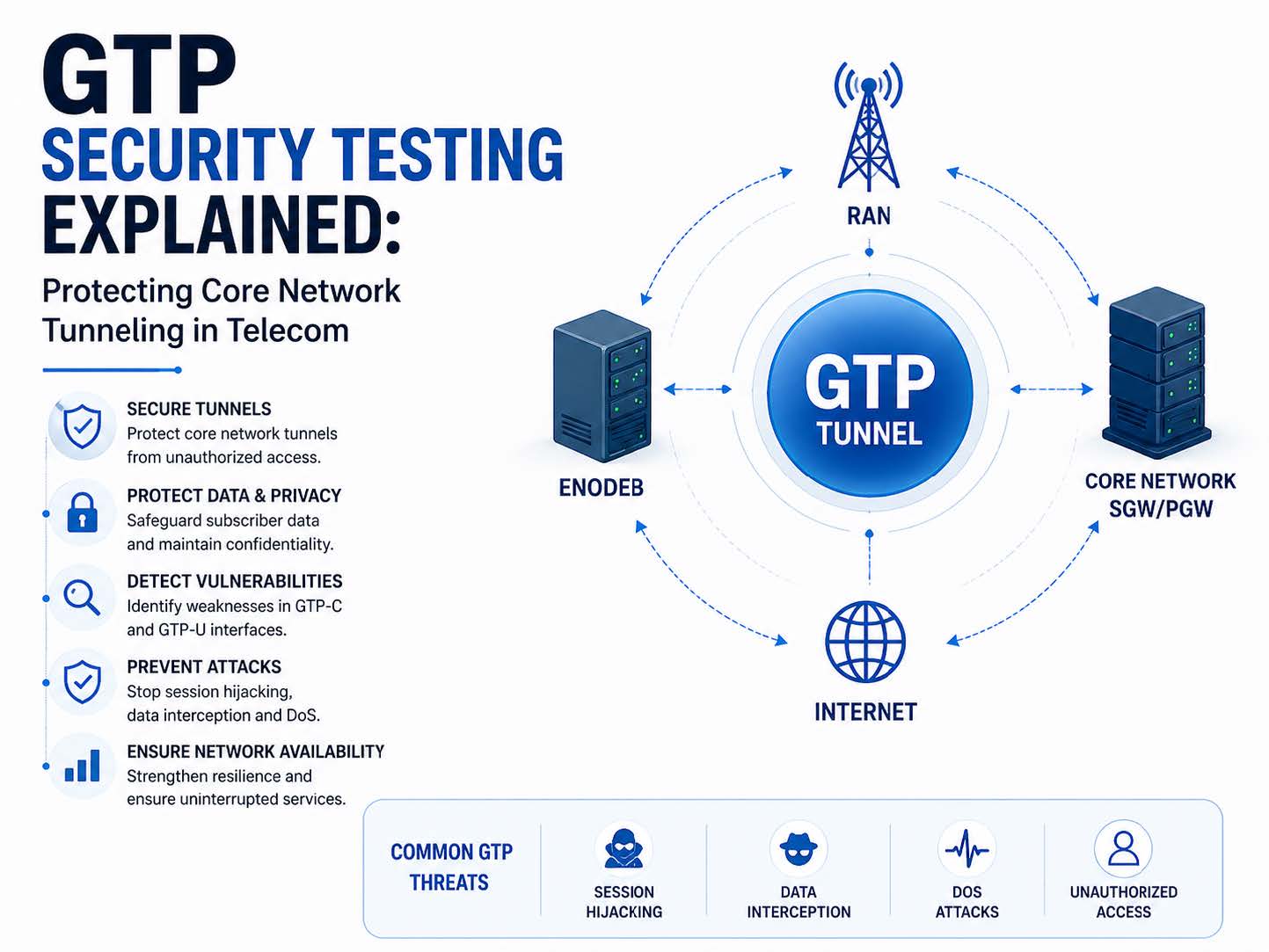
GPRS Tunnelling Protocol (GTP) supports data-session management and user-data transport on applicable mobile network interfaces.
Its main components include:
GTP is used in LTE networks and in certain 5G architectures. GTP security focuses on protecting tunnels, validating signaling messages, restricting network peers, and preventing unauthorized traffic from crossing network boundaries.
The comparison of SS7 vs GTP security and Diameter vs GTP is not about choosing one protocol over another. Each performs a different function, so operators need security controls appropriate to the protocol and interface.
Insufficient filtering and trust validation may allow malicious signaling requests to reach network elements. Depending on the architecture and protections in place, this can expose subscriber information or affect services such as messaging and mobility management.
Poorly controlled Diameter interconnections can expose signaling interfaces to unauthorized or unexpected messages. Inadequate peer validation, weak configuration, and insufficient monitoring can make suspicious activity harder to prevent or investigate.
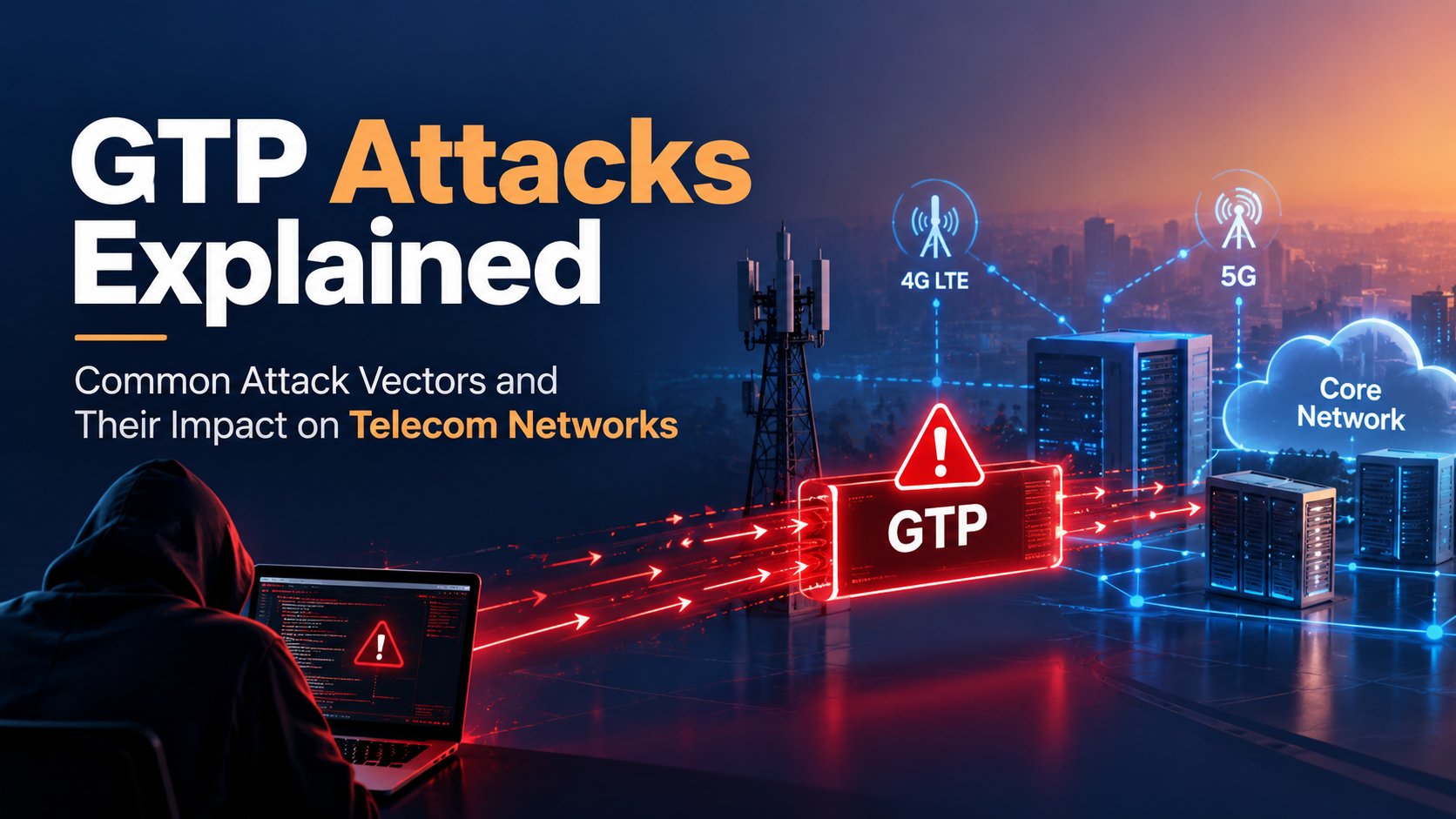
Weak GTP filtering and interface restrictions may allow unexpected messages or traffic from unauthorized sources. Potential consequences include session disruption, tunnel-related abuse, and exposure of mobile core functions.
GTP vulnerabilities in 5G should be assessed in the context of the actual deployment. Not all 5G interfaces use GTP, and security risks differ between standalone and non-standalone architectures.
GTP remains relevant to LTE and some 5G environments. In 5G NSA security, deployments may rely on LTE core components and GTP-based interfaces. Some 5G architectures also use GTP-U on applicable interfaces.
However, 5G mobile core security extends beyond GTP. Operators must consider the interfaces and protocols present in their architecture rather than assuming every 5G connection uses the same signaling technology.
For GTP-U security, important considerations include authorized tunnel endpoints, traffic filtering, validation of relevant message fields, and monitoring for unusual activity. Operators should also review applicable GSMA guidance and vendor-specific recommendations for the deployed environment.
A practical security program should address configuration, access, traffic inspection, and ongoing validation.
Use security controls suited to each protocol. SS7 and Diameter filtering should account for their respective signaling messages, while GTP firewall guidance should address GTP-C and GTP-U traffic on relevant interfaces.
Maintain an accurate inventory of connected network elements and roaming partners. Apply allowlists and interface restrictions, and review access whenever network architecture or interconnection arrangements change.
Check message formats, permitted message types, peer identities, and relevant protocol fields. Review network-element configurations and remove unnecessary exposure. Testing should be authorized and carefully coordinated with operations teams.
Establish baselines for normal activity and investigate unexpected message patterns, invalid requests, and unusual traffic volumes. Maintain logs and escalation procedures so security teams can respond effectively.
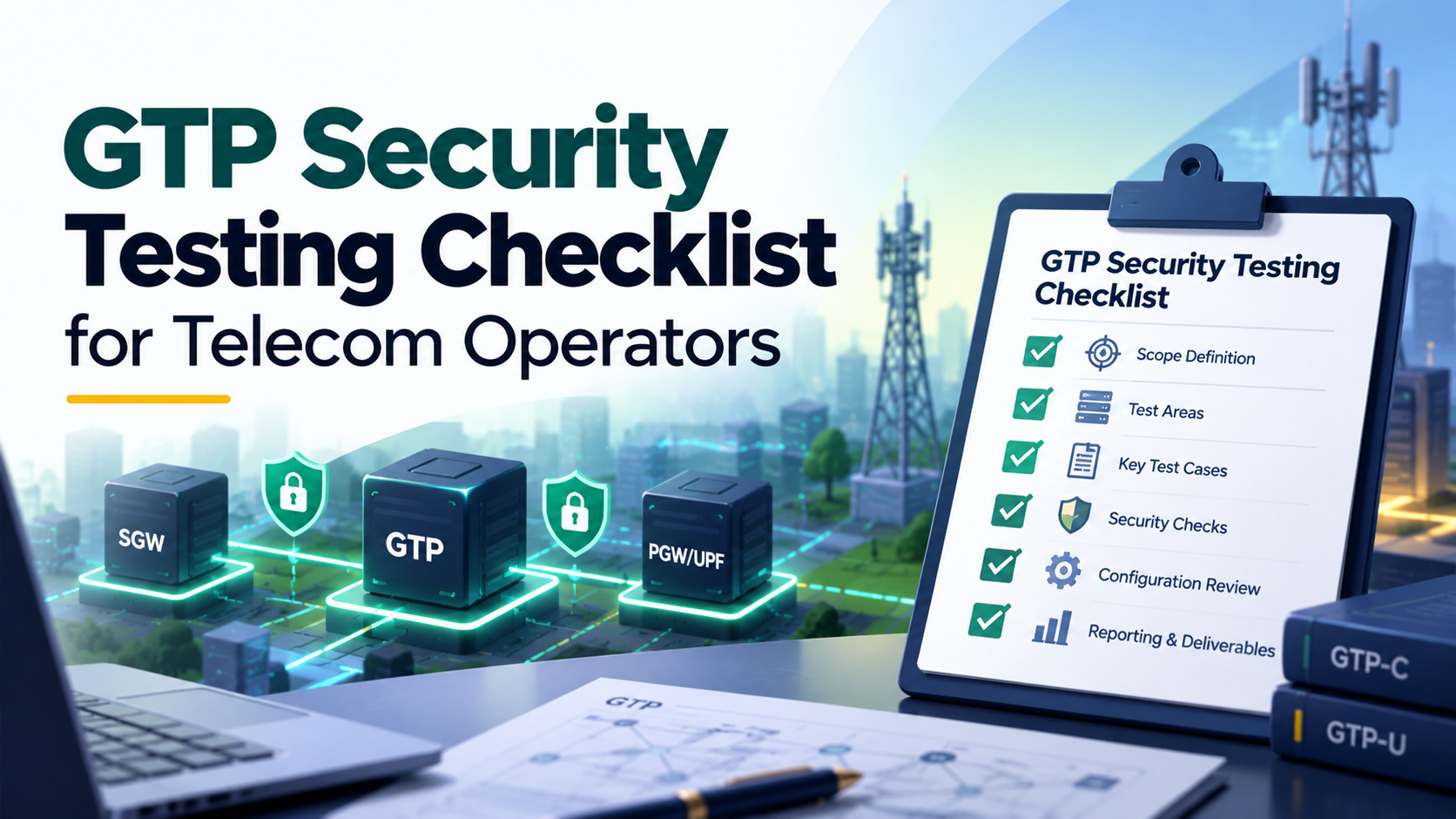
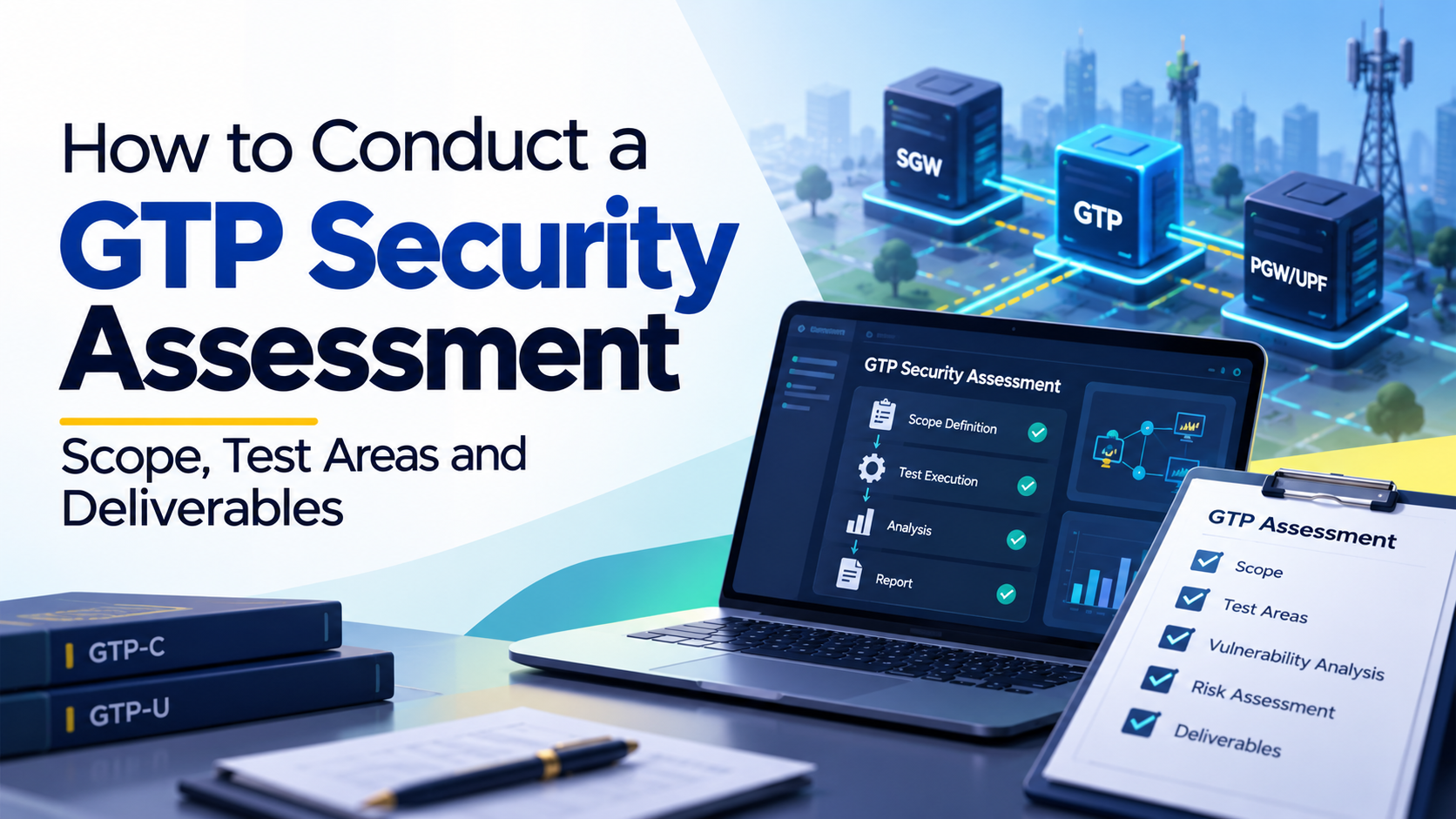
A GTP security assessment can identify weaknesses in interface exposure, firewall policies, message validation, and monitoring. Broader telecom signaling security assessments should also examine SS7 and Diameter where those protocols are deployed.
These activities support risk management and can contribute to telecom security compliance, but compliance depends on the applicable requirements, evidence, and effectiveness of the wider security program.
For additional guidance, explore Matrix Shell’s Signaling Security Testing service and its GTP Security Testing Explained resource.
The GSMA publishes technical guidance to help operators understand telecom security threats and implement appropriate countermeasures. GSMA GTP security guidelines, including FS.20, provide a reference for evaluating GTP-related risks and security controls.
Operators can use relevant GTP security standards and recommendations to review firewall policies, interconnection security, network configuration, and monitoring practices. The guidance should be applied alongside the operator’s architecture, vendor documentation, and applicable regulatory obligations.
GSMA guidance is not a substitute for testing. A documented assessment helps establish whether controls are configured correctly and working as intended.
SS7, Diameter, and GTP serve different but important functions in telecommunications. Their security risks depend on how they are deployed, exposed, and protected.
A strong telecom signaling security strategy combines protocol-aware filtering, trusted-peer validation, secure configuration, continuous monitoring, and regular assessments. By understanding GTP vs Diameter vs SS7, operators can prioritize controls according to their network architecture and strengthen security across legacy, LTE, and relevant 5G environments.