Blog
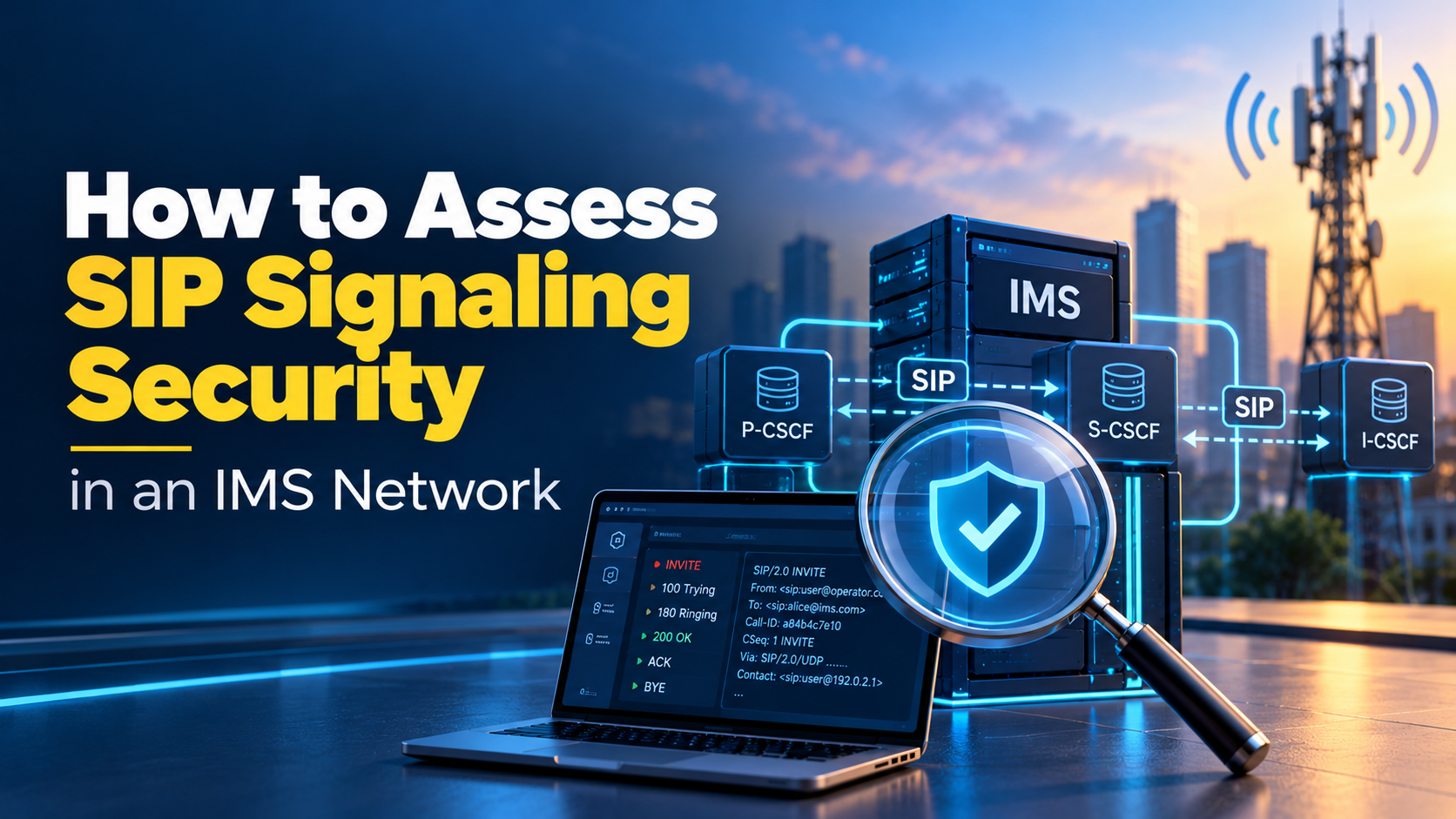

Session Initiation Protocol (SIP) is central to call setup and session management in many IP Multimedia Subsystem (IMS) deployments. If SIP signaling is poorly protected, weaknesses in access control, message handling, routing or monitoring can affect service availability and subscriber privacy. A structured SIP signaling security assessment helps operators understand which controls are effective, where exposure remains and what remediation should come first. It should be scoped carefully and performed in a way that protects live services.
A SIP signaling security assessment evaluates the design, configuration and behavior of SIP-facing components and related IMS controls. It can include architecture reviews, configuration checks, controlled protocol testing and analysis of monitoring and incident processes. The aim is to identify SIP vulnerabilities and weaknesses in the wider environment—not simply to confirm that individual devices are reachable.
IP Multimedia Subsystem security covers the components, interfaces, identities, routing rules and operational practices that support services such as VoLTE. SIP signaling security is one part of this broader IMS security assessment, and results should be interpreted in the context of the operator’s full network architecture.
SIP messages help establish, modify and end communication sessions. If unauthorized sources can reach signaling interfaces, messages are not validated consistently, or excessive traffic is not controlled, the network may be exposed to call disruption, resource exhaustion or unintended information disclosure. The severity of these IMS network risks depends on the implementation, existing safeguards and the access available to a potential attacker.
VoLTE IMS security therefore requires more than a firewall check. Operators should verify trust relationships, signaling policies, component hardening, visibility and response readiness. Assessments also need to account for connections to partner and roaming networks, where configurations and responsibilities may differ.
Identify the systems permitted to send SIP traffic to each interface. Review access-control lists, firewall rules, segmentation and signaling gateway policies. Confirm that only documented, authorized peers can communicate with each service and that administrative interfaces are not unnecessarily exposed.
Check how relevant network elements handle malformed, incomplete, unexpected or inconsistent SIP messages. Review validation of headers and fields, routing decisions, error handling and protocol-aware filtering. SIP security testing should use controlled test cases and record reproducible evidence without sending disruptive traffic to production systems.
Review how identities and trusted peers are established, how credentials are protected, and how routing policies restrict signaling to expected destinations. Excessive trust between components or inconsistent rules across vendor platforms can create gaps. Include internal interfaces, interconnects and roaming paths in the review.
Assess whether abnormal request rates, repeated registration activity or signaling bursts could exhaust processing or session capacity. Review rate limits, overload controls, capacity thresholds and anomaly alerts. Confirm that response procedures define how operations teams investigate and manage a signaling event.
Determine whether signaling paths, logs or diagnostic systems expose subscriber identifiers or unnecessary network details. Check access to logs, data-retention practices and appropriate protections for signaling in transit. The assessment should document where sensitive information is handled and who can access it.
Compare deployed configurations with approved baselines and vendor guidance. Check software support status, patch processes, unnecessary services, logging coverage and monitoring rules. Configuration drift and weak visibility can leave known VoLTE security weaknesses unresolved or delay detection.
Document IMS components, SIP interfaces, owners, dependencies, test windows and exclusions. Obtain authorization and agree on safeguards, escalation contacts and stop conditions.
Map signaling flows between subscribers, access networks, IMS elements and external peers. Record message paths, control points and monitoring to evaluate IMS network security.
Inspect access rules, authentication, routing, filtering, transport protection, hardening and monitoring. Then perform authorized tests that validate how in-scope components handle unexpected messages and traffic patterns. Broader IMS security testing may also examine dependencies and supporting interfaces; IMS penetration testing should remain within the approved scope.
For each finding, document affected assets, evidence, likely impact, severity, remediation guidance and ownership. Prioritize issues using exposure and service or subscriber impact, not technical severity alone. Separate confirmed vulnerabilities from recommendations that improve resilience or configuration consistency.
After fixes, retest controls and record results. Reassess after major network changes, new interfaces, significant updates or changes in risk.
Useful controls include:
A SIP signaling security assessment helps operators identify weaknesses in interface access, message validation, trust relationships, resource protection, privacy and monitoring. When combined with a wider IMS security assessment, it provides a clearer view of how SIP-related issues could affect service resilience and subscriber information. A repeatable process—scope, review, controlled testing, remediation and retesting—supports stronger IMS network security and more effective VoLTE signaling protection.