Blog
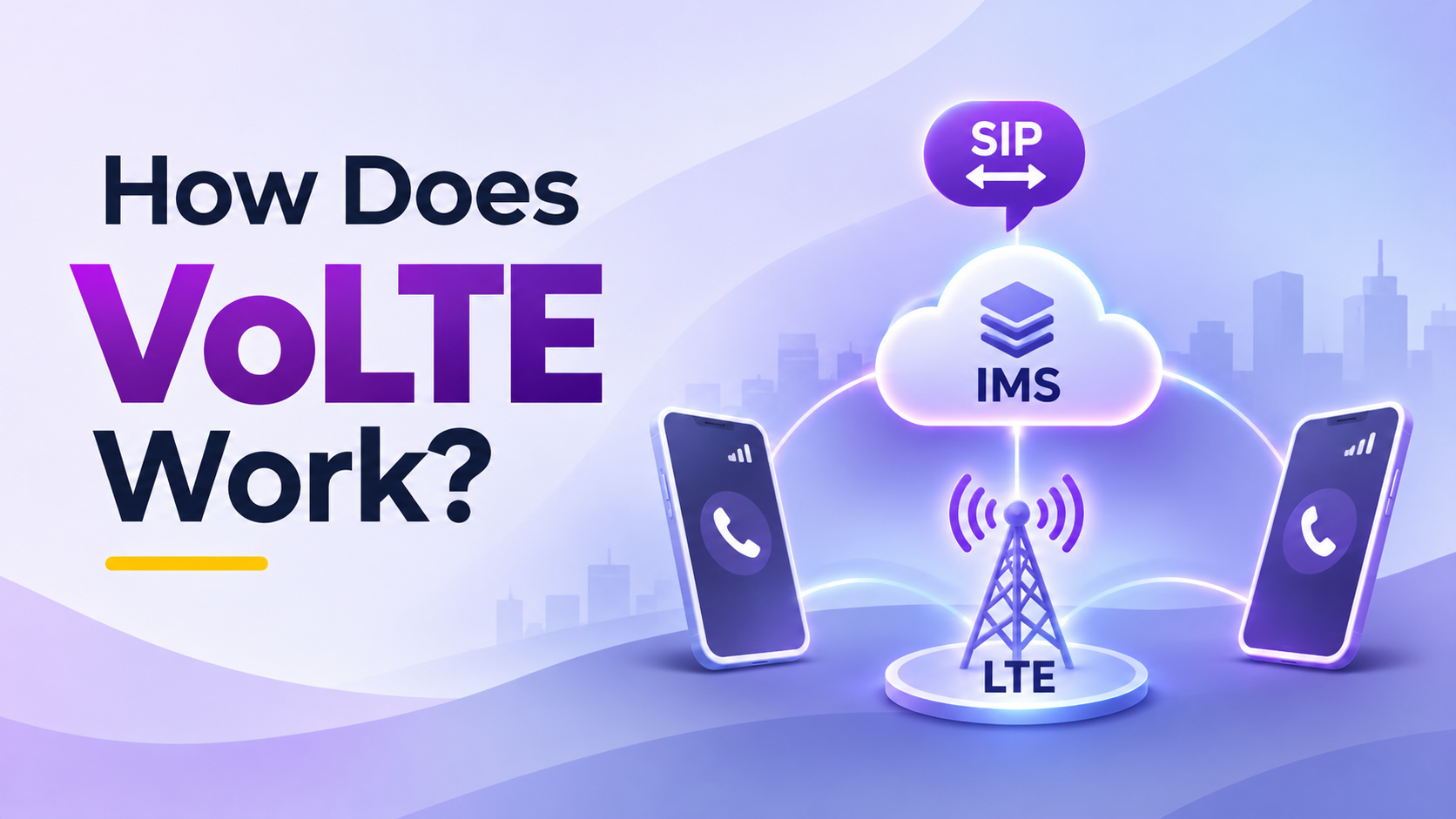

Voice over LTE (VoLTE) enables voice calls through a 4G LTE packet network. Rather than switching to a circuit-switched network, a compatible device uses LTE connectivity and the operator’s IP Multimedia Subsystem (IMS) to manage the call. This supports simultaneous voice and data and can improve call setup time and audio quality.
To understand how VoLTE works, consider the LTE access network, Evolved Packet Core (EPC), IMS service control, SIP signaling and media transport.
VoLTE converts voice into digital packets carried over LTE. A compatible handset connects to LTE, establishes packet connectivity and registers with IMS so the network can identify the subscriber and make the device reachable.
When a user calls, the handset sends a session request. IMS routes it, checks subscriber and service context, and coordinates with the destination. After acceptance, the devices negotiate media parameters and exchange voice packets. Signaling releases the session when the call ends.
With IP-based voice calling, signaling controls the session while a separate media stream carries the conversation.
A typical VoLTE network architecture combines the LTE radio access network, the Evolved Packet Core (EPC) and IMS. The exact implementation varies by operator, but the main functions are broadly similar.
The handset or other compatible device contains the SIM or eSIM and VoLTE-capable software. It connects to LTE, registers with IMS and initiates or receives calls.
The E-UTRAN, including eNodeBs, provides the radio connection between the device and the operator’s core network. It transports signaling and user-plane traffic and supports mobility between cells.
The EPC manages packet connectivity, mobility, routing and policy. Common functions include the MME, Serving Gateway, Packet Data Network Gateway and policy-control functions. Together they support subscriber access and packet delivery.
IMS provides service control through CSCF functions and application servers. It processes SIP registration and session requests and enables operator voice services.
Media gateways and related functions may support calls to legacy circuit-switched networks, other operators, announcements and conferencing, depending on the deployment.
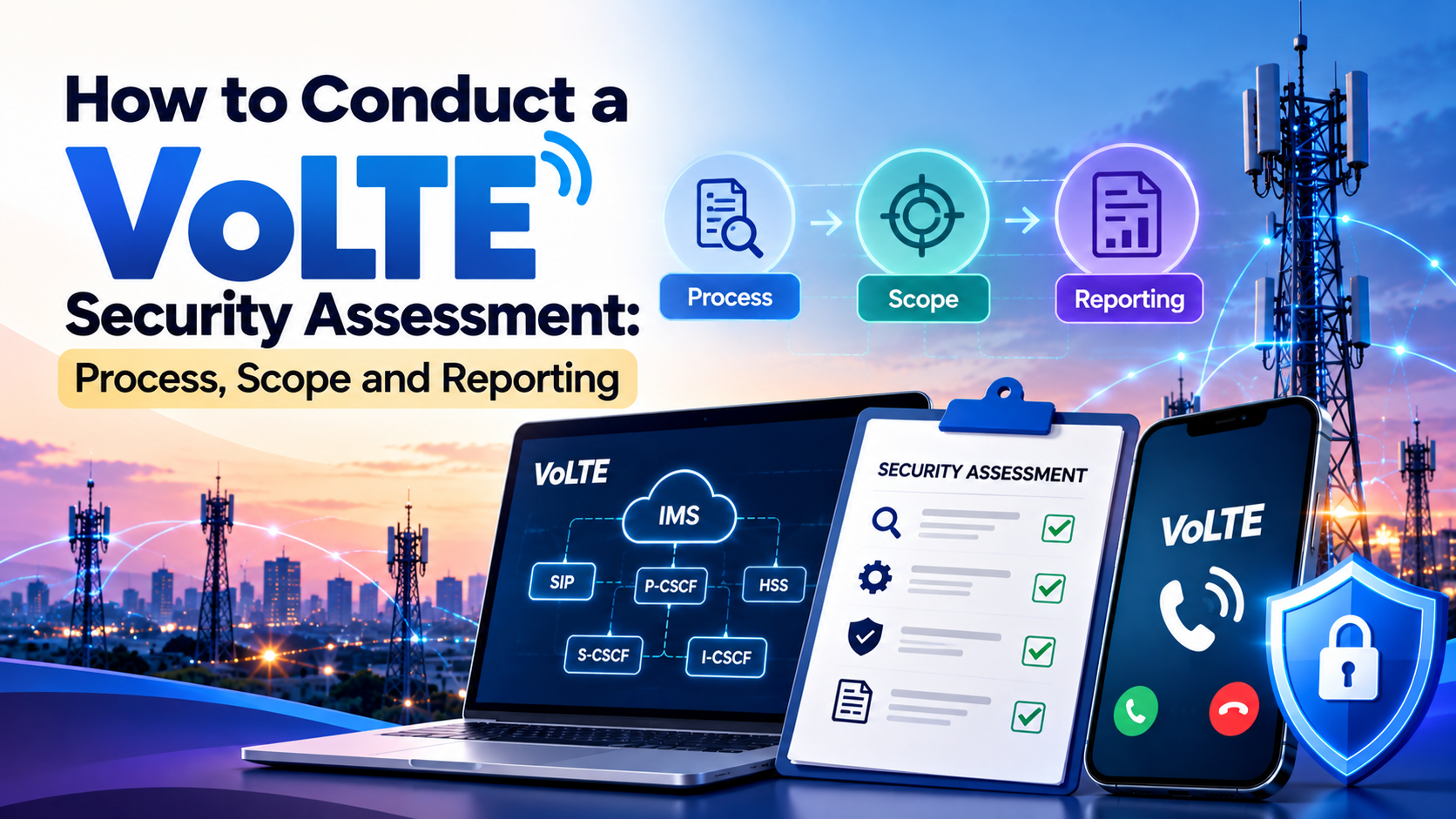
IMS provides VoLTE service control. Its Call Session Control Function (CSCF) components process SIP registration and call requests. The Proxy-CSCF (P-CSCF) is usually the device’s first IMS contact; the Interrogating-CSCF (I-CSCF) helps route requests; and the Serving-CSCF (S-CSCF) manages subscriber sessions. Application servers may provide call forwarding, caller identification and conferencing.
IMS in VoLTE controls how calls are established, routed, modified and released. The VoLTE IMS architecture can also support service continuity and interconnection with other networks.
Session Initiation Protocol (SIP) is the main session-control protocol for IMS voice. SIP messages register devices, initiate calls, alert the recipient, accept or reject sessions, and end conversations. SIP REGISTER supports IMS registration; SIP INVITE typically starts a call.
VoLTE signaling flow consists of requests and responses passing through IMS functions. SIP call flow becomes more complex with supplementary services, roaming and interconnects. Operators should route SIP traffic only through approved paths and validate and monitor messages.
The following simplified VoLTE call flow illustrates the main stages. Actual message sequences can differ according to network design and services enabled.
The device attaches to the LTE network and establishes packet connectivity through the EPC. It discovers the IMS service and sends a SIP REGISTER request via the P-CSCF. IMS authentication and subscriber checks are completed using the operator’s relevant subscriber and authentication functions. After successful registration, the subscriber is available for IMS voice services.
When the caller dials a number, the device sends a SIP INVITE containing session information. IMS routes the request toward the called party and returns progress messages as the destination is alerted. The called device responds, and the endpoints negotiate compatible media parameters. Policy and quality-of-service functions help ensure that the voice session receives suitable network treatment.
After the session is established, voice is commonly carried using Real-time Transport Protocol (RTP). RTP transports media packets, while Real-time Transport Control Protocol (RTCP) can provide feedback about media quality. When a participant hangs up, SIP signaling terminates the session and network resources are released.
Several VoLTE protocols work together across the service
SIP
controls registration and voice-session establishment, modification and release.
RTP and RTCP
carry voice media and provide media-delivery feedback.
Diameter
supports selected authentication, authorization, subscriber-data and policy exchanges between network functions.
IP and LTE/EPC mechanisms
provide packet transport, mobility, bearer management and quality-of-service handling. IPsec may be used to protect selected signaling links, depending on the interface and deployment.
Together, these protocols enable LTE voice communication. Their configuration and interaction should be reviewed as part of an operator’s broader network security and service assurance programme.
VoLTE vs Circuit-Switched Voice
Traditional circuit-switched voice reserves dedicated network resources for a call. VoLTE instead transports voice as IP packets over LTE and uses IMS for service control. This enables simultaneous voice and data and can improve call setup performance, but it also makes voice services dependent on packet-network availability, IMS functions and IP-based signaling. Operators may still need interworking with legacy networks to reach users on older technologies.
LTE voice security must cover the full service chain. Weaknesses may involve exposed interfaces, SIP or Diameter handling, access permissions, configurations, interconnects or monitoring.
Operators should restrict signaling to trusted peers, validate messages, harden network elements and secure administrative access. Monitor unusual registrations, signaling volumes and communication between network functions. Regular reviews and authorized testing can identify weaknesses in IMS, EPC and signaling paths.
VoLTE security is ongoing: architecture reviews and controls should evolve with software, interconnects, roaming and service changes.
VoLTE combines LTE packet connectivity with IMS session control. SIP manages registration and call signaling, while RTP carries voice media. Understanding its architecture, protocols and signaling flow helps operators troubleshoot services and assess end-to-end security.