Blog
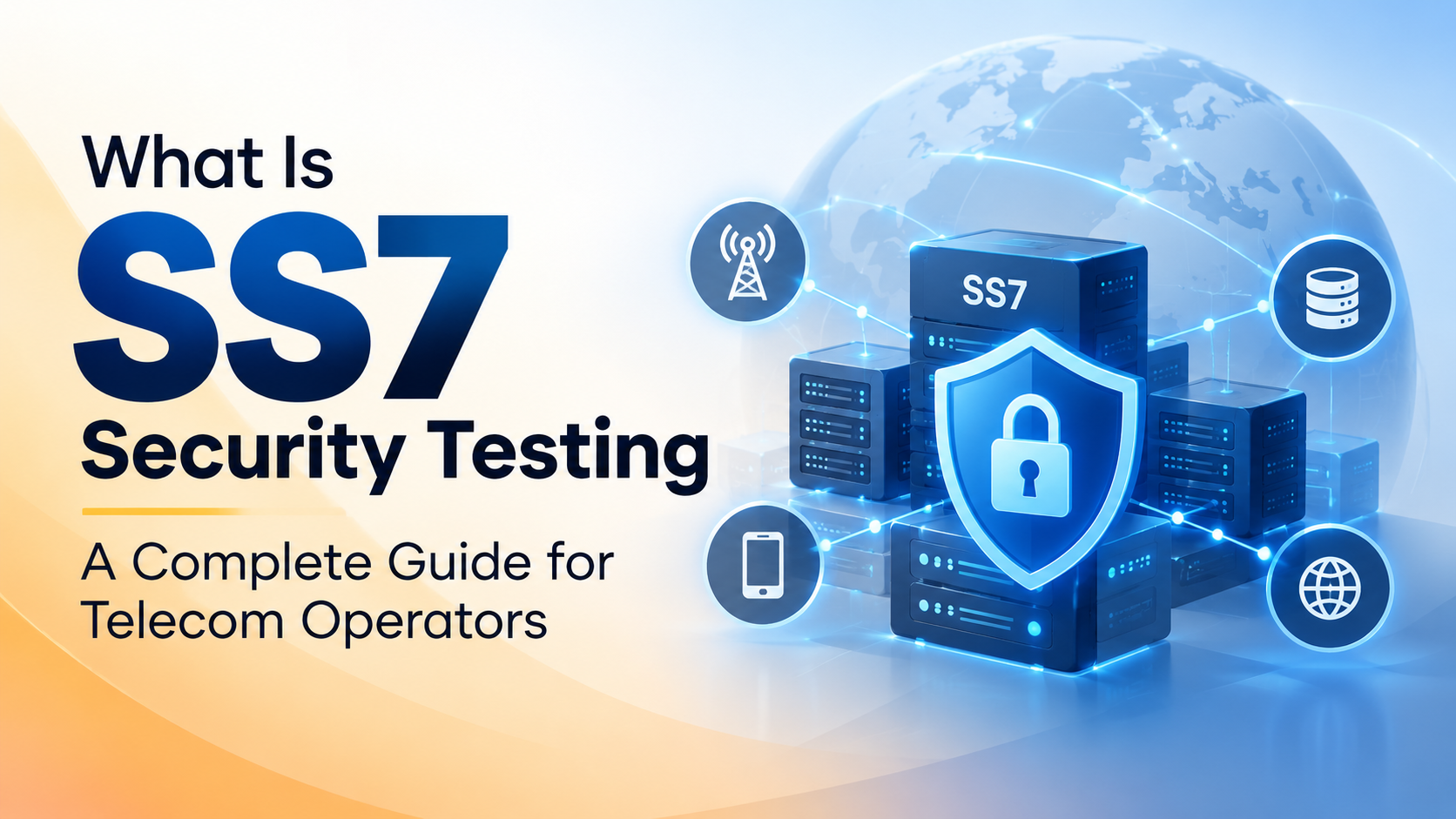

SS7 security testing is the process of assessing telecom signaling networks for vulnerabilities, misconfigurations, unauthorized access paths, and weaknesses that attackers could exploit. It helps telecom operators determine whether their SS7 infrastructure can withstand realistic signaling threats while protecting subscribers and maintaining network availability.
But what is SS7 security testing, and why is it important for telecom operators?
SS7 remains an important part of many telecom environments, particularly those supporting legacy 2G and 3G networks, roaming, and inter-operator connectivity. Because SS7 was designed around trusted relationships between networks, weaknesses in signaling controls can create opportunities for location tracking, SMS interception, subscriber information exposure, fraud, and service disruption.
SS7 vulnerability testing provides a structured way to identify these weaknesses before they become serious security incidents.
SS7 security testing is a specialized security assessment that evaluates how an SS7-enabled telecom network handles legitimate, unusual, and potentially malicious signaling activity.
The objective is not simply to determine whether SS7 is present in the network. Testing examines whether the network has effective controls for:
Testing can help operators identify security gaps and understand whether existing controls are capable of preventing or limiting SS7-based attacks.
The security model surrounding SS7 presents a unique challenge. Signaling messages may originate from external networks or interconnected operators, and historically, these relationships were based heavily on trust.
Today, telecom networks are significantly more interconnected.
An attacker who gains access to an appropriate signaling environment may attempt to abuse legitimate SS7 functionality to:
Regular SS7 security testing allows operators to evaluate these risks from an attacker’s perspective while maintaining a controlled testing environment.
SS7 vulnerability testing can cover multiple aspects of the signaling environment.
Testing begins by understanding how the SS7 environment is connected and where external signaling can enter the network.
This may include reviewing:
The objective is to identify unnecessary or insufficiently protected signaling access paths.
Testing can determine whether the network properly validates incoming signaling messages.
A message may be technically valid from a protocol perspective but inappropriate based on its source, destination, subscriber context, or requested operation.
Security testing evaluates whether such requests are correctly identified and handled.
SS7 vulnerability testing can assess whether unauthorized signaling requests can obtain sensitive subscriber-related information.
This may include evaluating exposure related to subscriber identity, mobility information, and other network data.
Protecting this information is important for both customer privacy and telecom security.
Location-related signaling functions are another important area of assessment.
Testing can evaluate whether unauthorized requests could potentially be used to determine a subscriber’s serving network or location-related information.
Controls should ensure that only appropriate signaling entities and legitimate use cases can access sensitive mobility information.
SMS-related signaling can be assessed for weaknesses that could potentially enable interception, redirection, or manipulation.
This is particularly important because SMS remains widely used for authentication codes, account notifications, and other sensitive communications.
Testing can help determine whether existing signaling controls adequately restrict unauthorized SMS-related requests.
Where an operator uses an SS7 or signaling firewall, SS7 security testing can verify whether its security policies work as intended.
Testing may evaluate whether the firewall correctly:
This helps identify gaps between the intended security policy and actual network behavior.
A typical telecom signaling security testing process can involve several stages.
Security teams first understand the signaling architecture, external connections, network elements, and trust relationships.
Potential attack paths and signaling weaknesses are identified based on the network architecture and relevant SS7 functions.
Controlled test scenarios are performed to determine how the network responds to unauthorized or suspicious signaling activity.
Existing controls such as signaling firewalls, filtering rules, access restrictions, and monitoring systems are evaluated.
Identified weaknesses are analyzed based on their potential impact on subscribers, services, network operations, and business continuity.
Recommended security improvements are implemented, followed by retesting to verify that identified weaknesses have been effectively addressed.
This approach makes testing more than a simple vulnerability scan. It provides a practical assessment of how the signaling environment behaves under security-relevant conditions.
A comprehensive assessment can help identify weaknesses such as:
The exact findings depend on the operator’s architecture, configurations, interconnections, and security controls.
Traditional penetration testing generally focuses on systems, applications, networks, or infrastructure.
SS7 security testing focuses specifically on telecom signaling behavior and the security of signaling protocols and relationships.
This distinction is important because an SS7 environment can contain risks that may not be visible through conventional IT security testing.
For example, a signaling request may use a legitimate protocol message while still representing an unauthorized operation.
Specialized testing can therefore provide visibility into telecom-specific security risks that traditional assessments may overlook.
Telecom signaling security testing provides operators with evidence about whether their signaling controls are effective.
It supports a broader signaling security program by helping organizations:
For a broader explanation of how signaling testing can reduce fraud and network disruptions, see How Signaling Security Testing Helps Prevent Fraud and Network Disruptions.
Testing should not be treated as a one-time activity.
Operators should consider assessments:
Continuous or recurring assessment helps ensure that security controls remain effective as the network evolves.
Although SS7 is primarily associated with legacy 2G and 3G networks, modern telecom environments are rarely limited to one generation.
Operators may simultaneously manage:
This creates a need for security teams to understand how signaling risks extend across generations.
SS7 testing can therefore form one component of a broader signaling security program covering multiple telecom protocols and network generations.
To get the most value from an assessment, telecom operators should:
This creates a continuous improvement cycle rather than treating security testing as a one-time compliance exercise.