Blog
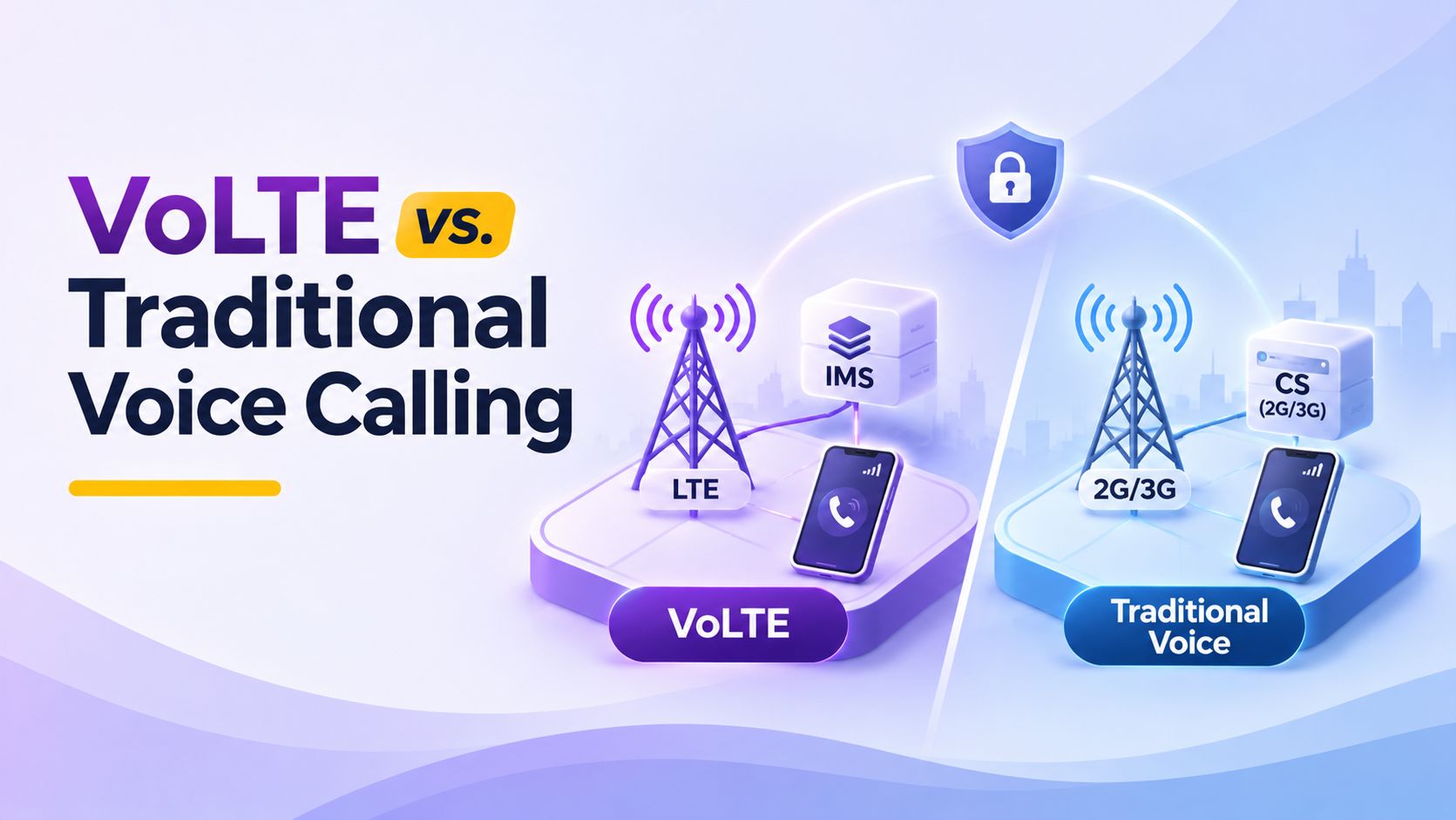

Voice calling has evolved from dedicated circuit-switched networks to IP-based services delivered over 4G LTE. VoLTE (Voice over LTE) enables subscribers to make calls through an LTE packet network, with the IP Multimedia Subsystem (IMS) managing voice services. Traditional voice calling, by comparison, commonly relies on circuit-switched technology in 2G and 3G networks.
The difference is not simply the transport method. VoLTE changes the network architecture, signaling, service control and security considerations involved in delivering a call. Understanding VoLTE vs traditional voice helps operators plan network evolution, maintain service continuity and assess security across both environments.
Traditional circuit-switched voice establishes a dedicated logical circuit or bearer for the duration of a call. In legacy mobile networks, call control is handled by circuit-switched core functions, and voice is carried through the corresponding circuit-switched access and transport infrastructure. Resources remain associated with the call until it ends.
This model has supported dependable voice services for decades, but it is less integrated with packet-based data services. In many deployments, a device may move from LTE to an older radio network to complete a voice call when VoLTE is unavailable, a process commonly known as circuit-switched fallback.
VoLTE uses LTE packet connectivity and IMS service control to deliver voice as IP traffic. A compatible device attaches to LTE, establishes packet connectivity and registers with IMS. When a subscriber makes a call, SIP signaling requests and manages the session. Once the destination accepts, voice media is commonly transported using RTP.
This is the foundation of IP-based voice calling: signaling controls the session while a packet media stream carries the conversation. VoLTE can support simultaneous voice and data and may offer faster call setup and high-definition voice, depending on device support, codecs, network configuration and radio conditions.
VoLTE network architecture combines the LTE radio access network, the Evolved Packet Core (EPC) and IMS. The LTE access network connects the device; the EPC manages packet connectivity, mobility and policy; and IMS controls voice registration, routing and supplementary services.
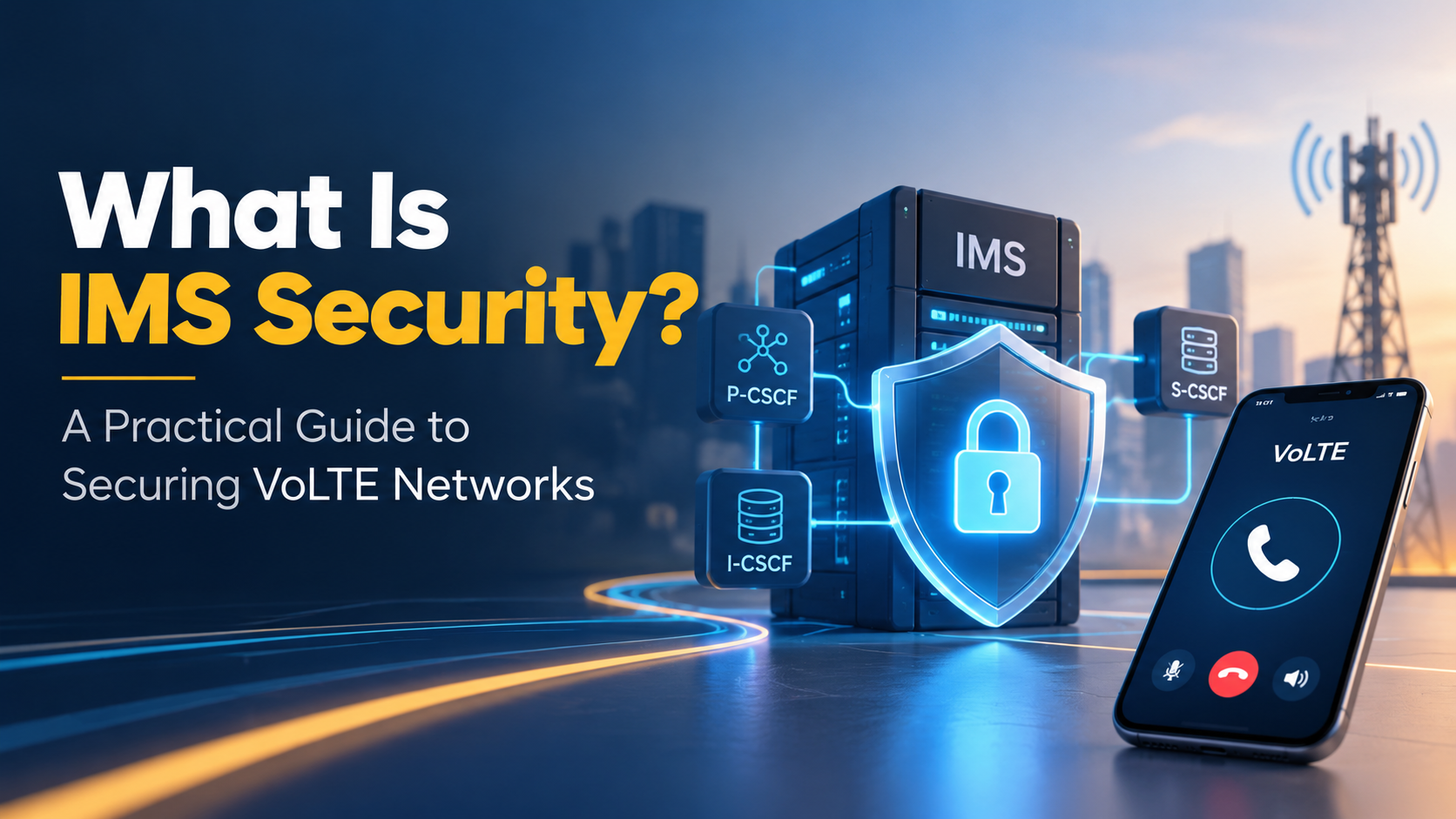
The VoLTE IMS architecture commonly includes the Proxy-CSCF (P-CSCF), Interrogating-CSCF (I-CSCF) and Serving-CSCF (S-CSCF), as well as application and subscriber-data functions. IMS in VoLTE provides service logic and session control over the packet network.
Traditional voice architecture instead relies on circuit-switched access and core functions, such as mobile switching and associated signaling systems. Interworking gateways may connect VoLTE users with subscribers on legacy networks, so operators often need both environments during migration.
VoLTE protocols are based on IP and IMS. SIP in VoLTE handles registration, call initiation, session modification and termination. The VoLTE signaling flow includes SIP requests and responses routed through IMS functions. SDP commonly describes media capabilities, while RTP carries voice and RTCP can provide media-quality feedback. Diameter supports selected authentication, subscriber-data and policy exchanges across relevant network interfaces.
Traditional mobile voice uses circuit-switched call-control and signaling mechanisms, which differ from SIP-based IMS session management. The protocols and interfaces depend on the generation and operator deployment.
A simplified VoLTE call flow includes LTE access, IMS registration, a SIP INVITE to initiate the call, session negotiation, RTP media exchange and SIP release. The IMS call flow and SIP call flow can become more complex with roaming, supplementary services and interconnection.
VoLTE can allow a subscriber to use voice and LTE data at the same time without dropping to a legacy radio network. It can also enable shorter call setup and wideband voice when supported end to end. Actual performance depends on radio coverage, congestion, device capabilities, codec negotiation and operator implementation.
Traditional voice may remain important for coverage, fallback and compatibility with older devices or networks. For operators, migration therefore involves more than enabling VoLTE: it requires interworking, device support, service testing and a plan for legacy network retirement.
LTE voice security requires a broader IP and service-layer perspective. VoLTE depends on connected LTE, EPC and IMS components, as well as SIP and Diameter signaling and media paths. Weak access controls, exposed interfaces, incorrect configurations or inadequate monitoring can affect service availability, call handling and subscriber privacy.
Traditional voice has a different risk profile, shaped by circuit-switched infrastructure and its signaling environment. Legacy signaling networks can also face threats such as unauthorized signaling, routing manipulation and subscriber-data exposure. Moving to VoLTE does not automatically remove older risks, particularly where networks interconnect or share operational dependencies.
Operators should review trusted-peer restrictions, signaling validation, network segmentation, secure administration, patching and traffic monitoring. A VoLTE security assessment should cover device access, EPC interfaces, IMS functions, SIP and Diameter handling, media routing, roaming and interconnects. Testing must be authorized, scoped and planned to avoid disruption to live services.
VoLTE is the preferred mobile voice approach where LTE coverage, compatible devices and a suitably secured IMS environment are available. Traditional circuit-switched voice may continue to support legacy devices, coverage gaps and fallback arrangements during transition. The right migration strategy depends on spectrum, coverage, device adoption, regulatory requirements, interconnects and the operator’s network roadmap.
VoLTE vs traditional voice is a comparison between packet-based voice controlled by IMS and legacy circuit-switched calling. VoLTE architecture, SIP signaling and IP media offer service and data-integration advantages, while traditional voice remains relevant in some networks for compatibility and fallback. Operators should understand the architecture and call flow of both models and apply security controls across their full network environment.