Blog
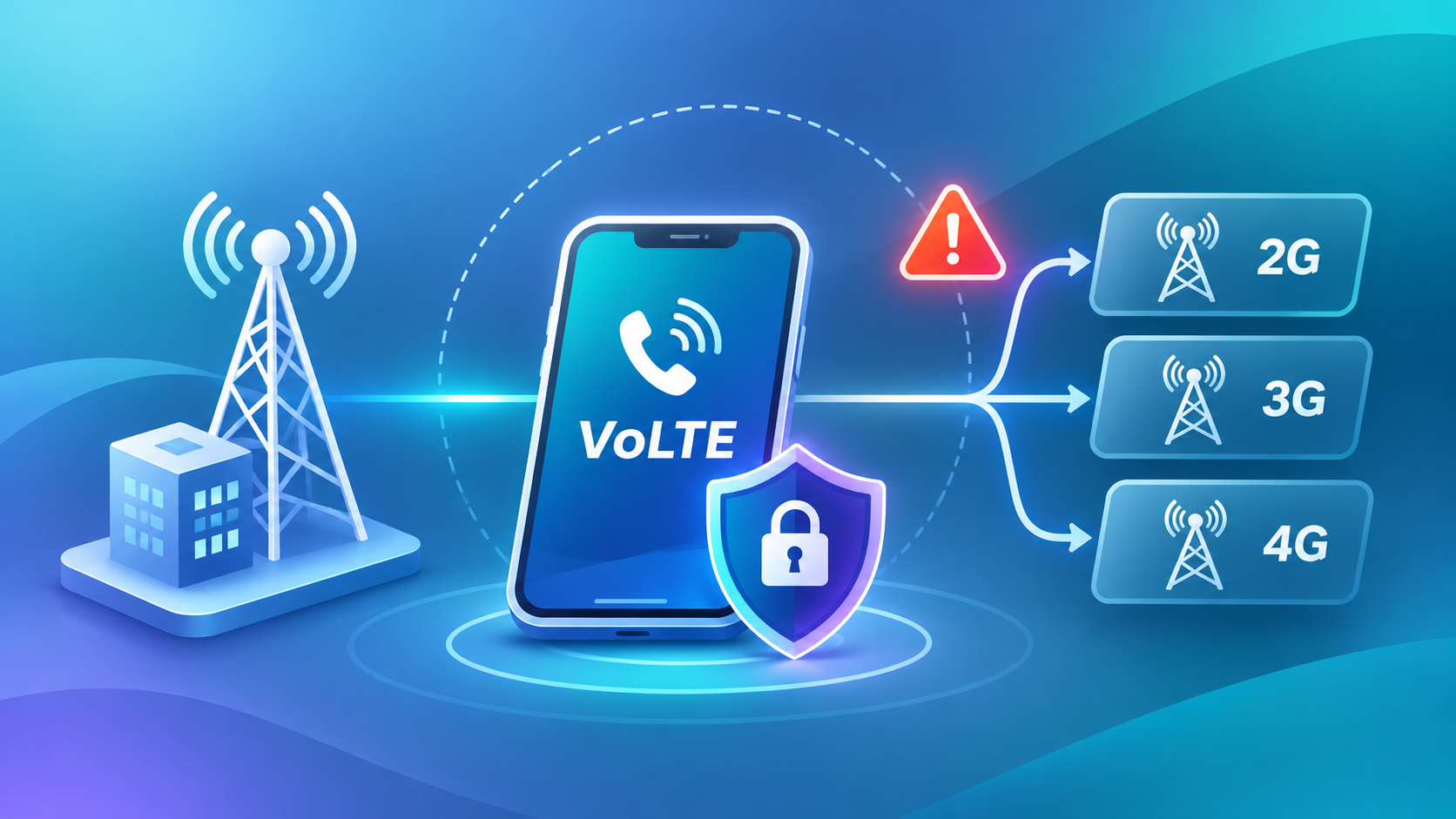

Mobile voice networks rarely change from one generation to another overnight. Operators may continue to support LTE voice, 5G voice and legacy circuit-switched services while subscribers move between coverage areas and networks. These transitions help maintain call availability, but each additional technology and interconnection can introduce security dependencies.
VoLTE interworking security focuses on protecting the signaling, routing, access controls and trust relationships involved when voice services move between LTE, IMS, 5G and legacy network environments. If transition paths are not designed and monitored carefully, attackers may exploit exposed interfaces, weak filtering or inconsistent policies to disrupt calls or access information.
VoLTE delivers voice over LTE using the IP Multimedia Subsystem (IMS) for service control. VoNR supports voice over 5G New Radio and commonly continues to use IMS. However, coverage, device capability, roaming arrangements and network deployment stages can require a call to use another available voice service.
VoLTE legacy network interworking may be needed while circuit-switched infrastructure remains in service. CS fallback can move an LTE device to a legacy radio network for voice in applicable deployments.
These arrangements support LTE voice continuity, but operators must understand the network domains and partner interfaces involved.
Transition scenarios can create exposure when controls differ between the originating and destination networks. Important risks include:
IMS network security provides the foundation for protecting voice service control, but interworking extends beyond the IMS core. IMS roaming security and VoLTE roaming security require operators to validate partner relationships, permitted routes and signaling exchanges.
VoLTE interconnect security and SIP interconnect security need source restrictions, message validation, rate controls and traffic monitoring. Expose only approved interfaces and segment internal IMS and management systems.
Roaming network security also depends on clear operational agreements. Operators should document partner responsibilities, change notifications, incident escalation paths and the traffic each connection is allowed to carry. Technical rules should match those agreements and be reviewed when routes, partners or vendors change.
Telecom interconnection security is strongest when trust is limited to the required service and continuously verified. A partner connection should not become a general route into unrelated network functions.
CS fallback security deserves specific attention wherever LTE devices may move to a circuit-switched network to complete or maintain voice service. The transition can involve additional signaling paths, legacy core components and different authentication or policy arrangements.
Identify supported fallback scenarios, signaling interfaces and controls at each transition stage. Review access restrictions, routing, configuration, monitoring and subscriber-data protection. Confirm fallback does not bypass security controls.
Legacy infrastructure may have different patching constraints. Where upgrades are not immediately possible, use documented compensating controls such as segmentation, restricted management access, traffic filtering and enhanced monitoring.
VoLTE vs VoNR comparisons go beyond the radio interface. VoLTE uses LTE access and VoNR uses 5G New Radio; both commonly rely on IMS. VoNR security therefore includes 5G-specific risks as well as IMS and interconnect protections.
IMS security in 5G remains relevant when calls cross between 5G and LTE, use roaming arrangements or depend on legacy interworking. Operators should verify that security policies are consistent across access technologies and that monitoring follows the call across network boundaries. Telecom interworking security should cover planned transitions, abnormal behavior and recovery scenarios.
An IMS security assessment should include the interfaces and operational processes that support interworking. A practical review can cover:
Testing must be authorized and planned to protect live services. Findings should document the affected path, business impact, evidence, risk and remediation. Retest fixes without disrupting legitimate voice continuity.
Map supported voice transitions, network elements, interfaces and partners. Prioritize routes crossing trust boundaries or relying on legacy components, then compare policies across LTE, IMS, 5G and circuit-switched domains.
Validate access restrictions and signaling behavior, review monitoring coverage and test representative continuity scenarios under controlled conditions. Include security requirements in partner onboarding and network change processes. Repeat assessments after major upgrades, new roaming agreements, routing changes or modifications to fallback design.
Reliable voice continuity depends on secure transitions as much as it depends on network availability. By restricting interworking interfaces, validating signaling, governing roaming relationships and assessing legacy dependencies, operators can strengthen VoLTE interworking security while supporting LTE, 5G and older voice services. A risk-based, end-to-end approach helps protect subscribers and maintain trusted voice communication as networks evolve.