Blog
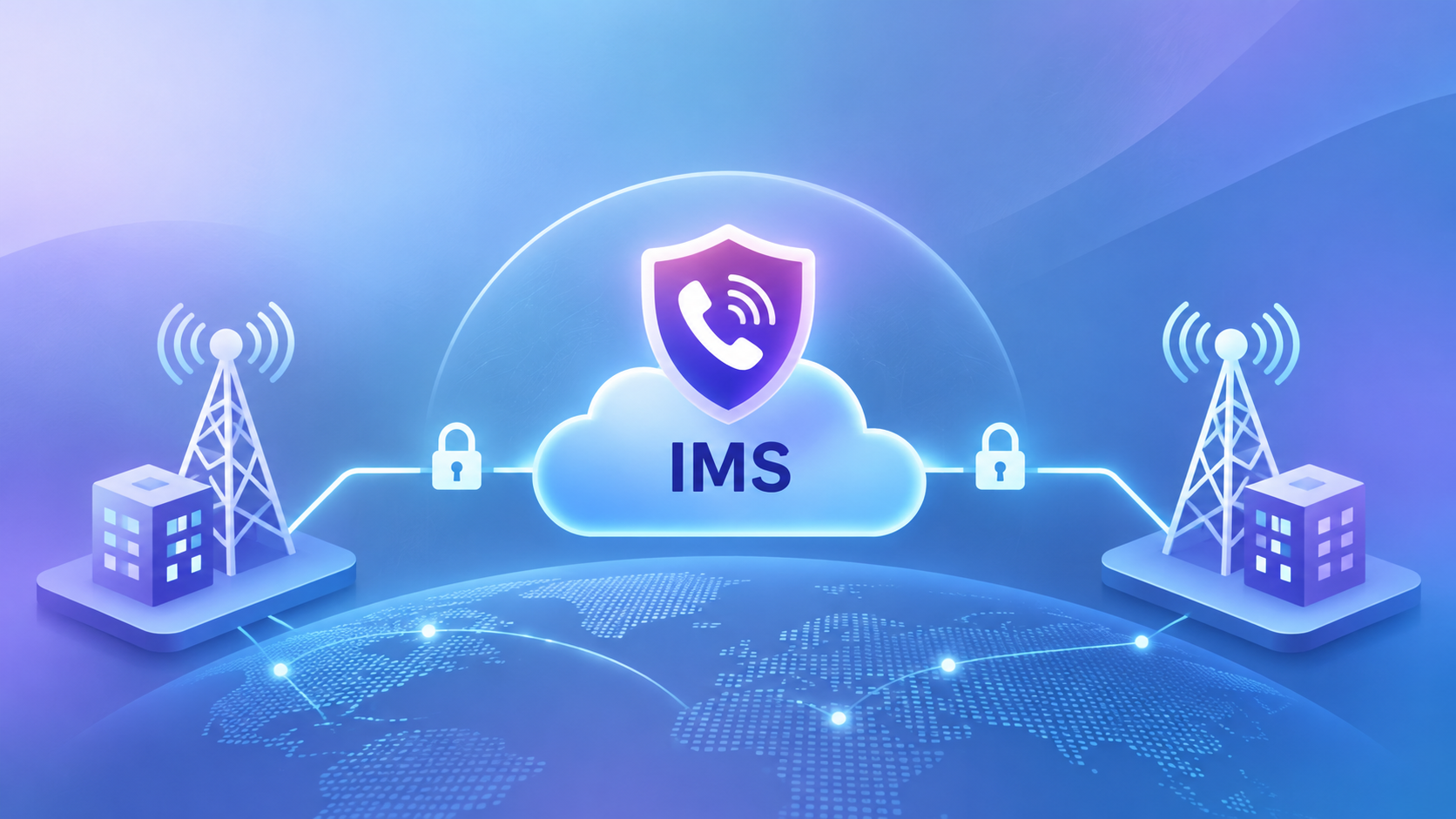

Telecom operators depend on interconnected networks to provide voice services beyond their own coverage areas. When a subscriber travels, makes an international call or moves between 4G and 5G coverage, the serving network may need to exchange signaling and media-related information with another operator. These connections make service continuity possible, but they also expand the security boundary.
IMS interconnect security focuses on protecting the interfaces, signaling exchanges and trust relationships that support voice communication between operators. A weakness in one network can affect partners through unauthorized signaling, service disruption, information exposure or misuse of interconnection routes. A structured security approach helps operators protect customers while maintaining reliable roaming and voice services.
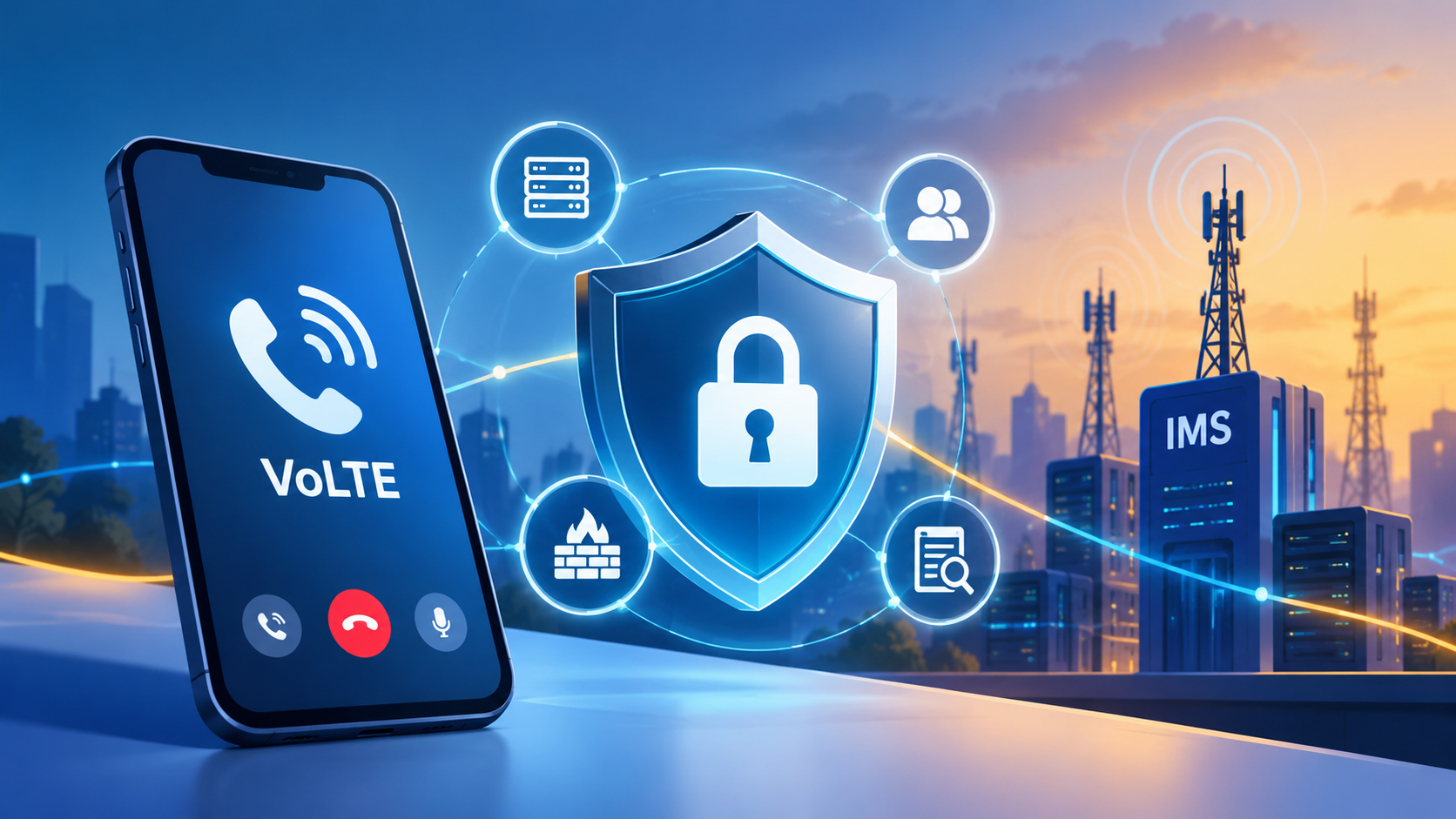
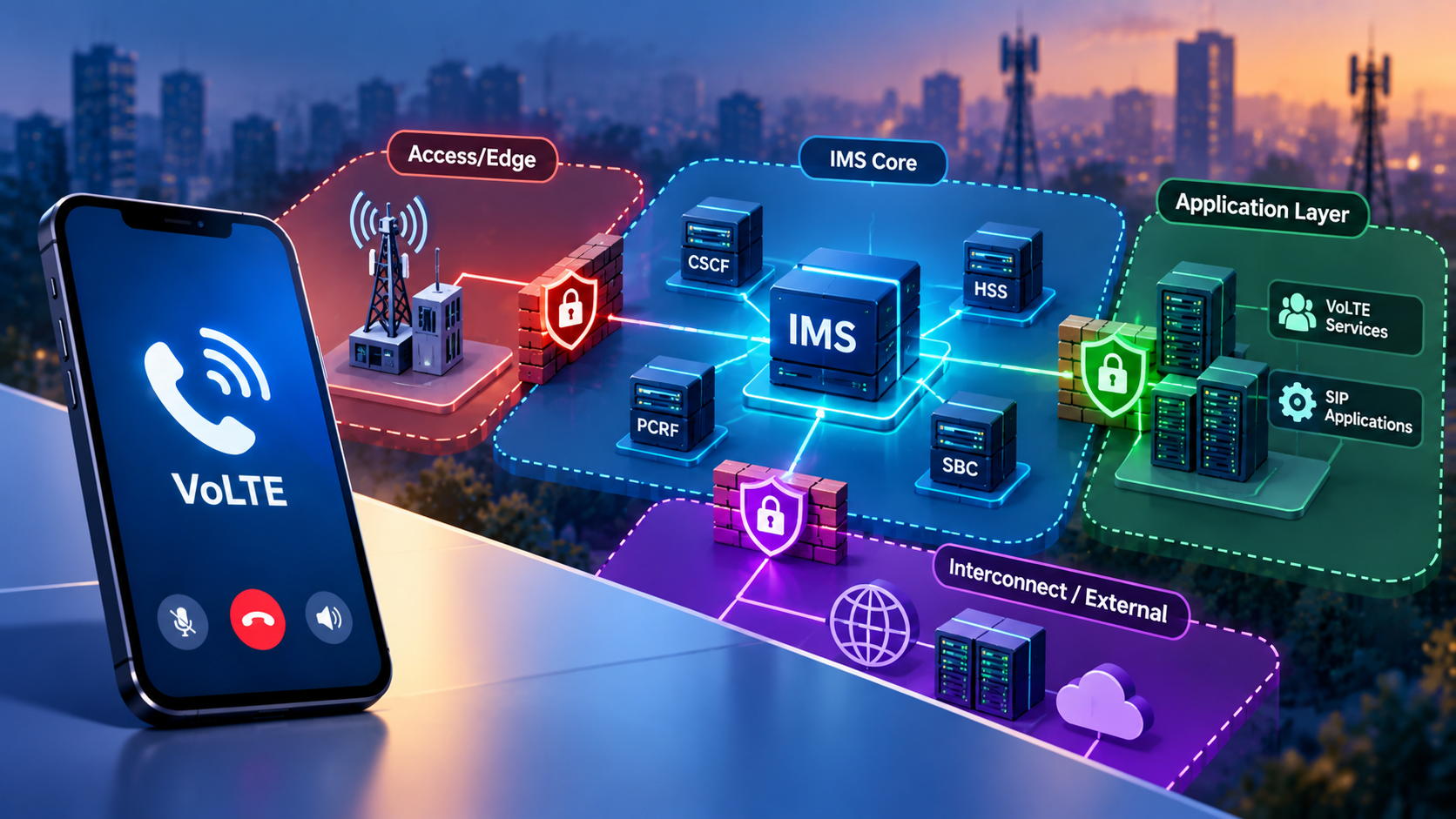
IP Multimedia Subsystem (IMS) is a service architecture used to deliver IP-based communication, including Voice over LTE (VoLTE) and Voice over New Radio (VoNR). Operators connect IMS environments to support roaming and inter-operator voice services. These links may involve signaling functions, border controls, routing systems and agreed security policies.
IMS interconnect security means applying appropriate authentication, filtering, topology protection, access restrictions, monitoring and operational governance to those connections. It is broader than securing an individual IMS core: it considers how traffic is accepted from, sent to and managed across external networks.
Interconnections create dependencies between organizations with different architectures, vendors, configurations and security maturity. Even where commercial agreements define permitted traffic, technical controls must enforce those boundaries.
Key concerns include:
Maintain an accurate inventory of partners, interfaces, IP ranges, routes, services and approved message types. Permit only the traffic required for each relationship. Review changes to partner endpoints and routing rules through a controlled process.
SIP interconnect security should include validation of message structure, headers, methods, source information and routing behavior against the operator’s design and partner agreements. Apply rate limits and suitable protections against malformed or excessive traffic. Controls should be tested to avoid blocking legitimate roaming and emergency service flows.
Use appropriately configured session border and interconnect security functions to enforce topology hiding, access restrictions, protocol normalization where supported, and protection against unsolicited traffic. Separate external-facing components from internal IMS functions and restrict administrative access.
Establish baselines for signaling volume, response patterns, partner behavior and call setup activity. Alert on unusual spikes, repeated failures, unexpected destinations and policy violations. Retain logs with appropriate access controls and coordinate incident handling with relevant partners.
Document security responsibilities, escalation paths, maintenance windows and notification requirements. Reassess partner connections when routes, vendors, software versions or network architecture change. Periodically review rules that may have become unnecessary.
An IMS security assessment should examine both technical exposure and the operational processes that protect inter-operator connections. Scope should be agreed with the operator and relevant partners before testing begins.
An assessment can review:
Operators may run VoLTE, VoNR and legacy voice arrangements in parallel during network evolution. This makes 4G voice security and 5G voice security part of a shared interworking challenge rather than isolated topics.
IMS security in 5G remains important because 5G voice services can still depend on IMS capabilities and inter-operator relationships. VoNR introduces a 5G radio access context for voice, while IMS provides the service control architecture. Operators should review how security policies apply across 4G and 5G domains, including roaming and fallback scenarios.
VoLTE vs VoNR is not simply a choice between two independent voice systems. Real-world deployments may need LTE voice continuity, VoLTE legacy network interworking and, where applicable, circuit-switched fallback. CS fallback security should be considered wherever legacy networks remain in the service path. Validate that transitions preserve authentication, routing restrictions, privacy protections and monitoring coverage.
Voice service continuity security depends on testing end-to-end behavior across access technologies, core functions and partner networks. A control that works within one domain may not provide adequate protection when traffic crosses an interconnect or moves to a legacy service.
Repeat the review after major network changes and on a risk-based schedule. Include interconnect security in supplier governance, change management and incident exercises. This makes security a continuing operational discipline rather than a one-time configuration exercise.
IMS interconnect security protects more than the connection between two operator networks. It helps preserve subscriber privacy, voice-service availability and trust across complex roaming and interworking arrangements. By combining strict boundary controls, SIP validation, monitoring, partner governance and authorized security assessments, operators can reduce exposure while supporting reliable VoLTE and 5G voice services.

Case Study